When you find a new lump, the first question that pops into your head is usually a simple one: "What are lymph nodes supposed to feel like?"
Most of the time, you won’t even notice your lymph nodes. However, when they swell up to fight off an infection, they usually feel like painful and tender lumps under your skin.
A Practical Guide to Normal v.s. Swollen Lymph Nodes
Think of your lymph nodes as filter stations. When they catch invaders, they swell up as they work overtime to clear them out.
Knowing what different sensations might mean can really help reduce anxiety and give you the confidence to know when it’s actually time to call the doctor. Let’s walk through what to look for.
Understanding the Texture and Feel
Let's break down the different things you might feel when you're checking a lymph node. The idea here is to get familiar with your own body, so you can turn that feeling of uncertainty into informed awareness.
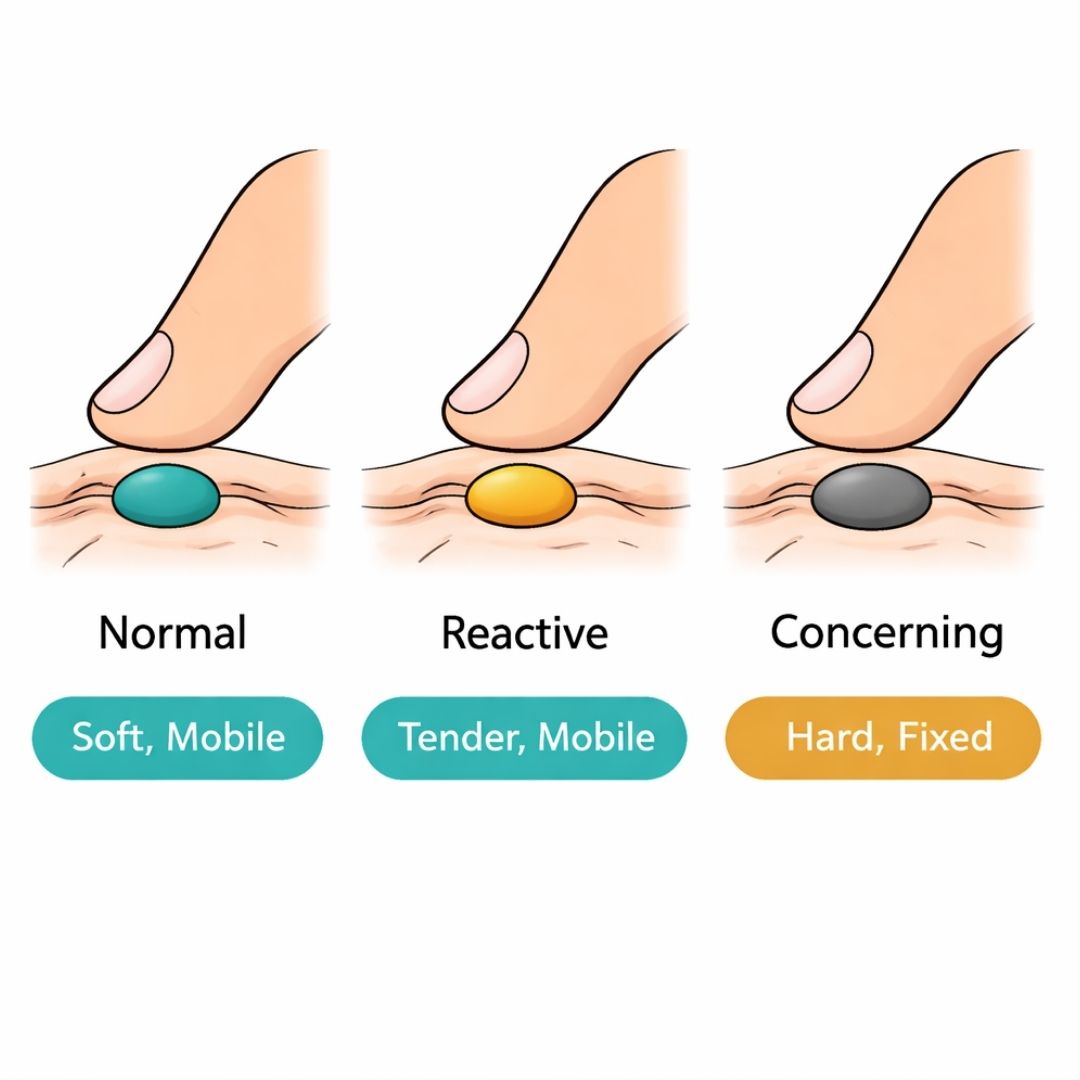
Normal Nodes: You probably can't feel normal lymph nodes at all. They're usually tiny (less than 1 cm), soft, and don't hurt to press on.
Reactive Nodes: They feel soft and mobile under your skin. They're often tender or even a bit painful to the touch, which is actually a good sign your immune system is hard at work.
Remember, this table is just a guide. It's always best to get a professional opinion if you have any doubts at all.
It is important to note that swollen lymph nodes are the result of an immune response. By learning to spot these differences, you can get a better sense of what your body is telling you. For example, a tender, moveable lump in your neck when you have a sore throat is more likely a sign of a normal immune response. On the other hand, a hard, painless, and fixed lump that sticks around for several weeks is a clear signal to book an appointment with your doctor, even if it's just for peace of mind.
Getting to Know Lymphatic System
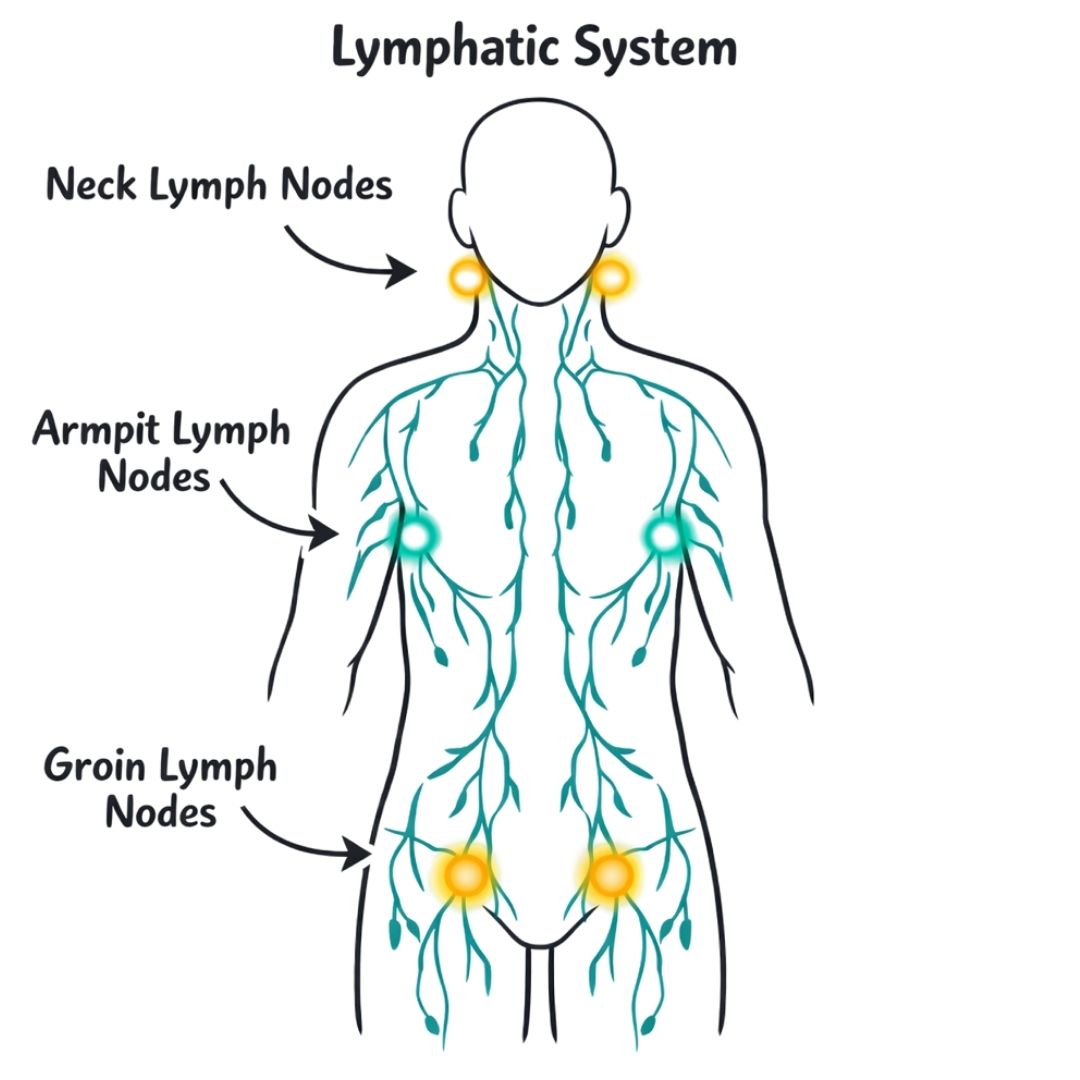
Think of your body as having its own highly advanced drainage and security network, working tirelessly behind the scenes. This is your lymphatic system, a web of lymphatic capillaries, lymph vessels, lymph nodes and lymphoid organs. Specifically, your lymph nodes filter and surveil the composition of tissue fluid and blood, being responsible for enhancing an immune response and eliminating infection and malignant cells.
A swollen lymph node is an indication that the lymphatic system is generating an immune response. These small, bean-shaped glands house an army of immune cells to trap and destroy pathogens like bacteria, viruses, and other nasties before they can cause widespread problems.
Neck: You can find them down the sides, in the front, and along the back of your neck. They often swell up in response to things like a cold, sore throat, or even a dental issue.
It's a bit like a neighbourhood watch system. A sore throat alerts the nodes in your neck, while a scraped knee might get the attention of the ones in your groin. It’s a smart, local response. For a deeper dive into this incredible network, check out our guide on how your lymphatic system works.
Why Location is a Big Clue
Figuring out the link between a swollen node’s location and a potential cause is helpful to alleviate anxiety. For instance, if you're battling a head cold and feel a tender lump on the side of your neck, that's a sign that your immune system is doing its job. The node is just temporarily swollen because it’s filled with immune cells. Once the infection clears up, the node will gradually shrink back to its usual, undetectable size.
A swollen lymph node isn't the illness itself. It is potentially a sign of a healthy, successful immune response. It’s your body showing you it’s on guard and protecting you.
This simple diagram shows what your lymphatic system is up to when it spots an infection.
As you can see, swelling is just a sign that your body's security team is on the job, fighting off and filtering out pathogens and abnormal cells. Just understanding this can take a huge amount of fear out of the experience. Instead of immediately thinking the worst, you can see it as a positive signal. This knowledge helps you observe your body with curiosity instead of anxiety, giving you a better handle on what’s normal and when it might be time to chat with a doctor.
How to Check Your Lymph Nodes at Home
Getting to know your own body is one of the most empowering things you can do for your health. Learning how to do a simple self-check of your lymph nodes isn't about looking for trouble; it's about figuring out what your 'normal' feels like. Once you have that baseline, you'll be much more likely to notice if something changes.
The trick is to be gentle. You're not trying to dig for anything. Just use the soft pads of your fingers and apply some light pressure. Move your fingers in a slow, circular motion over each area, feeling for any small lumps or changes just under the skin.
A Step-by-Step Guide to Your Self-Check
Ready to give it a go? Find a comfortable, quiet spot where you can relax. Take a deep breath, and let's walk through it together.
A methodical approach reassures you that you've covered all the main spots. Remember to compare both sides of your body as you go.
Checking the Neck: Start right under your chin, then gently work your way along your jawline toward your earlobes. From there, trace a path down the sides of your neck, following the large muscle you can feel there. Finish up by checking the front and back of your neck, especially the soft area just above your collarbones.
Checking the Armpit: Lift one arm slightly. With your other hand, gently press your fingers deep into your armpit and move circularly while lowering the lifted arm. Feel all around the area, including the part that stretches towards your chest wall.
Checking the Groin: The lymph nodes here are tucked into the crease where your leg joins your pelvis. You can do this lying down or standing up. Just press gently along this crease on both sides.
Each time you check, you’re building a map of your own body. It's an incredibly valuable health habit.
What You Are Feeling For
So, you know where to check, but what exactly are you feeling for? It helps to pay attention to a few key things. Does the lump feel soft or hard? Can you move it around a bit, or does it feel stuck in place? Is it painful when you press on it, or do you feel nothing at all?
These little details can offer some important clues:
Size: Is it smaller than a pea, or has it grown to be bigger than a grape?
Texture: Does it feel soft and a bit squishy, or is it firm, rubbery, or even hard like a little stone?
Mobility: Can you gently roll it under your skin, or does it feel fixed to the tissue underneath?
Tenderness: Does pressing on it cause any discomfort or pain?
For some people, regular self-checks are particularly important. For instance, patients with skin cancers like melanoma or squamous cell carcinoma are often encouraged to do monthly checks. It helps them understand how a node might feel if it’s affected—often, it’s a painless, firm lump. Some hospital guidance recommends checking the neck, armpit, and groin nodes monthly, pointing out that a cancer on the leg could make a groin node feel like a fixed, rubbery swelling.
Knowing what's normal for your body is the most powerful tool you have. A monthly check takes only a few minutes but provides invaluable insight into your health over time.
If you do find a node that’s a bit tender or swollen, a gentle massage can sometimes help get the fluid moving. If you're curious, you can learn more about the proper techniques in our guide to lymphatic drainage massage. However, if you find anything that feels hard, fixed, or isn't causing any pain, it's always best to get it checked out by a doctor.
The Most Common Reasons for Swollen Lymph Nodes
Finding a swollen lymph node can immediately set your mind racing, but it's important to know that this is usually a good thing. Before you jump to the worst-case scenario, take a breath. The vast majority of the time, a swollen node is simply your body's immune system doing its job perfectly.
Your Immune System in Action
By far, the most common reason for swollen lymph nodes is an infection. This is especially true for the everyday viruses and bacteria we all encounter. Your lymphatic system responds to local infections, and the location of the swollen nodes often gives you a clue about where the infection is.
Here are the usual types of infection that trigger immune response in lymph nodes:
Upper Respiratory Infections:Viral upper respiratory tract infections, such as the common cold, flu, and sinus infections often cause swelling in the neck nodes.
Skin Infections: An infected, small cut, an angry insect bite can make the nearest lymph nodes swell. For instance, an infected scrape on your arm might cause a lump in your armpit.
Dental Problems: An abscessed tooth or a severe gum infection can lead to swollen, tender nodes under your jawline as your body tries to kill the bacteria.
In all these cases, the lymph nodes tend to feel a bit tender, soft, and mobile. These are all classic signs of a reactive node under an infection. Once the illness is over, they'll slowly shrink back to their normal, unnoticeable size.
Swollen Lymph Nodes in Children
If you're a parent, you've probably felt little lumps in your child's neck from time to time. This is normal. It's common for healthy children to have palpable lymph nodes that feel like small, soft, movable beads under the skin.
While infection is the most common reason, a few other things can cause lymph nodes to swell. Autoimmune disorders, such as rheumatoid arthritis or systemic lupus erythematosus, can lead to widespread lymph node swelling that is not localized.
It's helpful to remember that a swollen lymph node is a symptom, not a diagnosis. More often than not, it’s a sign that your body is effectively protecting you from everyday illnesses.
Certain medications can also have lymph node swelling as a side effect, although this is less common. And of course, long-term conditions that affect the lymphatic system itself, like lymphoedema, a long-term swelling that is developed due to malfunctioning lymphatic drainage system. However, this is different from the temporary swelling of nodes due to infection. To get a clearer picture of lymphoedema, you can check out our guide covering all you need to know about lymphedema.
When to go for a professional check
Getting to know the normal landscape of your body turns worries into confident awareness. Yet, it’s just as crucial to know when a new lump needs a professional eye. The aim here isn't to cause alarm, but to give you clear, calm advice on when it’s time to book an appointment with your doctor for your own peace of mind and health.
Key Signs to Monitor
Think of these as 'red flags'. They aren’t definite signs of a serious problem, but they are clear signals that it’s time for a proper health check. If you find a lymph node with one or more of these traits, making an appointment with your doctor is necessary.
It persists for too long: A swollen lymph node that lasts for more than 6 weeks, especially if you haven't had a cold or sore throat, should be checked.
It keeps growing: A node that continues to get bigger is a good reason to see your doctor. A normal reactive node swells up, does its job, and then shrinks.
It feels hard or rubbery: If the node feels firm like rubber, or even hard like a small stone, it needs a closer look. A healthy or reactive node should feel much softer, more like a cooked bean.
It’s fixed in place: When you gently press the lump, does it move around easily under your skin or does it feel stuck, as if it’s matted to the tissue underneath? A fixed node is a really important reason to get it checked out.
It’s painless: A lump that is painless to touch is more of a concern than a tender one. Tenderness often just points to a simple infection, whereas a painless, hard lump needs professional investigation.
It's important to remember that even if a lymph node has one of these features, it doesn't automatically mean something serious is going on. However, these are the signs that doctors look for as reasons for further investigation, so it’s always best to get a professional opinion.
Don't Forget the Bigger Picture
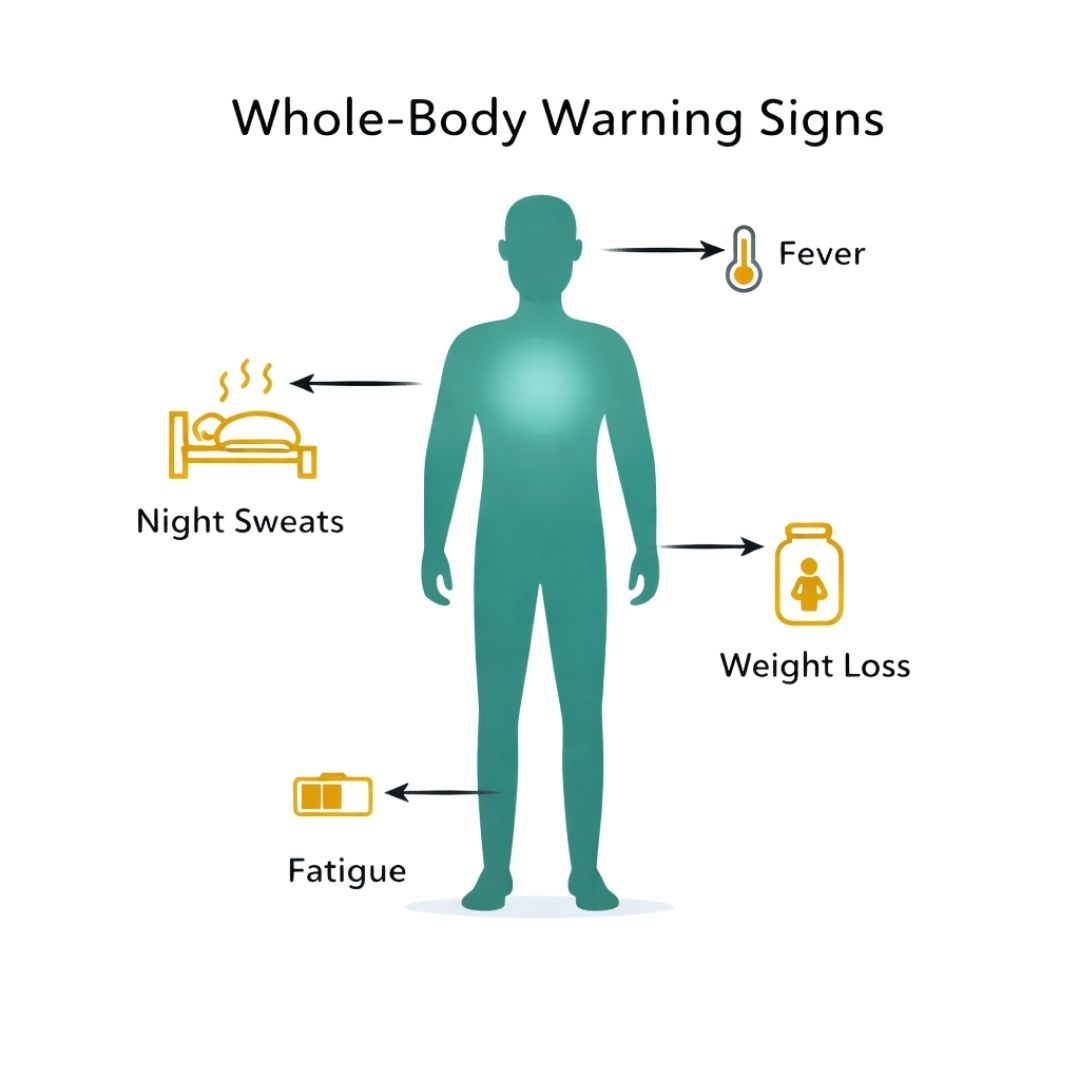
Sometimes, the lymph node itself is only one piece of the puzzle. Your doctor will also want to know how you're feeling in general. Certain symptoms which pop up alongside a persistent swollen node underline the need for a medical review.
Keep an eye out for these general symptoms:
Unexplained Weight Loss: Losing a noticeable amount of weight when you aren't trying to.
Persistent Fever: A low-grade temperature that comes and goes without apparent cause.
Night Sweats: Waking up to find your pyjamas and bedding are soaked through.
Overwhelming Fatigue: A level of exhaustion that doesn't get better with rest and gets in the way of your daily life.
These symptoms can sometimes be signs of conditions like blood cancer, so it's vital you mention them to your doctor. Also, pay attention to early signs of memory loss. You can learn more about what to look for in our guide to recognizing blood cancer symptoms.
What to Expect at Your Doctor's Appointment
It's completely normal to feel nervous when you've booked an appointment for a swollen lymph node. Just knowing what to expect can make the whole process feel much less stressful and help you prepare for the chat with your doctor.
When you see your doctor, they’ll start by asking you some questions about the lump and your general health. They will then do a physical examination, carefully feeling the node’s size, texture and mobility, and checking other areas too.
Interestingly, even for experts, judging size by touch alone is difficult. A recent study found that when doctors' estimates of swollen lymph node size in children's necks were compared to ultrasound scans, the size was overestimated in 68% of cases where there was a difference. A lump that felt like 1cm might only be half that size on a scan.
This is why your doctor might refer you to more tests, which give them a much more accurate picture of your condition. Based on what they find, your doctor will decide the best next steps, which could be anything from simply keeping an eye on it to ordering blood tests or an ultrasound.
The Initial Assessment and Subsequent Management
After the initial look, your doctor will plan the subsequent course of action. It's important to know that this doesn't automatically mean a series of tests. If an everyday infection seems to be the obvious cause, the most common approach is simply to watch and wait.
Here’s what your doctor might suggest:
Watchful Waiting: If the node is soft, a bit tender, and you've got the sniffles or a sore throat, your doctor will likely suggest keeping an eye on it for a few weeks to see if it settles down by itself.
Blood Tests: A quick blood test can tell your doctor a lot. It’s a great way to confirm the presence of any infection or inflammation that might be causing the swelling.
Imaging Scans: If the node has any unusual features, your doctor might send you for an imaging scan, starting usually with an ultrasound.
Think of your doctor as a detective. The feel of the lymph node and your recent health history help them figure out what’s likely going on.
Understanding Diagnostic Tests
If your doctor does suggest more tests, a bit of anxiety is perfectly understandable. However, please remember that these are just standard procedures to get a much clearer picture. It can be helpful to understand various diagnostic tests that your doctor might discuss with you.
An ultrasound scan is a really common next step. It's totally painless and uses sound waves to create a detailed image of the lymph node. This gives the radiologist a much better look at its size, shape, and what's going on inside than they could ever get from just a physical examination.
If you’re curious about what this kind of scan can show, our guide on whether an ultrasound can show cancer goes into more detail. Often, an ultrasound provides all the information needed to rule out anything serious and ease your mind.
Your Questions, Answered
It's completely normal to have questions when you're checking your body for changes. Let's tackle some of the most common ones that come up when people start paying attention to their lymph nodes.
Can a Lymph Node Feel Like a Hard, Painless Pea?
Yes, it can, and this is one of those feelings that you should definitely follow up on. While a lot of harmless swollen nodes can feel a bit firm, one that feels truly hard, painless, and won't move upon gentle push, is a clear sign to get checked out by a doctor.
More often than not, it will be something simple, but getting it properly assessed is the only way to know for sure and gain peace of mind.
How Long Is It Normal for a Lymph Node to Stay Swollen?
If you've just been getting over something like a cold, it’s typical for a swollen node to take two to six weeksto go down. Think of it as your body's army slowly returning to base after winning a battle, and it takes a little while for things to get back to normal.
If a node sticks around for longer than six weeks, or you feel it getting bigger instead of smaller, that's your cue. It’s time to book an appointment and let your doctor take a look.
Is It Normal to Be Able to Feel Lymph Nodes in Your Neck?
For many people, yes, it absolutely is. Especially if you're quite slim, it’s common to be able to feel small nodes in your neck. These are usually less than 1 cm across, feel soft, and move around easily under your fingers. They’re just healthy, working nodes doing their job close to the surface of your skin.
What you're really looking out for is change. If one of those familiar little bumps starts getting bigger, feels harder, or becomes tender when it wasn't before, that's when you should start paying closer attention.
Can Stress Cause Lymph Nodes to Swell?
That’s a brilliant question. The short answer is that stress on its own doesn't directly make your lymph nodes swell up. The swelling is a physical immune response to an infection or inflammation.
However, there's an important link. Long-term stress can run your immune system down, making you more likely to pick up germs and viruses that do cause your lymph nodes to swell. As such, while stress isn't the direct cause, it can definitely play a part in creating the conditions for swelling to happen.
We strongly advise you to talk with a health care professional about specific medical conditions and treatments. The information on our site is meant to be helpful and educational but is not a substitute for medical advice.
Written by Ziya Zhang
Ziya Zhang is an undergraduate Biochemistry student at University College London (UCL), with a strong interest in the molecular mechanisms of cancer and the development of therapeutic drugs. She aspires to pursue a career in the biomedical field, with a particular focus on advancing cancer drug discovery and innovation.
In addition to her academic pursuits, Ziya is deeply committed to public science communication. Through writing accessible, evidence-based articles, she aims to empower patients and their families to make informed and timely decisions throughout the diagnosis and treatment process, while also helping to alleviate the psychological burden associated with cancer.
Through this volunteer experience, Ziya seeks to gain a deeper understanding of the challenges faced by cancer patients and their families, and to apply these insights to her future studies and professional work.