When you hear the words “stage 2 lung cancer”, it’s a lot to take in. What this diagnosis essentially means is that the cancer is still contained within the chest area. It’s a bit more advanced than stage 1, the tumour might be larger or has started to push into nearby tissues, but it hasn’t spread to distant parts of the body.
This is a really important distinction. At this point, the goal of treatment is very often a cure.
Getting a cancer diagnosis can feel like being handed a textbook in a language you don’t speak. Taking the time to understand exactly what stage 2 means is the first step to feeling more grounded and having clearer conversations with your oncology team.
Think of staging as a map that your doctors use to plan the best route for treatment. For lung cancer, this map is created using the TNM system, a globally recognised method for describing where the cancer is and how much of it there is.
The TNM system provides a detailed picture by looking at three specific factors. Getting your head around these will help you understand the conversations happening around you.
To make this clearer, here’s a simple breakdown of how the TNM system defines Stage 2 lung cancer.
| Stage | Tumour (T) Characteristics | Lymph Node (N) Involvement | Metastasis (M) |
|---|---|---|---|
| 2A | Tumour is between 4 cm and 5 cm wide. | Cancer has not spread to any lymph nodes (N0). | M0 |
| 2B | Tumour is 5 cm or less AND has spread to nearby lymph nodes (N1). | Or, the tumour is wider than 5 cm but hasn't reached nodes (N0). | M0 |
Understanding this classification is so important because it's what guides your treatment plan. While the TNM staging is universal, it's also worth remembering that lung cancer can present differently from person to person. For more on this, you can explore the differences in how lung cancer affects women versus men.
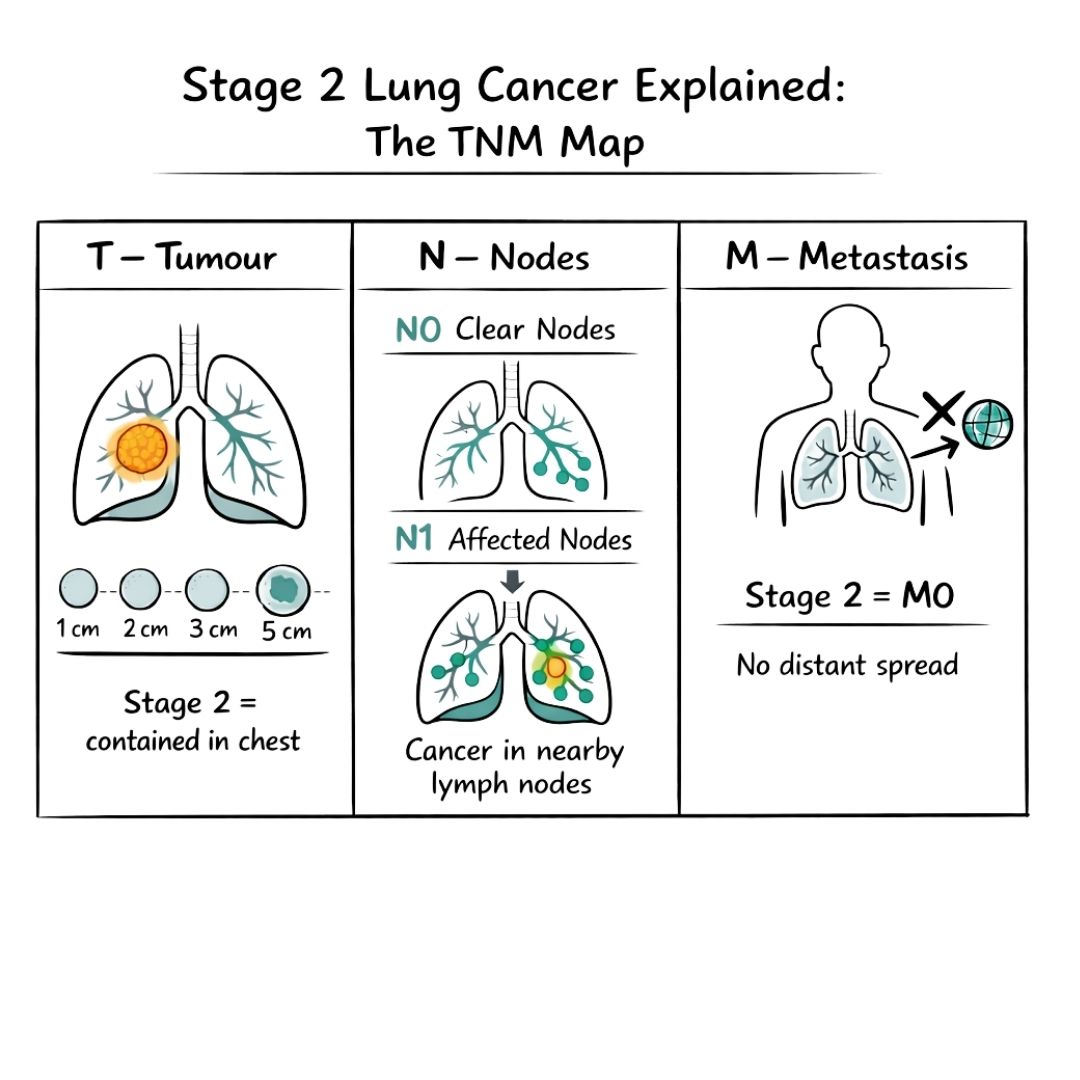
The crucial thing about a stage 2 diagnosis is that the cancer is still considered localised. Because it's contained in one area, treatments can be much more targeted and are often aimed at getting rid of the cancer completely.
Thankfully, we're getting better at finding lung cancer at these earlier, more treatable stages. In some countries, a big push on awareness and screening programmes is starting to pay off.
Data from the UK's National Lung Cancer Audit shows a significant rise in the number of people diagnosed at stage 1 or 2. This is encouraging, as the percentage of early diagnoses has been increasing steadily in recent years. You can read more about these encouraging trends at natcan.org.uk.
This shift is fantastic news because the earlier a diagnosis is made, the better the chances of successful treatment and long-term survival. It offers real hope and more options for people starting their treatment journey.
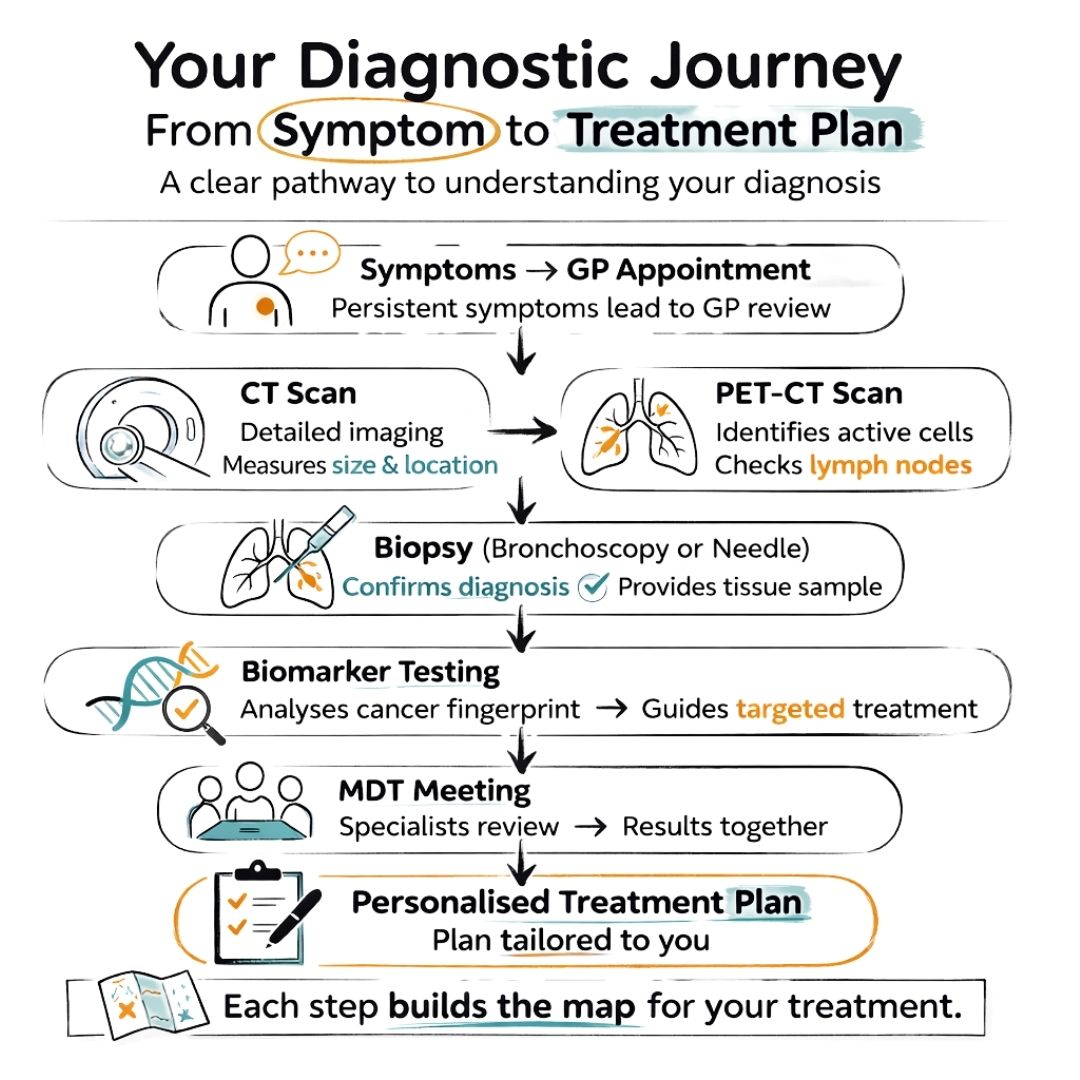
The path from a lingering cough or another worrying symptom to a definite diagnosis of stage 2 lung cancer is a step-by-step process. It can feel overwhelming, but each test is carefully chosen to build a complete picture of what’s going on, giving your medical team the clear information they need to plan the best possible treatment. Knowing what to expect can make the process feel a little less daunting.
It almost always begins with a chat with your GP, who will listen to your concerns. If they suspect something might be wrong with your lungs, the next step is usually imaging scans to get a look inside your chest. These scans are the first real glimpse at the size, shape, and location of any potential tumour.
Think of these scans as creating a detailed map of your chest. They let doctors see exactly what’s happening without making a single incision, offering crucial clues that help determine the cancer's stage. The two most common and powerful scans for this are CT and PET scans.
Sometimes, you'll have what’s called a PET-CT scan. This combines both scans into one session. It overlays the "hot spots" from the PET scan onto the detailed anatomical map from the CT scan, giving your oncology team an incredibly accurate, all-in-one view of the situation.
While these images provide strong evidence, one final step is needed to be absolutely certain.
If the scans create the map, the biopsy provides the definitive proof. A biopsy is simply a procedure to take a small sample of tissue from the suspicious area. A specialist doctor, called a pathologist, then examines these cells under a microscope. This is the only way to confirm, with 100% certainty, that cancer is present.
The best way to get this tissue sample depends entirely on where the tumour is located:
Once the biopsy confirms lung cancer, the work isn't over. That same tissue sample is often sent for more advanced analysis, known as biomarker testing (or molecular testing). This isn't about diagnosing the cancer, but about understanding its specific biological 'fingerprint'.
This testing looks for specific genetic changes or proteins within the cancer cells. Discovering certain biomarkers can unlock powerful, modern treatments like targeted therapy or immunotherapy, which are sometimes used for stage 2 lung cancer. This information allows your doctors to create a treatment plan that is tailored specifically to you, rather than a one-size-fits-all approach.
It’s so important to feel empowered to ask questions during this time. For a bit of help, here's a guide to some of the most important lung cancer diagnosis questions to ask your doctor. This whole diagnostic process is about building a solid foundation for your treatment ahead.
Receiving a stage 2 lung cancer diagnosis is a life-changing moment, and it's completely normal to feel overwhelmed. The good news is that at this stage, the primary goal of treatment is almost always a cure. The first step is to bring together a team of specialists, a multidisciplinary team, or MDT, to map out the best path forward, specifically for you.
Your treatment plan won't be a one-size-fits-all solution. It's carefully crafted around very specific details: the tumour's exact size and location, your general health and fitness level, and the unique characteristics of the cancer cells discovered during your biopsy. This personalised approach is crucial for giving you the best possible chance of a successful outcome.
The journey to this point, from first noticing symptoms to getting a confirmed diagnosis, provides all the essential information your team needs to build your treatment strategy.
This decision tree helps to visualise how each diagnostic step, symptoms, scans, and the biopsy, informs the treatment plan that lies ahead.
For most people diagnosed with stage 2 lung cancer who are otherwise in good health, surgery is the main event. It's the most direct and effective way to tackle the disease. The surgeon's goal is clear-cut: to remove the entire tumour, plus a small margin of healthy tissue around it, to make sure no cancer cells are left behind.
The most common operation is called a lobectomy. Your lungs are made up of five sections called lobes (three on the right, two on the left). In a lobectomy, the surgeon removes the entire lobe containing the tumour. This might sound drastic, but your remaining lung tissue is more than capable of handling the work, allowing you to breathe well after you’ve recovered.
Occasionally, if a tumour is particularly large or sits in a tricky central spot, a pneumonectomy, the removal of an entire lung, might be necessary. While this is less common, it can be a life-saving and curative procedure.
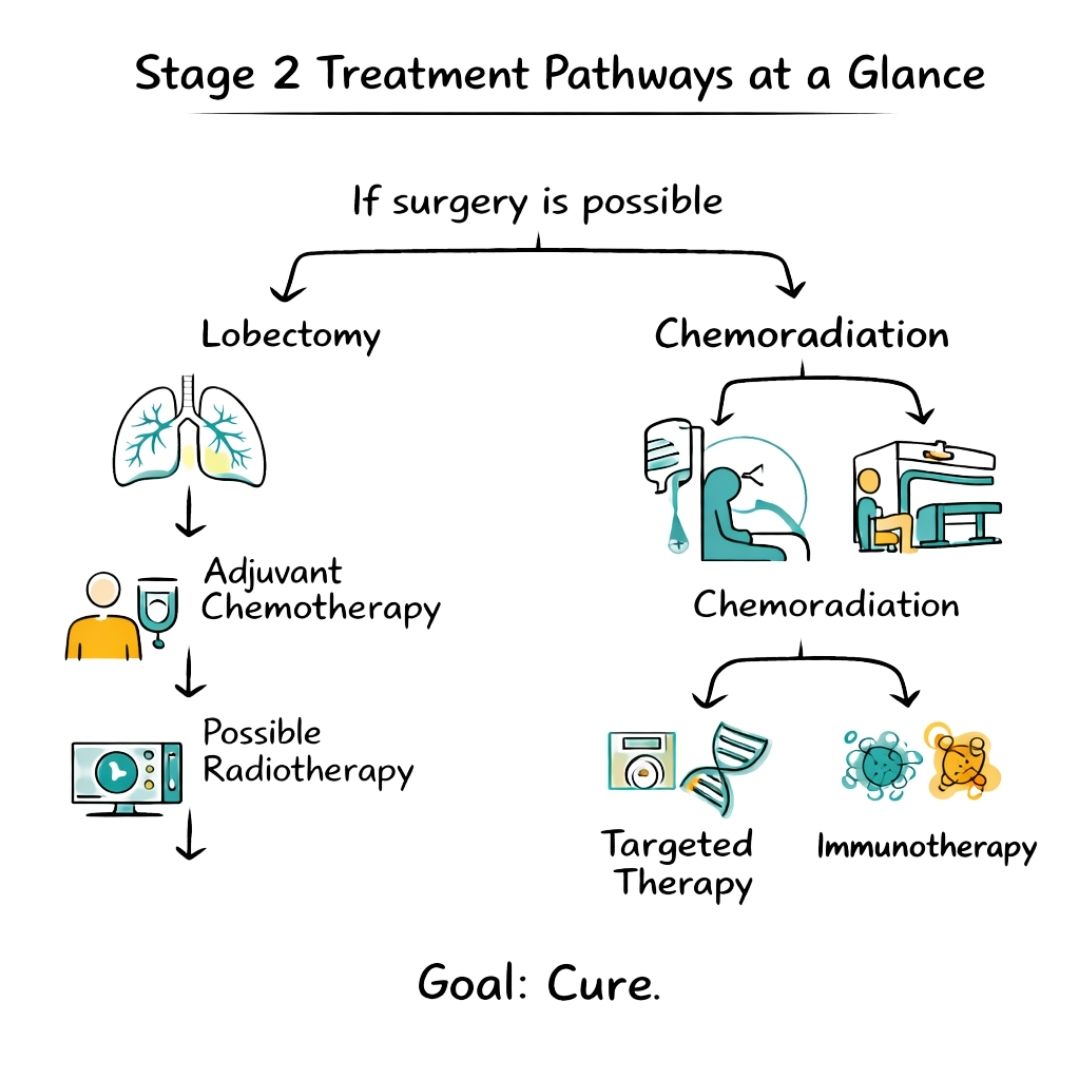
Even after a successful operation, there's always a slight chance that a few microscopic cancer cells might have broken away and travelled to nearby lymph nodes or into the bloodstream. This is where adjuvant therapy comes in. It’s an extra layer of treatment given after surgery to mop up any stray cells and reduce the risk of the cancer coming back.
Think of it like this: surgery removes the main weed from the garden. Adjuvant therapy is like treating the soil afterwards to stop any tiny, unseen roots from sprouting again later on.
Usually, this "safety net" treatment is chemotherapy. These powerful drugs circulate throughout your body to hunt down and destroy any remaining cancer cells. You'll typically receive it in cycles over a few months. In some situations, radiotherapy might also be used after surgery, especially if there's a worry about cancer cells in the lymph nodes in the middle of your chest.
Surgery is a big deal for the body, and it isn't the right choice for everyone. If you have other significant health issues, like severe heart or lung disease, your team might decide that a major operation is too risky. But that absolutely does not mean there aren't other powerful, curative treatments available.
The main alternative is a potent combination of chemotherapy and high-dose radiotherapy, often given together. This is called chemoradiation. It’s a very effective approach where the chemotherapy actually makes the cancer cells more vulnerable to the radiation, boosting its ability to destroy the tumour.
To help you weigh up the different options, here's a quick look at the most common approaches for stage 2 lung cancer.
| Treatment Type | Primary Goal | Typical Application | Potential Side Effects |
|---|---|---|---|
| Surgery (Lobectomy/Pneumonectomy) | To completely remove the tumour and nearby lymph nodes for a cure. | For patients in good overall health where the tumour is accessible. | Pain, fatigue, breathlessness, risk of infection. |
| Adjuvant Chemotherapy | To kill any microscopic cancer cells that may remain after surgery. | Given after surgery to reduce the risk of the cancer returning. | Nausea, fatigue, hair loss, increased risk of infection. |
| Adjuvant Radiotherapy | To destroy cancer cells in a specific area, often the chest lymph nodes. | Used after surgery in certain cases to target high-risk areas. | Skin irritation, fatigue, cough, difficulty swallowing. |
| Chemoradiation | To cure the cancer when surgery is not a suitable option. | The main treatment for patients who cannot have surgery. | A combination of side effects from both chemo and radiotherapy. |
This table provides a snapshot, but your medical team will discuss the best fit for you in much greater detail.
Cancer treatment has come a long way, and we now have smarter, more personalised ways to fight the disease. Biomarker testing on your biopsy sample can reveal specific characteristics of the cancer cells, which might open the door to these newer treatments.
These advanced treatments are changing the outlook for people with stage 2 lung cancer. For a deeper dive, our comprehensive lung cancer treatment guide offers further research and tips to help you explore every option. Every part of your plan is chosen with one aim in mind: to give you the very best chance of living a long and healthy life.
Talking about the future and survival rates can feel overwhelming, and that’s completely understandable. But getting to grips with what the numbers mean, and what they don’t, can give you a clearer picture as you move forward.
It’s important to remember that statistics are just averages drawn from thousands of past cases. They can paint a broad picture, but they can't predict your personal story. Your own journey is unique.
When your care team talks about your prognosis, they’re looking at much more than a single number. They’re considering a whole host of factors that are specific to you and your situation.
Here’s what really makes a difference:
As you plan for the future, it can also be helpful for you and your family to know about all the support available, which might include understanding end-of-life services.
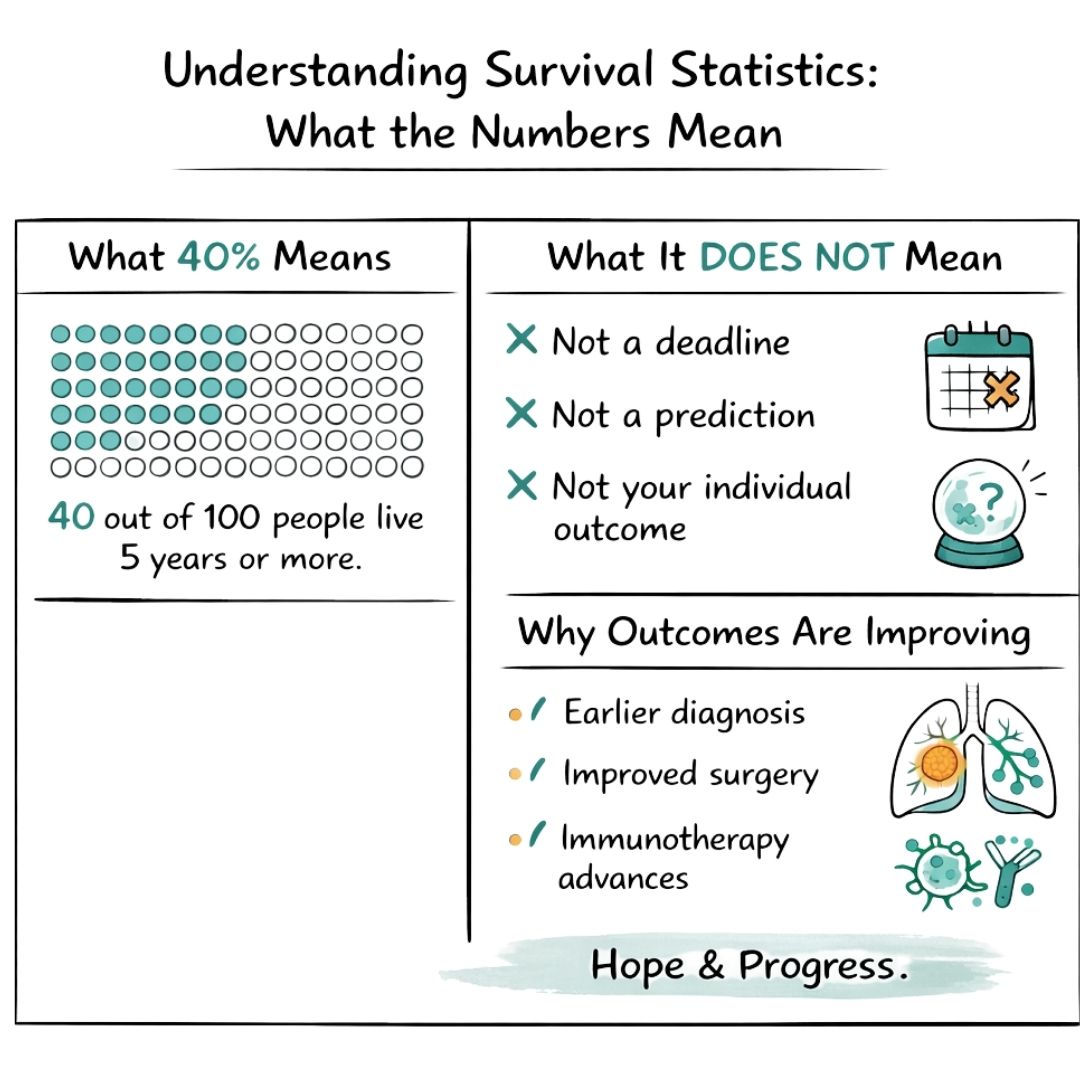
You'll almost certainly come across the term “five-year relative survival rate.” It sounds clinical, but all it means is this: it compares people who were diagnosed with a certain cancer five years ago to people in the general population. It’s simply a standard way for experts to measure how well treatments are working over time.
This absolutely does not mean that life expectancy is capped at five years. Far from it. Many people live full and meaningful lives for many years beyond this milestone. Think of it as a benchmark for medical progress, not a deadline.
The outlook for stage 2 lung cancer is getting better all the time. Real advances in surgery, smarter follow-up therapies, and the game-changing impact of immunotherapies are all helping more people live longer, healthier lives.
The statistics back this up. Data from health audits shows that roughly 40 out of every 100 people (or 40%) diagnosed with stage 2 lung cancer will live for five years or more. This is a huge improvement on the average for all lung cancer stages combined, and it really shows the difference that catching the cancer early makes. For a deeper dive into the numbers, you can find more lung cancer incidence statistics on cancerresearchuk.org.
At the end of the day, the most important thing is working with your medical team to build the right treatment plan for you. The statistics offer a hopeful backdrop, but it's your personal journey that counts.
Going through treatment for stage 2 lung cancer isn’t just about the medical procedures; it’s about taking care of your whole self. Looking after your physical and emotional well-being is a massive part of your recovery, and it can genuinely improve your quality of life during what is undoubtedly a tough time.
It’s completely normal to feel like your world has been turned upside down. The trick is to find small, practical ways to handle treatment side effects, look after your mental health, and stay as strong as you can. Think of this section as your toolkit for doing just that.
Every treatment path for stage 2 lung cancer has its own set of potential side effects. Knowing what to expect can make a real difference in how you manage them. Your cancer care team is your greatest ally here, so never hesitate to tell them exactly what you’re feeling.
Here are some of the common ones:
The emotional impact of a cancer diagnosis can be just as difficult as the physical side effects. It’s normal to feel anxious, scared, or sad, and it’s important to give yourself space to feel these things rather than bottling them up.
Taking small, deliberate steps to look after your mental health is vital. The treatment journey can be a real emotional rollercoaster, and learning some strategies to deal with depression can be incredibly helpful for staying on an even keel.
Building small, positive routines into your day can create a sense of stability when everything else feels uncertain. This could be a five-minute meditation, listening to a favourite podcast, or simply enjoying a cup of tea in the garden.
Finding what works for you is what matters most. For some, talking to a professional counsellor is a huge relief. For others, connecting with people in a support group who just ‘get it’ is what helps. Simple mindfulness exercises or gentle yoga can also be brilliant for calming a busy, worried mind.
What you eat and how you move play a surprisingly big part in your recovery. Good nutrition gives your body the fuel it needs to repair itself, fight off infections, and build back strength. At the same time, gentle activity is one of the best ways to fight fatigue, lift your mood, and feel a bit more in control.
Your appetite might be all over the place during treatment, but try to focus on nutrient-rich foods when you can. If you're struggling with ideas, ask to speak with a dietitian for personalised advice. You can also find some helpful tips in our guide on what to eat during chemotherapy.
When it comes to exercise, the goal is simply to keep your body moving—this isn’t the time to train for a marathon!
Juggling daily life, work, and treatment is a very personal challenge. Some people find that work provides a welcome distraction and a sense of normality. Others find they need to step back completely to focus on their health. There is no right or wrong answer.
If you do want to keep working, have an open chat with your employer. Many are very supportive and can offer flexible hours or other adjustments. The most important thing is to give yourself permission to put your health first. Managing your well-being is an active and essential part of your treatment.
Hearing you have stage 2 lung cancer can feel overwhelming, but please know this: you don't have to face it alone. There's a whole network of support out there ready to help you, your friends, and your family navigate the practical, emotional, and financial hurdles that treatment can bring. Building your support system is just as important as your medical care plan.
Help comes in all shapes and sizes, from big national charities to smaller, local groups right on your doorstep. These organisations offer everything from a friendly voice on the phone to financial grants and, crucially, a chance to connect with others who truly get what you’re going through.
A great place to start is with the major cancer organisations. They are pillars of the community, offering a huge amount of trusted, free information and direct support services that can make a real difference.
These groups are dedicated to making sure you have the practical help and clear information you need, right from day one.
The emotional toll of a cancer diagnosis can be heavy. Looking after your mental health is every bit as important as managing the physical side effects of your treatment. Getting professional psychological support can give you coping strategies and a safe, confidential space to talk through your feelings.
Your oncology team is the best first port of call; they can usually refer you to a counsellor or psychologist who has experience working with people with cancer. They understand the specific anxieties and pressures you might be feeling.
Connecting with others on a similar path can be incredibly powerful. Online patient communities and local support groups offer a sense of solidarity and invaluable peer-to-peer advice that you simply cannot get anywhere else.
Support is also vital for the family members and caregivers walking this path with you. It's also worth remembering that age can bring its own unique challenges. While the highest incidence of lung cancer is in people aged 85 to 89 (accounting for about 9% of new cases), studies show that even patients aged 75-80 often have a similar stage 2 lung cancer outlook to younger groups and are frequently offered treatment with the goal of a cure. You can find more insights about lung cancer staging in older adults on pmc.ncbi.nlm.nih.gov.
Beyond the formal organisations, your own personal network is your bedrock. This is your circle of friends, family, and the specialist healthcare professionals who become your dedicated team.
Here are a few practical ways to build and strengthen that network:
For more tailored information and resources, you might find it helpful to explore our other lung cancer guides. Taking that first step to ask for help is a sign of strength, and it’s an essential part of living with, and beyond, cancer.
Of course. Here is the rewritten section, designed to sound completely human-written and natural, as if from an experienced healthcare expert.
When you’re first told you have stage 2 lung cancer, it’s completely normal for your mind to be racing with questions. We’ve gathered some of the most frequent ones we hear from patients and their families to give you clear, straightforward answers.
Yes, it absolutely can be. In fact, for stage 2 lung cancer, a cure is the primary goal of treatment. At this stage, the cancer is still contained within the chest, which means our treatments can be very effective.
We typically take an assertive approach, often starting with surgery to remove the tumour, followed by a course of chemotherapy or radiotherapy to catch any stray cancer cells. While everyone’s situation is unique, the chances for a cure are very good.
That’s a great question, and it all comes down to the finer details of the cancer's size and spread. Think of it as a more precise map of what’s going on.
Basically, Stage 2B describes a slightly more advanced situation than Stage 2A, either the tumour is larger, or it has reached more of the nearby lymph nodes. This distinction is really important because it helps your cancer team pinpoint the most effective treatment strategy just for you.
It’s definitely something worth discussing with your doctor. Clinical trials are how we make progress against cancer, and they can give you access to new and promising treatments—like advanced immunotherapies or new surgical methods, before they become standard practice.
Taking part in a clinical trial is a deeply personal decision. It offers you a chance to receive a treatment that could be the next breakthrough, and at the same time, you're helping to improve cancer care for countless others in the future.
Your oncologist is the best person to talk to about this. They’ll know if there are any trials that could be a good fit for your specific type of lung cancer and can walk you through all the pros and cons.
Recovery really is a different journey for everyone, so there’s no single timeline. After surgery, you can expect the initial healing to take anywhere from a few weeks to a couple of months.
It’s also common for side effects from treatments like chemotherapy or radiotherapy to stick around for a while. Fatigue, for example, can linger even after your sessions are over. Your medical team will give you a recovery plan tailored to you, guiding you on how to ease back into your daily life safely. A lot depends on your general fitness before you started treatment and the exact procedures you had.
We strongly advise you to talk with a health care professional about specific medical conditions and treatments.
The information on our site is meant to be helpful and educational but is not a substitute for medical advice.
A clear, compassionate guide to stage 4 lung cancer. Understand advanced treatments, symptom management, diagnosis, and finding meaningful support.
How Does Lung Cancer Spread and Where Does It Go? Discover the Warning Signs, Common Sites of Spread, and Life-Saving Treatments.
Discover The 10 Crucial Questions To Ask After A Lung Cancer Diagnosis.