

Subtotal: £13.00

Subtotal: £13.00
Subtotal: £13.00
End-of-life care at home is about providing comprehensive medical, emotional, and practical support that allows someone to spend their final days in the place they feel most comfortable. It’s a shift in focus from aggressive treatments towards ensuring the best possible quality of life and dignity. This is a highly specialised approach, very different from standard home care.
Making the decision to receive care at home is profoundly personal. It’s a choice that champions comfort, familiarity, and peace above all else. A clinical setting can feel impersonal, but home is a sanctuary, a place filled with memories that offers a real sense of control and normality when it’s needed most. The entire philosophy is built around making sure a person's final chapter is lived with respect.
The goal here isn't to cure an illness, but to manage symptoms and provide holistic support. This goes far beyond just medical tasks; it's about giving emotional, spiritual, and practical help to the person and their family. It’s all about maximising the quality of life for the time someone has left.
More and more people are choosing to spend their final days at home. Recent figures for England show that over a quarter of all deaths occurred at home. This reflects a noticeable increase in recent years, which really highlights the growing desire for the comfort and control that care at home can offer. National palliative and end-of-life care profiles provide more detail on these trends.
The essence of this care is to honour an individual's wishes, creating a peaceful and supportive environment that hospitals often struggle to replicate. It gives families the chance to be together in their own private space, sharing moments that are both profound and incredibly precious.
A compassionate care plan is never a solo effort; it relies on a coordinated team of skilled professionals. This network usually brings together palliative care specialists, district nurses, and dedicated hospice-at-home teams who all work in concert. If you want to get a better sense of the day-to-day work these professionals do, resources like this guide on understanding the role of CNAs in home health care can be very insightful. These experts bring symptom management and compassionate support right to the front door, forming the true backbone of effective at-home care.
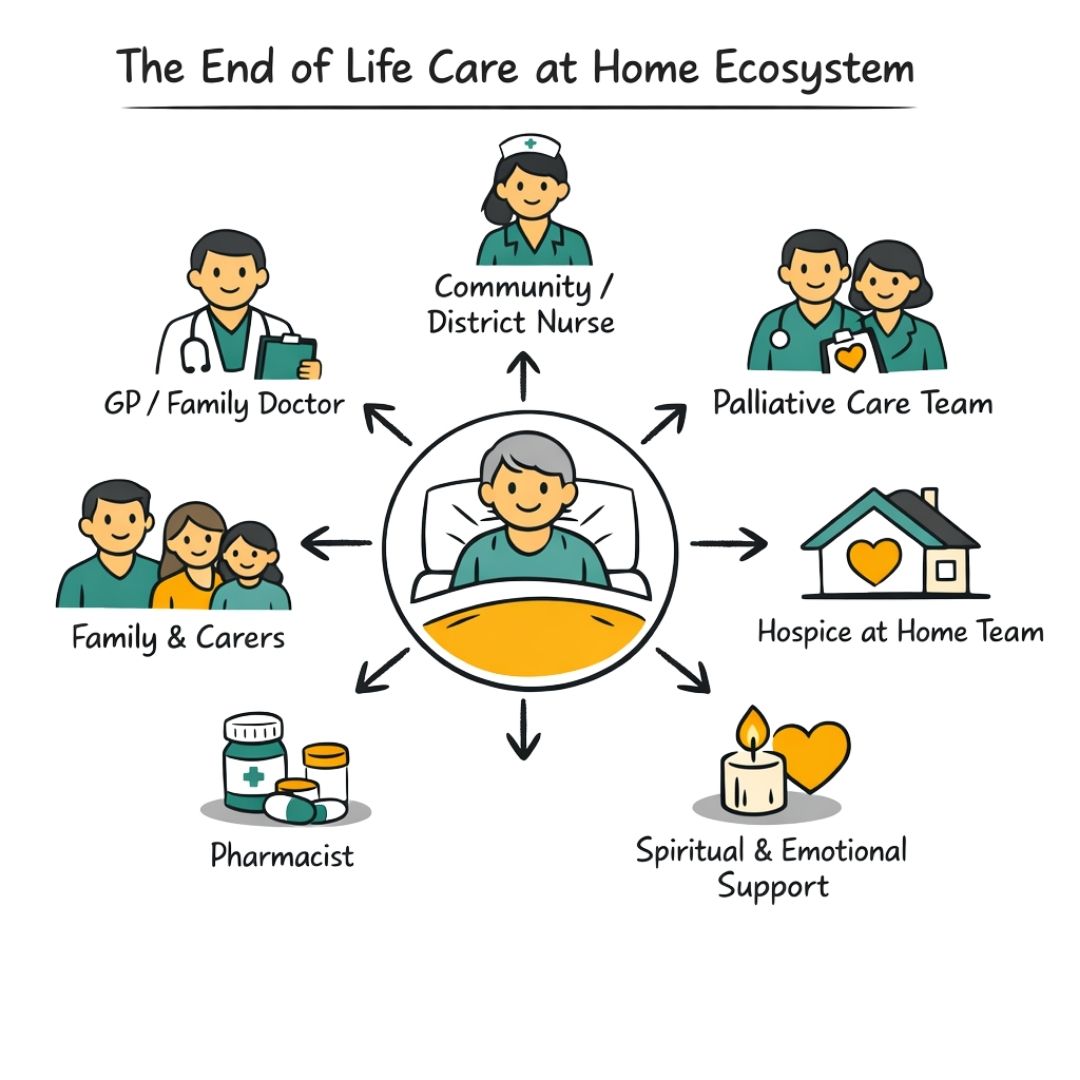
Trying to figure out the right care for a loved one at home can feel overwhelming. The good news is that you don't have to do it alone. There is a robust network of services designed to work together, wrapping a layer of physical, emotional, and practical support around your family right where you are.
Understanding how these different services fit together is the first step toward building a plan that brings comfort and peace of mind.
Many people hear "palliative care" and immediately think it's just for the final days. That’s a common misunderstanding. In reality, palliative care is all about improving quality of life by managing the symptoms and stress that come with a serious illness.
This specialised support can start at any stage, even alongside treatments meant to cure an illness. The focus is always on the whole person, tackling everything from pain and breathlessness to emotional distress. This proactive approach helps people live as fully and comfortably as possible. For a closer look, our guide on palliative care benefits for cancer patients offers more detail.
When an illness progresses and a cure is no longer the goal, the focus often shifts to hospice care. The wonderful thing is that this specialist support doesn't have to happen in a separate building. A hospice-at-home service brings that same expert care directly to you.
These teams are incredible. They offer master-level pain and symptom control, alongside vital emotional and spiritual support. At the heart of this service are the district and community nurses who provide the daily, hands-on care—things like administering medication, changing dressings, and keeping a close eye on your loved one’s condition. They become the essential bridge between you, the patient, and your GP or family doctor.
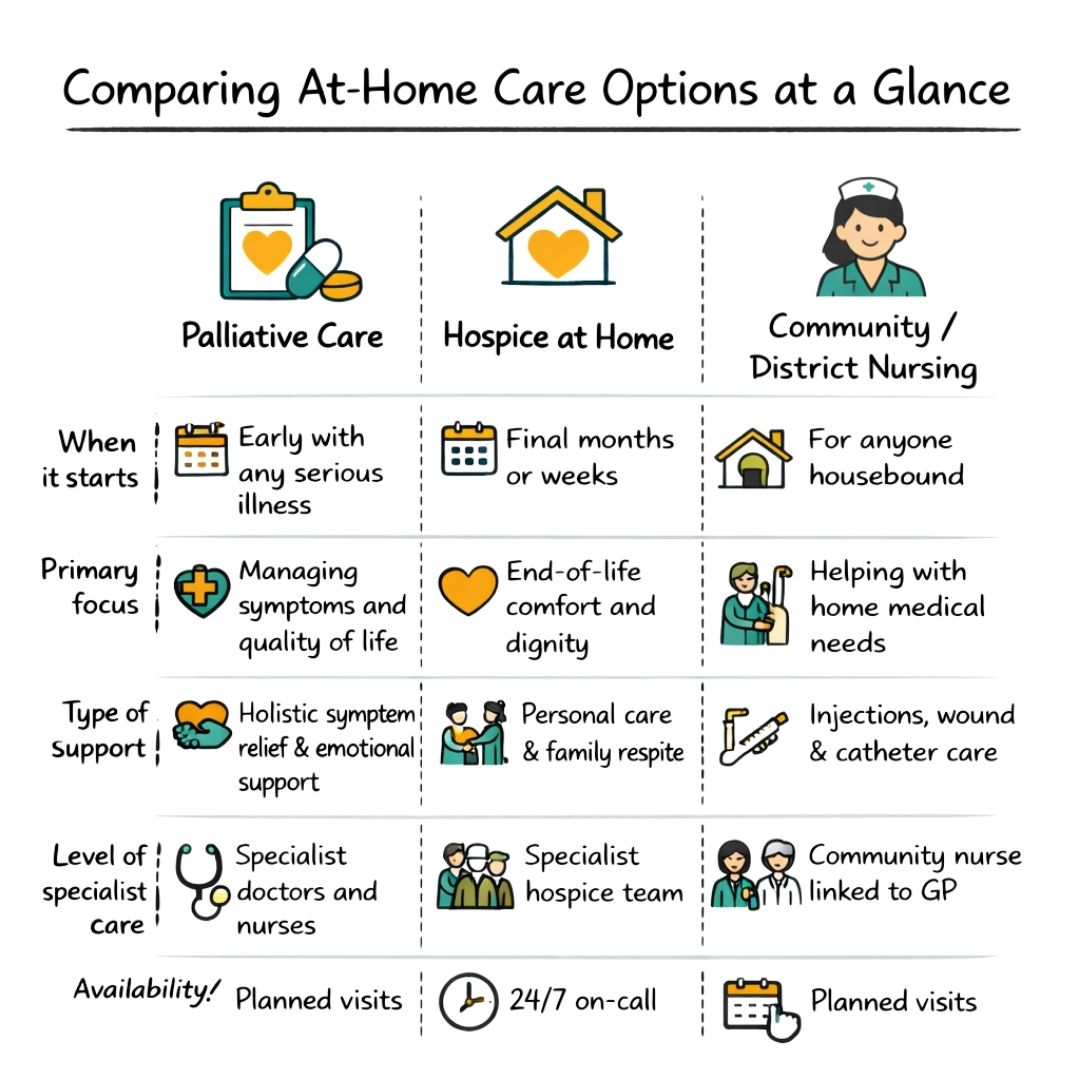
To help you distinguish between the main services, here’s a straightforward comparison.
| Service Type | Primary Focus | Provided By | Examples of Support |
|---|---|---|---|
| Palliative Care | Improving quality of life and managing symptoms at any stage of a serious illness. | Specialist palliative care doctors, nurses, and therapists (often in hospitals, hospices, or visiting at home). | Pain management, breathlessness control, emotional support for patient and family, coordinating with other doctors. |
| Hospice-at-Home | Providing holistic hospice-level care for individuals in their final months or weeks, focusing on comfort and dignity. | A multidisciplinary hospice team, including specialist nurses, healthcare assistants, therapists, and counsellors. | 24/7 on-call advice, personal care, respite for family carers, spiritual support, bereavement counselling. |
| District/Community Nursing | Delivering general nursing care and clinical support to people who are housebound. | Community nurses (such as District Nurses in the UK) who work closely with your local GP or medical practice. | Administering injections, wound care, catheter and stoma care, monitoring long-term health conditions. |
These services aren't mutually exclusive. More often than not, they collaborate to provide a seamless network of support tailored to your specific situation.
One of the cornerstones of providing good end-of-life care at home is managing symptoms proactively. This isn't just about reacting when pain or discomfort arises; it's about staying one step ahead to ensure your loved one remains as peaceful and comfortable as possible. The aim is to uphold their dignity and enhance their quality of life, giving them precious, meaningful time with family.
This is very much a team effort, requiring close collaboration between you and the palliative care team. Open communication is absolutely vital. By regularly sharing observations about any changes, however small, you enable the professionals to fine-tune the care plan, making sure it always meets the person's immediate needs.
Symptom management is a delicate balance of medical treatments and simple, compassionate care. Everyone's journey is different, so the plan must be tailored specifically to the individual's needs and preferences.
On the medical side, you can expect support to include:
Beyond the medical chart, small acts of kindness and attention to detail can make a world of difference:
True comfort care is about being responsive and anticipating needs. When you stay ahead of discomfort and adapt the plan as things change, you create a space of profound care, peace, and dignity.
Pain is often a significant worry for families, but it is something that can be managed very effectively with the right approach. For more detailed advice, our guide on managing cancer pain offers a wealth of practical strategies.
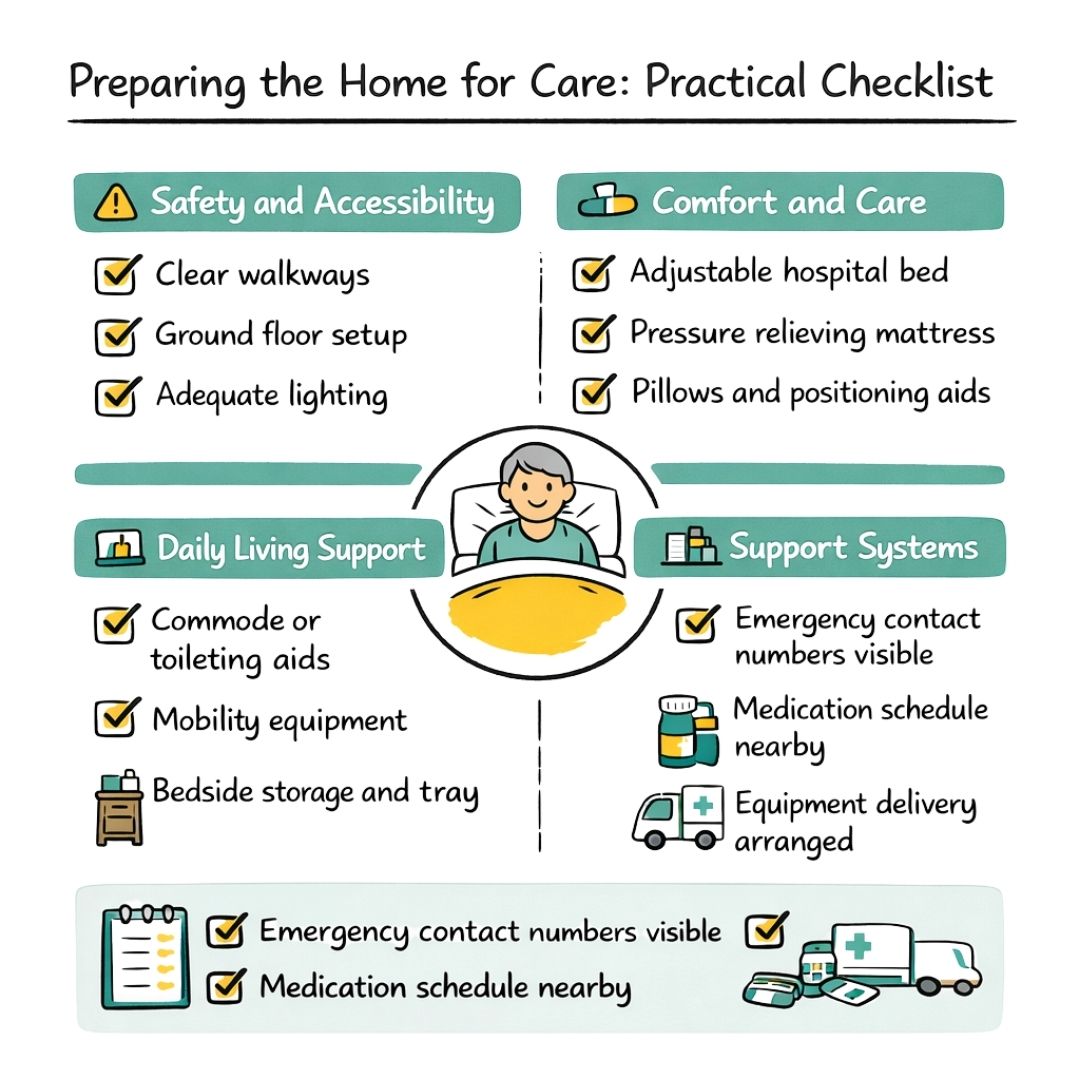
Turning a familiar home into a safe space for care is one of the most practical and loving things you can do. The goal is to create an environment that's not only comfortable and safe for your loved one but also supportive for everyone involved in their care. It’s all about making daily life a little bit easier and maintaining their sense of dignity.
Even small changes can make a world of difference. Simply rearranging furniture to create clear, wide pathways can prevent falls and make it much easier to get around with a wheelchair or walking frame. If stairs have become an obstacle, consider setting up a comfortable living area on the ground floor, perhaps with a specialised hospital bed.
Having the right equipment on hand is absolutely fundamental to providing effective care at home. Your community nurse or the local hospice team are the best people to speak to first; they can assess what’s needed and arrange for key items to be delivered, often free of charge through public health services.
Some of the most common pieces of equipment include:
Getting hold of this equipment is usually more straightforward than people think. Palliative care teams, occupational therapists, and even charities can often provide or loan out essential items, taking a huge weight off the family's shoulders.
When someone has to spend a lot of time in bed, their comfort and well-being become the top priority. For more detailed tips, have a look at our guide on how to help someone who is bedbound. Ultimately, these adaptations help create a peaceful, supportive setting where compassionate care can truly happen.
Tackling the legal and administrative side of things is a profound act of care. While these conversations can feel daunting, they bring immense clarity and ensure the person's wishes are front and centre. It's about empowering them to have a say in their future, preventing confusion for everyone involved later on.
It all starts with something called Advance Care Planning. Think of this less as a one-off task and more as an ongoing conversation about what matters most – what "a good life" looks like to them. It’s a chance to discuss and write down preferences for future medical care, creating a clear roadmap for family and doctors to follow.
For a more detailed look, we have a complete guide on Advance Care Planning.
Once those wishes are clear, several legal documents can make them official. The names and specifics can differ depending on where you live, but the goal is always the same: to protect the person’s autonomy.
Here are some of the key documents you're likely to come across:
Power of Attorney (POA): This is a legal tool that lets someone (the ‘principal’) choose a trusted person to make decisions for them if they can no longer do so themselves. Different types exist for healthcare and financial matters. In England and Wales, this is known as a Lasting Power of Attorney (LPA).
Advance Directive or Living Will: This is a legally binding document where a person can specify exactly which medical treatments they want to refuse in the future, should they lose the capacity to communicate. In the UK, it's often called an Advance Decision to Refuse Treatment (ADRT).
Do Not Attempt Resuscitation (DNAR) Order: This is a medical order, made in consultation with the individual and their family, that instructs healthcare teams not to perform CPR if the person's heart or breathing stops. This decision is typically made when CPR is unlikely to succeed or would only prolong suffering.
Making these decisions provides true peace of mind. It ensures that even when a person can no longer speak for themselves, their voice is still heard, and their choices are honoured with dignity.
Getting a clear understanding of essential end-of-life legal documents like a Living Will and Power of Attorney is vital, as the specific forms and rules can vary. These frameworks aren't just paperwork; they are a way to provide a clear, respectful path forward during a deeply challenging time.
Caring for someone at the end of their life is about so much more than managing physical symptoms. It’s a profoundly emotional journey for everyone involved, touching on the deepest parts of our psychological and spiritual selves. Acknowledging this is central to providing truly compassionate care.
Often, the best place to start is simply by talking. Creating a safe, gentle space for open conversations about fears, hopes, and final wishes can bring a powerful sense of comfort and closure. Sharing cherished memories and processing the complex emotions that surface is a vital part of this time.
The emotional burden of this experience doesn’t fall on one person’s shoulders; it’s shared between the patient, their family, and their carers. This is where professional support can be an anchor, helping everyone navigate their feelings and find a way through.
Thankfully, there are several avenues for support:
This holistic approach recognises that the entire family unit needs care and support. It reinforces the simple but vital message that you do not have to walk this path alone.
The role of a carer is one of the most demanding imaginable, and their own well-being is critical. If the carer burns out, the quality of care can suffer. Learning to spot the signs of exhaustion and taking action is not a luxury, it's an absolute necessity.
The need for this kind of support is only growing. Projections show that the number of people requiring palliative care each year is expected to rise significantly in the coming decades. These figures underscore the increasing pressure on families and the crucial need for sustainable caregiving.
Taking regular breaks, leaning on others for help, and practising self-care are fundamental. Respite services, which offer temporary relief for primary caregivers, can be an invaluable lifeline. For more in-depth advice, our guide on preventing caregiver burnout offers practical strategies. Remember, looking after yourself is an essential part of looking after someone else.
When you're arranging care for a loved one at home, you're bound to have a lot of practical questions. It's completely normal. Getting clear, straightforward answers can make a world of difference, giving you the confidence to focus on what’s most important: their comfort and your time together.
Let’s walk through some of the most common queries we hear from families.
The best place to start is with your loved one's existing medical team. Speak to their GP or family doctor, a hospital doctor, or their specialist nurse. They hold the key to getting the process started and can make direct referrals to the right local services, whether that's a palliative care team, community nurses, or a hospice-at-home service.
You can also reach out to brilliant organisations like Marie Curie or Hospice UK yourself. They can guide you on what’s available in your area. Following that initial contact, an assessment will be carried out to build a coordinated care plan that fits your family's specific needs.
This is a major worry for many families, but it’s something your care team will plan for from the very beginning. You should be given an out-of-hours contact number specifically for urgent advice.
This number usually puts you straight through to a specialist nurse who understands your loved one's situation. Having that direct line for support can help you manage a sudden change in symptoms or a crisis at home, often avoiding a stressful and unnecessary trip to A&E or the Emergency Room.
Yes, there is support out there, and it's important to know what you might be entitled to. The specifics vary by country, but many governments offer benefits to those who give up significant time to care for someone. In the UK, a key benefit to look into is Carer's Allowance.
There may also be benefits for the person you are caring for, which can help with the extra costs of long-term illness or disability (such as Attendance Allowance in the UK). Many charities and support organisations also provide financial advice, and some offer grants to help ease the pressure. It's always worth asking what help is available.
We strongly advise you to talk with a health care professional about specific medical conditions and treatments.
The information on our site is meant to be helpful and educational but is not a substitute for medical advice.
The disappointment ensuing a shortened career is equally distressing if not more, than the struggle with cancer.
As hard as everything was, I am meant to be here. I was born a fighter. I don't let it my cancer define me. I am a strong, intelligent woman now.
If there’s one thing I’ve learned from having Hodgkin's Lymphoma is that I have to reset whenever a negative thought pops up.