Prostate-Specific Antigen, or PSA as it's more commonly known, is a protein made by the prostate gland. A simple blood test can measure how much of this protein is circulating in your system, giving us a vital clue about the health of your prostate.
It's important to remember, though, that this is not a direct test for cancer. Instead, think of it as an early warning signal; a change in your PSA level can suggest that it’s time to take a closer look.
Picture PSA as a messenger, constantly sending out updates from your prostate. While most of this protein stays within the semen it helps to produce, a tiny amount naturally finds its way into your bloodstream. The PSA test simply measures this amount in nanograms per millilitre (ng/mL).
When everything is ticking along nicely, the prostate sends out a steady, low-level signal. But if the gland becomes inflamed, enlarged, or if cancerous cells start to grow, the prostate's natural structure can be disturbed. This disruption allows more PSA to leak into the blood, effectively turning up the volume on those messenger signals.
An elevated PSA level is a bit like your car's 'check engine' light coming on. It doesn't mean the engine is about to explode, but it's a clear sign that you need to lift the bonnet and find out what's happening.
Doctors don't rely on the PSA test alone. Instead, it’s a crucial first step in their toolkit when investigating several common prostate issues. A high reading points towards a potential problem, which could be one of a few things:
Because so many different things can influence the result, your doctor will always interpret your PSA level in the wider context of your overall health. The test's main job is to flag that something might be amiss, sparking a more detailed conversation and potentially further checks. This is a core principle in laboratory medicine, where test results are the start, not the end, of the diagnostic journey.
The use of this test has grown significantly over the last couple of decades. In the UK, for example, PSA testing increased fivefold between the late 1990s and more recent times. To give you a sense of scale, one major study tracked over 1.5 million men who had a combined total of more than 3.8 million PSA tests, which shows just how routine this has become. Interestingly, that same research found that testing rates were highest in men over 70, an age group where the benefits of regular screening are often debated.
Getting your prostate-specific antigen (PSA) test result back can feel like a big deal, but it's important to remember that the number itself is just one part of a much bigger picture. There’s no universal "normal" PSA level that fits every man. Instead, your doctor will interpret your result in context, using it as a guide rather than a final verdict.
You might have heard of the 4.0 nanograms per millilitre (ng/mL) threshold. For a long time, this was seen as the general cut-off point, where anything higher might need a closer look. Think of it less as a strict rule and more as a starting point for a conversation. A result below 4.0 ng/mL doesn't completely rule out prostate cancer, just as a result above it doesn't automatically mean you have it.
Many things besides cancer can push your PSA level up, which is why your doctor treats this number as just one piece of your overall health puzzle.
One of the most significant factors in making sense of a PSA result is your age. It's completely normal for the prostate gland to get bigger as men get older, a condition known as benign prostatic hyperplasia (BPH). A larger (but non-cancerous) prostate naturally produces more PSA, so it's expected for a man's baseline level to creep up over the years.
Because of this, doctors often use age-adjusted ranges to get a clearer, more accurate picture. This approach helps avoid unnecessary worry for older men whose levels might be slightly elevated for perfectly normal reasons. It also helps flag potentially concerning results in younger men, whose PSA levels should typically be much lower.
A PSA test isn't a simple pass-or-fail exam. It's a dynamic measurement that only truly makes sense when viewed through the lens of your age, family history, and overall health.
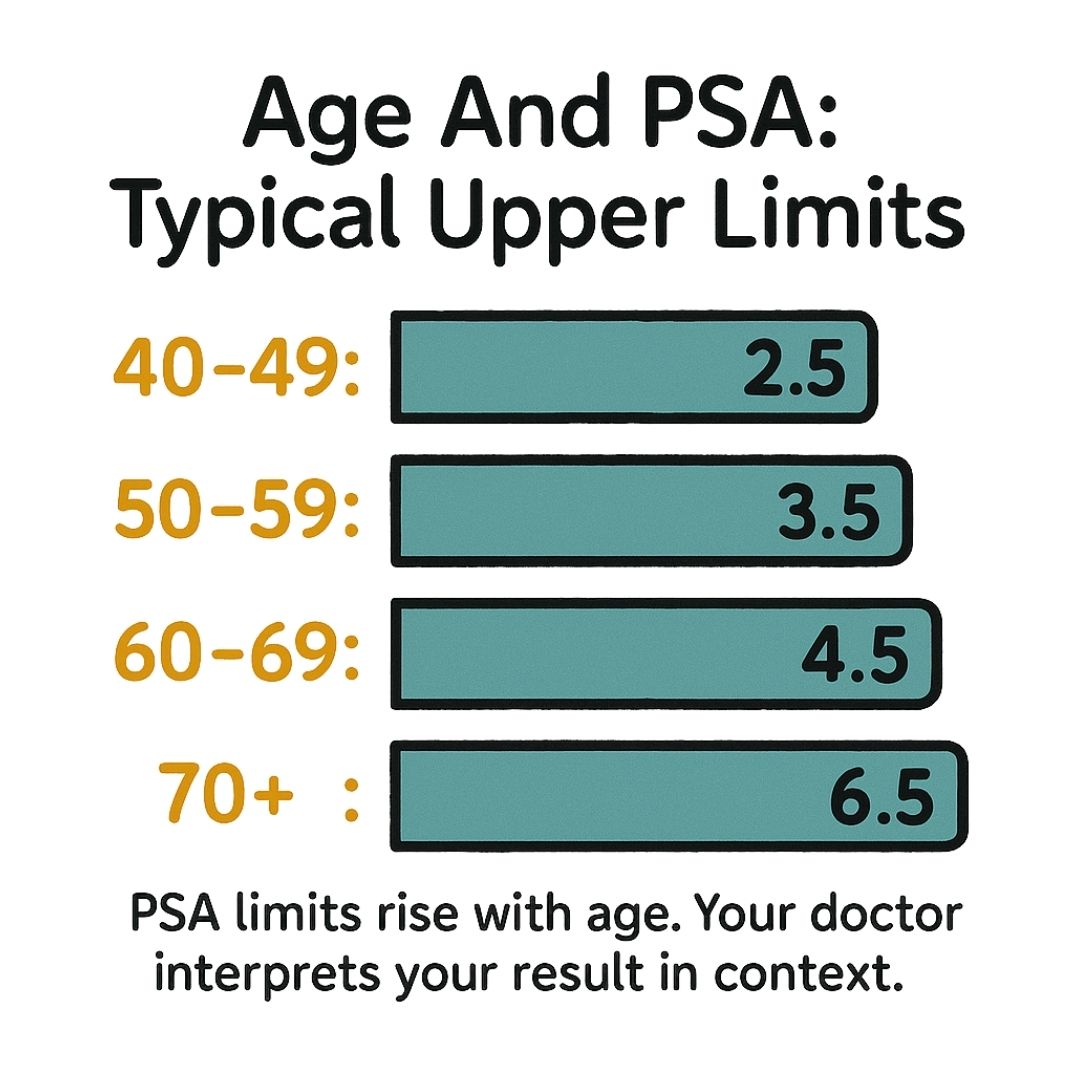
This table shows some generally accepted upper limits for PSA levels according to age. These are just guidelines, of course, and your doctor will interpret your specific results based on your unique health profile.
| Age Group (Years) | Upper PSA Limit (ng/mL) |
|---|---|
| 40–49 | 2.5 |
| 50–59 | 3.5 |
| 60–69 | 4.5 |
| 70+ | 6.5 |
As you can see, this data helps explain why a PSA of 4.2 ng/mL might ring more alarm bells for a 45-year-old than it would for a 65-year-old.
To get more detail from the initial result, your doctor might explore a couple of more advanced metrics. These calculations are designed to help distinguish between a PSA rise caused by a harmless condition and one that might signal something more serious. While the PSA test is prostate-specific, other biomarkers exist for different health conditions. For example, you can learn more about how the CA 15-3 test is used as a tumour marker in our detailed guide.
For prostate health, two key advanced metrics are PSA velocity and PSA density.
PSA Velocity: This is all about speed. It measures how quickly your PSA level is changing over time. A slow, steady increase over several years is often less of a concern than a rapid jump in a short period. To work this out, your doctor needs at least three separate PSA readings taken over a minimum of 18 months. A sharp rise could be a stronger signal that it's time for a closer look.
PSA Density (PSAD): This calculation connects your PSA level to the actual size of your prostate gland. First, the volume of your prostate is measured, usually with an ultrasound or an MRI scan. Then, your PSA level is divided by the prostate volume. A higher density suggests there's more PSA concentrated in the tissue than expected for a gland of that size, which can be a red flag
The infographic below shows just how common PSA testing has become, now involving millions of men.
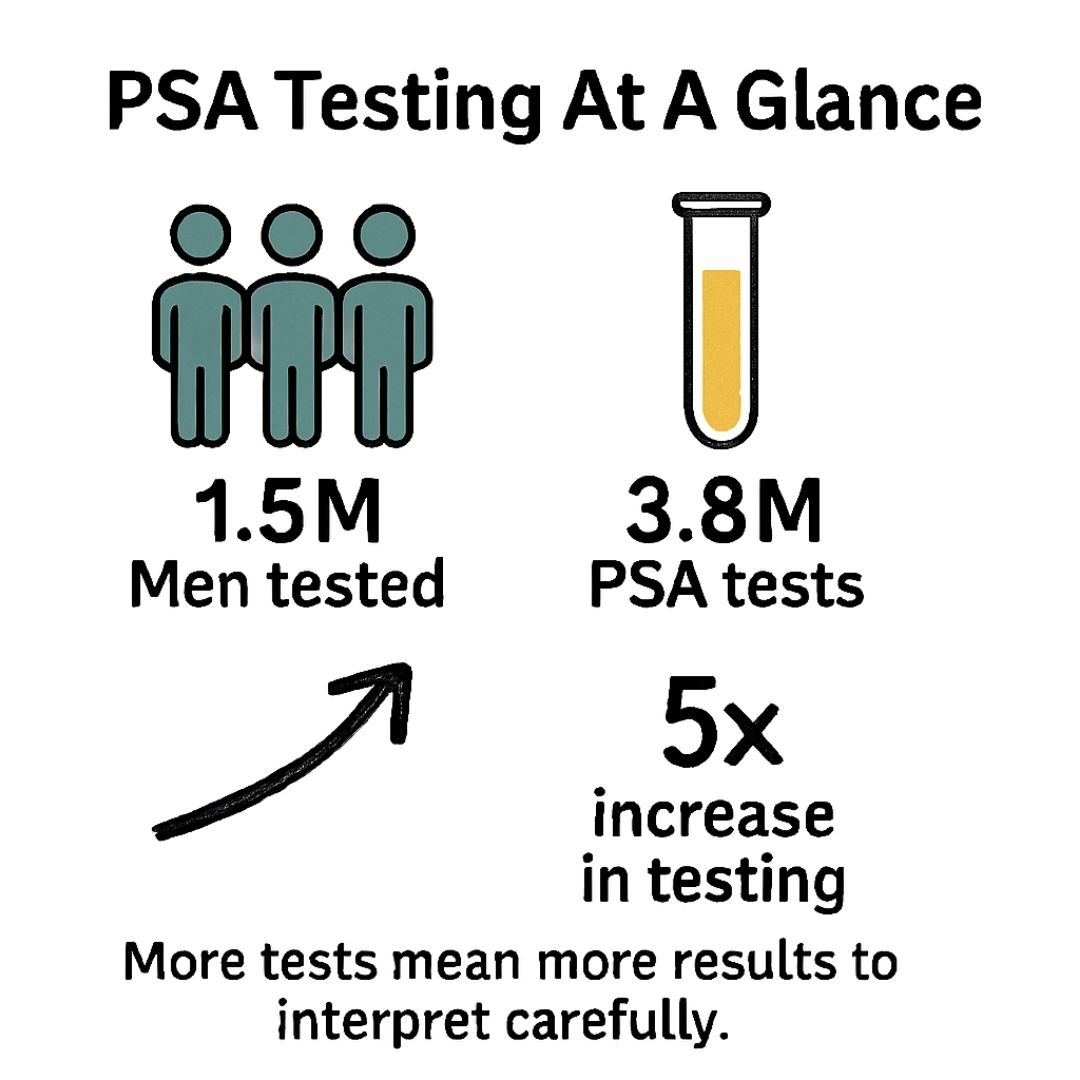
With a fivefold increase in testing for over 1.5 million men, it’s more important than ever to interpret results carefully to avoid unnecessary anxiety and procedures. By using tools like age-adjusted ranges, velocity, and density, doctors can make a much more informed decision about what your PSA number really means for you.
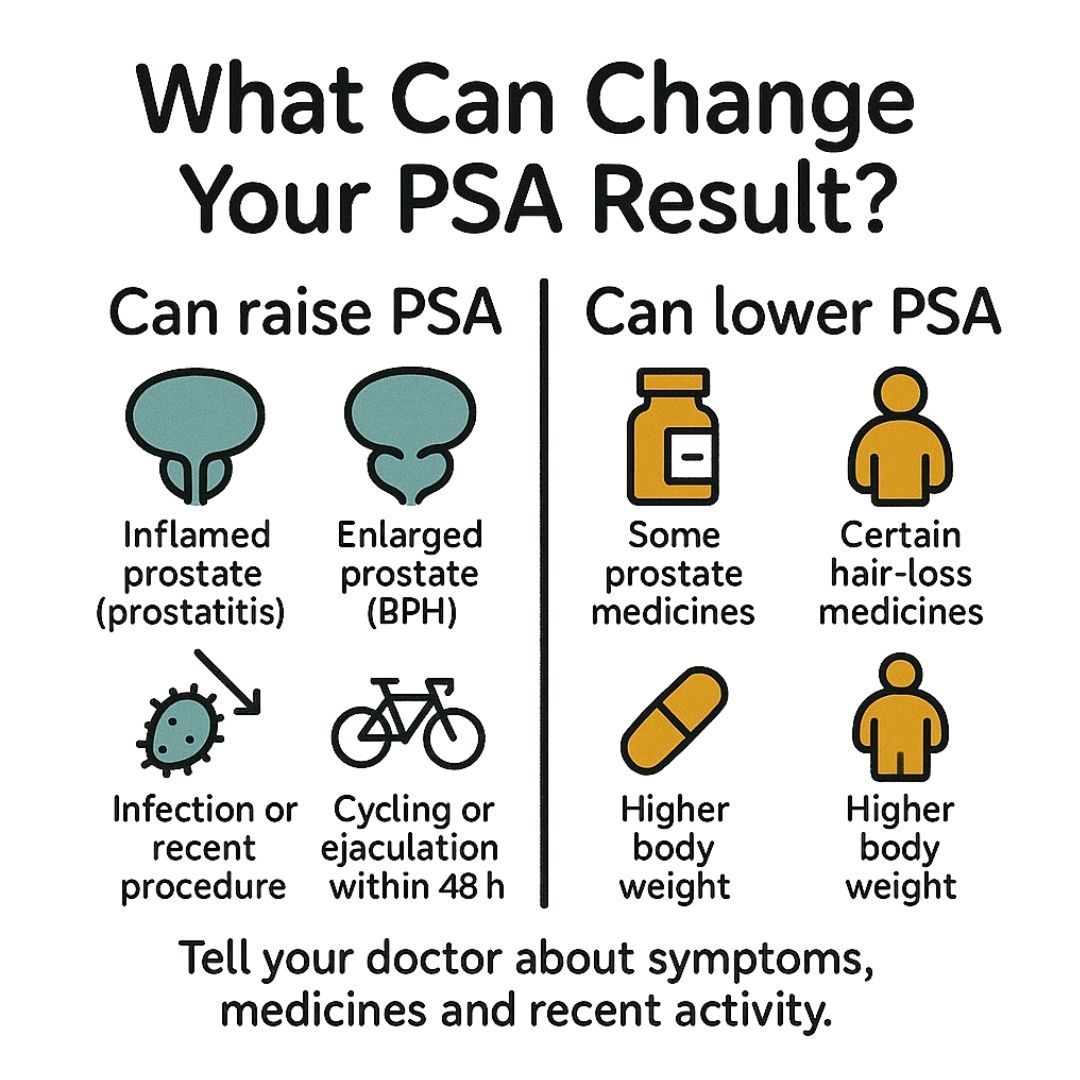
It’s easy to think of a PSA test result as a hard-and-fast number, but the reality is far more nuanced. Your PSA level is a dynamic figure, not set in stone. It can be pushed up or down by a surprising number of things, many of which have absolutely nothing to do with cancer.
Think of it like a very sensitive seismograph for your prostate health. All sorts of everyday activities and common medical conditions can cause the needle to jump. Getting to grips with these influencers is the key to correctly interpreting your result and, just as importantly, avoiding a lot of unnecessary worry.
Seeing a PSA level that’s higher than expected can be unsettling, but it’s very often caused by benign (non-cancerous) conditions. These issues can irritate the prostate or cause it to grow, which in turn allows more of the PSA protein to leak into the bloodstream.
Before jumping to the worst-case scenario, it’s helpful to know about these common culprits:
It’s a crucial point to remember: as many as three-quarters of men who have an elevated PSA level do not have prostate cancer. The test simply flags that something might need a closer look; it doesn't diagnose the cause on its own.
Beyond medical issues, certain activities can also give your PSA a temporary bump. It’s always a good idea to avoid these for at least 48 hours before your blood test. And if you're experiencing other symptoms, our guide on the early signs of prostate cancer to look for might be a helpful read.
Just as some things can falsely raise your PSA, others can do the opposite and mask a potential problem. This can create a false sense of security, which is why it’s so important to tell your doctor about any medications you’re taking.
Certain drugs, for instance, are well-known for suppressing PSA. Medications used to treat an enlarged prostate (BPH) or hair loss, like finasteride and dutasteride, can cut a man’s PSA level by about 50% after a year of use. Doctors know this and will often double the test result to get a more accurate picture.
Obesity can also have a diluting effect. Men with a higher Body Mass Index (BMI) have a larger blood volume, which can spread out the PSA and lead to a lower concentration in the sample. Even long-term use of aspirin or certain diuretics might be linked to slightly lower levels. Always give your doctor a complete list of your medications so they can put your prostate specific antigen result into the proper context.
The prostate-specific antigen (PSA) test is a key part of a doctor's toolkit for managing prostate health, but it wears two very different hats. It can act as an early warning system to screen for potential problems, or it can be a way to monitor a known condition.
Knowing which role the test is playing in your specific situation is crucial for understanding what the results really mean. For some men, it’s a proactive check-up; for others, it’s a progress report on a condition that’s already being managed.
When used for screening, think of the PSA test as a smoke detector. Its primary job is to sound an alarm about a potential problem in men who don’t have any obvious symptoms of prostate disease. The ultimate goal is to catch prostate cancer at its earliest and most treatable stage. This proactive stance is built on the well-established principle that early detection is key to prostate cancer survival, which can dramatically improve the odds of a positive outcome.
Despite this, routine PSA screening for all men is a hot topic of debate among medical experts. The central dilemma is a classic risk-reward scenario: how do you balance the benefit of finding aggressive cancers early against the very real danger of "over-diagnosis"?
Over-diagnosis is what happens when a screening test picks up very slow-growing cancers that would almost certainly never have caused any harm or symptoms in a man's lifetime. It's estimated that a staggering 20% to 50% of men treated for prostate cancer may have had one of these harmless cancers. The problem is that treating them unnecessarily exposes men to the potential side effects of treatment, such as urinary or sexual problems, without offering any real survival advantage.
Once a prostate condition has actually been diagnosed, the role of the PSA test shifts dramatically. It's no longer a smoke detector; it's more like a speedometer, precisely tracking changes over time. Its purpose isn't to find a new issue but to keep a close eye on an existing one.
In this context, doctors rely on regular PSA tests for a few key reasons:
As a monitoring tool, the PSA test provides invaluable data that helps you and your doctor make well-informed decisions about managing your prostate health for the long haul.
The way we use the PSA test has changed quite a bit over the years. Some time ago, PSA testing rates were fairly low, with only about 6% of men aged 45-84 getting tested each year in some regions.
In more recent years, that number climbed substantially as screening became more common. One study estimated that the 10-year risk of a man aged 45 to 69 having at least one PSA test was 39.2%, which shows just how mainstream the test has become. You can read more about these trends in this study on opportunistic PSA screening.
Getting to grips with the role of PSA is a vital part of looking after your prostate, which is a key aspect of overall men's reproductive health. Whether it’s for an initial screening or for ongoing monitoring, the prostate-specific antigen test provides a crucial piece of the puzzle, helping to guide the conversation and decisions between you and your healthcare provider.
Getting the news that your PSA level is high can be a genuinely unsettling moment. It’s completely natural for your mind to race, but it’s so important to remember that a high PSA is simply a starting point for investigation, not a diagnosis in itself.
Think of it as a warning light on a car's dashboard. It’s telling you that something needs a closer look, not that the engine has failed. The first step is often the simplest: wait a few weeks and repeat the blood test. Since so many things can temporarily bump up your PSA, a second test helps confirm if the level is genuinely elevated or if the first result was just a one-off.
If the second test also comes back high, your doctor will likely suggest a Digital Rectal Exam (DRE). During this quick physical check, the doctor feels the prostate gland through the rectal wall, checking for any hard lumps, unevenness, or other irregularities.
While it might sound a bit daunting, the DRE is over in seconds and gives the doctor hands-on information that a blood test can’t provide. It helps build a more complete picture of your prostate health.
A high PSA is a signal, not a verdict. It’s worth remembering that as many as three out of four men with a raised PSA level do not have prostate cancer. The whole follow-up process is designed to find out precisely what’s causing that signal.
Going through this can feel isolating, but reading about others' experiences can make a real difference. Accounts like this prostate cancer journey can provide much-needed perspective and reassurance when you’re facing the unknown.
Depending on your PSA levels and the DRE findings, your doctor might recommend advanced imaging to get a really good look at what's going on. Today, the gold standard is a multi-parametric MRI (mpMRI) scan of the prostate.
An mpMRI is a specialised scan that creates incredibly detailed, cross-sectional images of the prostate. It’s brilliant at highlighting suspicious areas that could be cancerous, showing the size and location of any potential tumours, and even helping to see if the problem is contained within the prostate. Getting these scans read correctly is crucial; understanding the role of specialist radiology reading services can help you feel more confident in this vital step.
If the mpMRI scan flags up a suspicious area, the only way to know for certain if cancer is present is with a prostate biopsy. This is the definitive diagnostic test.
During a biopsy, a urologist takes several tiny tissue samples from the prostate using a fine needle. These samples are then sent to a lab, where a pathologist examines them under a microscope for any signs of cancer cells.
The procedure is almost always guided by ultrasound or MRI imaging to make sure the samples are taken from the exact areas of concern. The thought of a biopsy can be worrying, but it’s the one procedure that provides the concrete evidence needed for an accurate diagnosis and, if necessary, for creating the right treatment plan for you.
Deciding whether to have a prostate specific antigen (PSA) test isn't a straightforward yes or no. It’s a very personal decision, and one you should make after a proper chat with your doctor, weighing up your own health, family history, and what feels right for you.
The first step is getting to grips with your own personal risk. The odds of developing prostate cancer aren't the same for everyone, and understanding where you stand can help guide the conversation about when—or even if—you should consider PSA testing.
It might come as a surprise, but your ethnic background has a real impact on your prostate cancer risk. Study after study has shown that men from certain ethnic groups are more likely to develop the disease, which is crucial information to have when you talk to your doctor.
For instance, men of Black African and Black Caribbean heritage face a significantly higher risk. It's estimated that around 1 in 4 men from these backgrounds will get prostate cancer at some point, which is double the 1 in 8 risk for White men. Because of this, it's often recommended that these men start talking about the PSA test earlier, usually from the age of 45.
Like many health conditions, your family’s medical history can offer important clues. If you have a close relative, a father or a brother, for example, who had prostate cancer, your own risk goes up. That risk climbs even higher if they were diagnosed at a younger age (before they turned 60).
If there's a strong pattern of prostate cancer in your family, your doctor might suggest you start thinking about PSA testing from as early as 40. This is all about being proactive and catching any potential problems when they're most treatable.
An informed choice is all about balancing the pros of catching cancer early against the cons of potential over-diagnosis and treatment you might not need. Your personal risk factors are what help tip that balance.
It’s not just about genetics. Things like your socioeconomic background and even where you live can affect both your health and your ability to get the right care. These health disparities mean that men from different walks of life can have very different outcomes.
A detailed look at PSA testing in one country found big differences in who gets tested. The research showed that men of Black African and Caribbean ethnicity, older men, and those from more affluent areas were more likely to have a PSA test. There were also clear regional divides, with testing being less frequent in some areas compared to others. You can learn more about how these factors create different PSA testing patterns across the UK.
By understanding how your personal situation, from your ethnic background to your family tree, shapes your risk, you'll be in a much better position to have a meaningful conversation with your doctor. That chat is the key to figuring out a plan for your prostate health that truly works for you.
It's completely normal to have a lot of questions running through your mind when it comes to PSA testing. To help, we've put together some clear, no-nonsense answers to the questions we hear most often.
Not at all. A high PSA is simply a flag, a signal that something might be going on with your prostate that warrants a closer look. It is absolutely not a diagnosis of cancer.
Many other things can cause PSA levels to rise. Benign Prostatic Hyperplasia (BPH) – that’s a non-cancerous enlarged prostate – is a very common culprit. So are things like a urinary tract infection or general inflammation of the prostate (prostatitis). Your doctor will see a raised result as just one piece of the puzzle.
It's worth remembering that about three out of four men with a raised PSA level do not have prostate cancer.
There isn't a single, one-size-fits-all answer here, which is why it’s so important to have a chat with your doctor about what's right for you. For most men with an average risk, the conversation usually starts around age 50.
But if you fall into a higher-risk group, you’ll want to have that conversation much earlier.
Yes, a little bit of prep can make a big difference in getting an accurate result. For 48 hours before you have the blood test, it’s best to avoid two key things: ejaculation and any really vigorous exercise, particularly cycling. Both can temporarily push your PSA levels up.
You also need to give your doctor a heads-up if you’ve recently had a urinary infection, a prostate biopsy, or had a catheter fitted. All of these can skew the results, and your doctor might suggest waiting a little while before doing the test.
We strongly advise you to talk with a health care professional about specific medical conditions and treatments.
The information on our site is meant to be helpful and educational but is not a substitute for medical advice.
Asking 'does an ultrasound show cancer?' This guide explains what ultrasound can detect, its limitations, and what the next steps are in the diagnostic process.
Explore How To Manage The Emotional Impact Of Cancer, With Practical Tips To Help Patients Navigate Their Feelings During Treatment And Beyond.
Understand your kidney cancer prognosis. Our guide explains survival rates by stage, prognostic factors, and how to discuss your outlook with your doctor.