This article discusses the recovery journey of a 35-year-old woman in Pakistan who developed psychosis and major depression following successful brain cancer surgery. While medical and psychiatric interventions played essential roles, it was the structured, empathetic, and sustained counselling provided by her extended family that catalysed her psychological healing. This story highlights the vital and often underappreciated role of community-based counselling and emotional support, especially in resource-limited settings where professional mental health support is scarce. The family’s consistent emotional presence, structured engagement, and cultural approach offer a powerful model of holistic healing.
Mental health recovery, particularly after a life-altering diagnosis, is rarely a sole journey. While physicians may prescribe medication and psychologists may provide therapy, the often invisible, unpaid, and untrained workforce of caregivers, especially family members, frequently becomes the true engine of recovery. In many parts of the world, such as Pakistan, the family is not merely a support system; it is the core treatment environment, particularly in communities where access to mental health services is limited, underfunded, or stigmatised.
This narrative explores the story of a woman whose psychosis, triggered by the trauma of surviving cancer, was resolved not only through clinical care but through daily, intentional family-led counselling, underpinned by love, structure, and cultural understanding.
The patient was a 35-year-old mother of two living in a densely populated, low-income neighbourhood in Pakistan. Her diagnosis, the brain cancer, was devastating. The emotional weight was compounded by the financial strain and the complexity of navigating a healthcare system where out-of-pocket payment is the norm. Nonetheless, her extensive family, including her sisters, aunts, nieces, nephews, and cousins, stood by her side.
She underwent two successful surgeries in the span of one month. The tumour was fully removed, and the outcome was deemed medically positive. However, shortly after the second procedure, she began to exhibit disturbing psychiatric symptoms: disorganised speech, sudden shouting, paranoia, aggressive behaviour, and episodes of biting her children. Her mental state deteriorated rapidly, and a psychiatric evaluation confirmed post-cancer psychosis with major depression, likely triggered by the trauma of surgery, fear of recurrence, and existential dread.
Her family, having been her strongest pillar throughout the physical illness, was now confronted with a new challenge, one they did not understand, but refused to abandon.
What unfolded over the next eight months was an extraordinary demonstration of structured, community-based mental health intervention without formal training.
The family devised a daily rotation schedule to ensure she was never left alone. Aunts, cousins, sisters, and their children took turns visiting her home. Mornings were assigned to her sisters, who would bring food, help with hygiene, and initiate light conversation. Afternoons often belonged to her nieces and nephews, who brought games, music, and an element of lightness. Evenings were reserved for one or two of her cousins, who engaged her in reflection and offered companionship through storytelling and shared memories.
This structure created a predictable rhythm in her day, critical for someone experiencing psychosis. It offered reassurance and emotional containment. The message was clear: “You are not alone, no matter what.” In this fast-paced world, there are still people in one's life who show selfless love no matter what, and this family is a depiction of such selfless love.
The family did not seek to challenge her delusions or dismiss her behaviour. Instead, they responded with gentle redirection and validation. If she became agitated or paranoid, family members listened without resistance. If she became violent or withdrawn, they did not respond with shame or control but with patience and quiet reassurance.
They said things like:
This kind of empathetic, trauma-informed dialogue helped her slowly rebuild trust in her environment. They reminded her of her identity, her role as a mother, and her intrinsic worth.
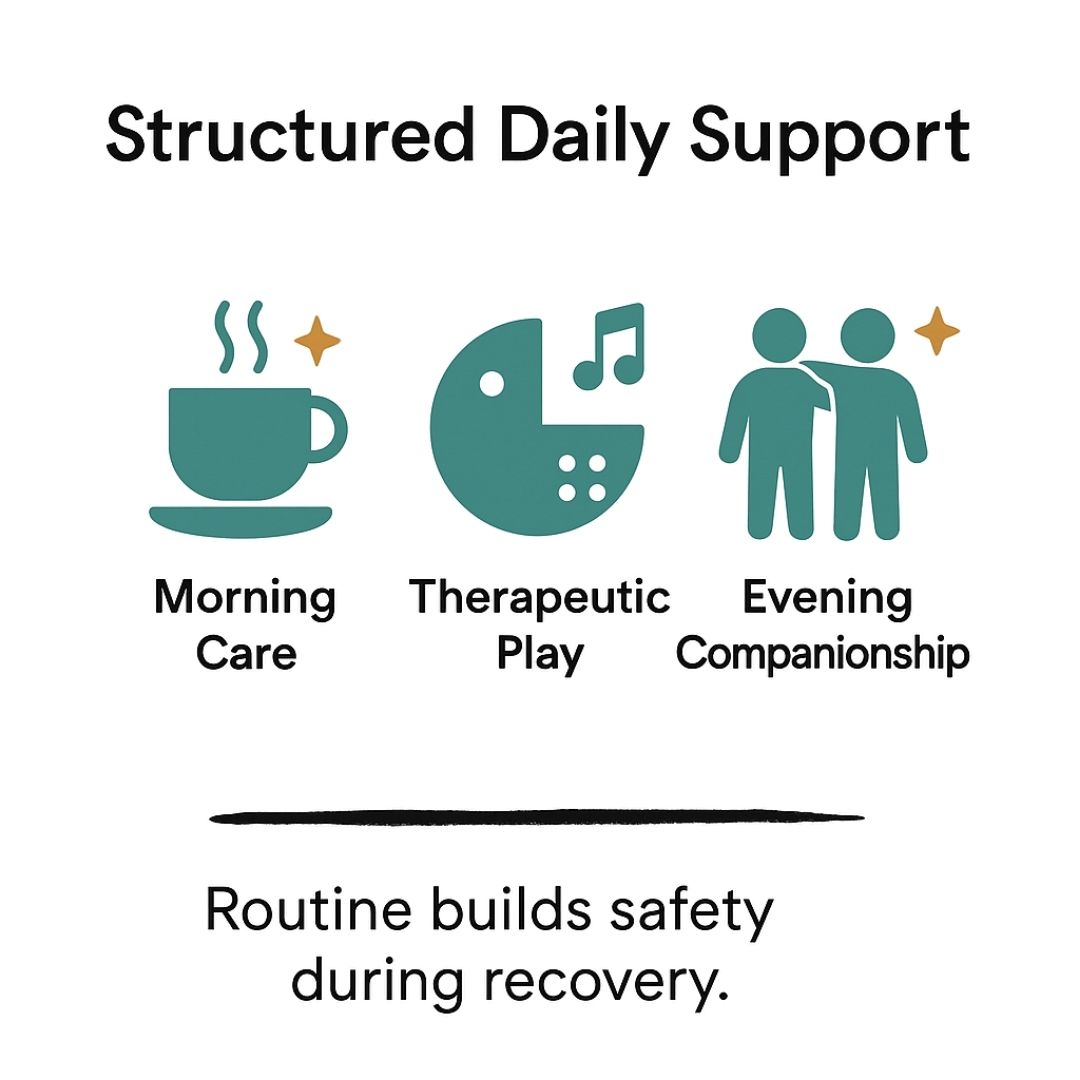
Games became therapy. She was reintroduced to activities she once enjoyed: Ludo, Monopoly, and cards. These were not trivial distractions; they were tools of reconnection. They re-established her cognitive focus, her ability to share space with others, and her engagement with rules and structure.
Over time, these activities helped to ground her. She began looking forward to the evening games with her nephews. Her laughter returned, fortnightly at first, then with increasing regularity. The return of joy became a therapeutic milestone.
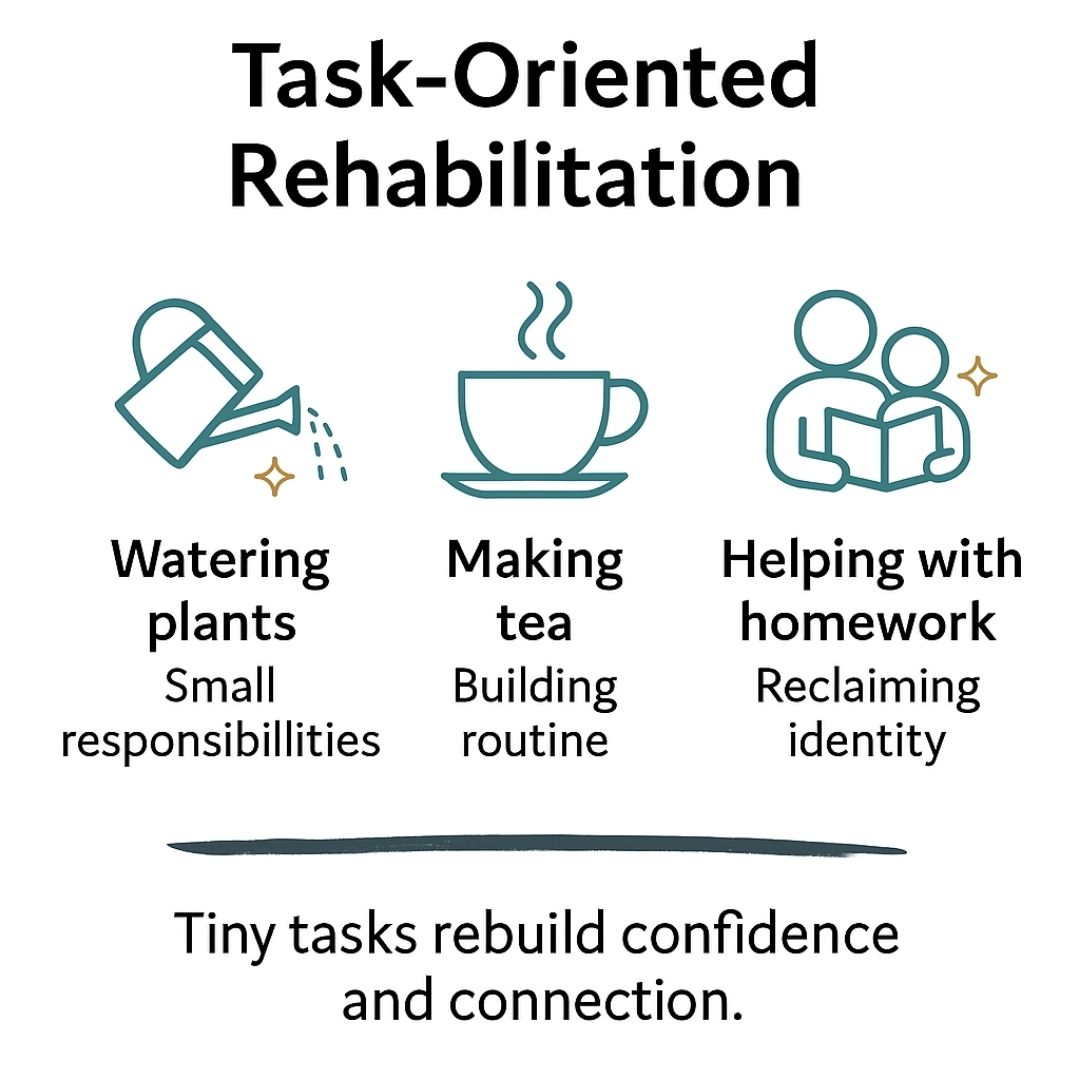
Recognising the need to restore her sense of purpose, the family gave her small responsibilities. She was asked to water the plants. Later, she helped prepare tea. Eventually, she resumed helping her children with homework. These responsibilities weren’t chores; they were symbolic bridges to normalcy.
By reintroducing functional tasks incrementally, the family helped reconstruct her identity from patient to person, from burden to contributor.
The family kept informal notes and reflections, often sharing updates in a family WhatsApp group or nightly discussions. If she reacted poorly to a certain type of interaction, they adjusted. If she responded well to music, they incorporated it more. This fluid, responsive system mirrored clinical team debriefings, though it was entirely driven by empathy and lived experience.
Over eight months, this intensive, community-driven model gradually reversed the psychosis. Her medication was tapered. Her mood stabilised. Her delusions disappeared. Most importantly, she reconnected with her children, a moment the entire family had prayed for.
This story cannot be separated from its cultural context. In Pakistan and many other collectivist societies, the family is the default care unit. There is less individualism and more communal interdependence. While this dynamic can sometimes lead to issues like overprotection or delayed medical-seeking behaviour, in this case, it proved to be a life-saving advantage.
The family’s response was not simply emotional; it was systematic. They understood the emotional train intuitively. Without any professional training, they created a healing environment more effective than what some patients receive in institutional settings.
Their counselling wasn’t scripted, but it was intentional. Their goal wasn’t therapy in the Western sense, but comfort, grounding, and reintegration, the very outcomes mental health professionals strive for.
This case raises important questions for mental health:
In countries with limited psychiatric infrastructure or in developed countries as well, this story shows the importance of what love, care and affection can bring in one's life without any monetary gains.
This is not merely a story of a woman surviving brain cancer. It is a story of a family becoming a multifunctional therapeutic unit, offering presence, patience, and persistence in the face of a psychological collapse. Their daily counselling was not a luxury; rather, it was a necessity. Their words, though untrained, were powerful. Their actions, though informal, were transformational.
“Even if you don’t have money to play a part in someone’s life, you still have your words, and they can bring magic.”
In a time when technology dominates healthcare conversations, this case reminds us of something ancient and deeply human: healing can begin with a voice, a touch, a game, or a shared memory. And sometimes, that’s enough to bring someone back from the edge of the world.
We strongly advise you to talk with a health care professional about specific medical conditions and treatments.
The information on our site is meant to be helpful and educational but is not a substitute for medical advice.
This new YouTube review is from the popular lifestyle blog "Alejandra's Life"
Advice From Body Confidence Coach Cliona Byrne On How To Boost Your Body Confidence During Your Cancer Journey.
Care During Cancer Treatment: Read Matthews Story On How A Cancer Care Parcel Donated To Him Helped During His Cancer Treatment.