When we think about breast cancer, it's often associated with women. However, it's important to recognize that men can develop breast cancer too. Although rare, male breast cancer is a reality, and understanding it can lead to early detection and better outcomes. Let's explore this topic with care and clarity.
Yes, men can develop breast cancer. While men have less breast tissue than women, they still possess breast cells that can become cancerous. According to the American Cancer Society, male breast cancer accounts for less than 1% of all breast cancer cases.
Source: American Cancer Society
Despite its rarity, men are often diagnosed at later stages because breast cancer in men is not widely discussed, leading to delayed awareness and medical consultation.
While the exact causes of male breast cancer remain unclear, certain factors increase the risk of developing the disease.
1. Age
The risk of breast cancer increases with age. Male breast cancer is most commonly diagnosed in men aged 60 and older.
2. Family History and Genetics
A family history of breast cancer can increase the likelihood of developing the disease, especially if close relatives (mother, sister, grandmother) have had breast cancer.
BRCA1 and BRCA2 genetic mutations are linked to an increased risk of breast cancer in both men and women. Men with a BRCA2 mutation have a lifetime risk of developing breast cancer of about 6%, compared to less than 1% for the general male population.
3. Hormonal Imbalances
Estrogen plays a significant role in the development of breast cancer. While men typically have lower levels of estrogen, certain conditions can cause hormonal imbalances, increasing the risk of breast cancer. These conditions include:
4. Obesity
Excess body fat contributes to increased estrogen production, which may raise breast cancer risk Maintaining a healthy weight through diet and exercise may lower the risk of developing breast cancer.
5. Radiation Exposure
Men who have undergone radiation therapy to the chest area (such as for lymphoma) are at a higher risk of developing breast cancer.
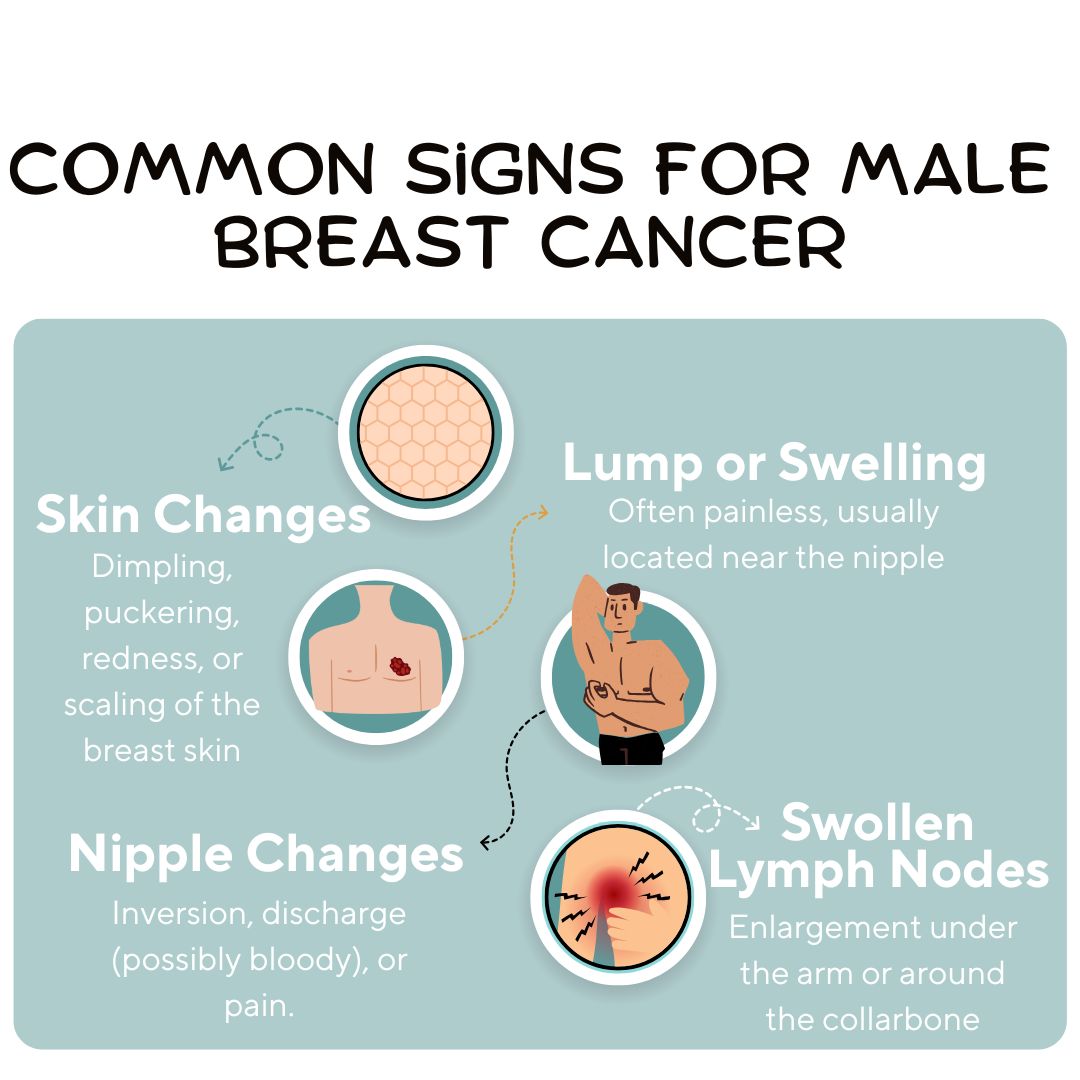
Since men are not routinely screened for breast cancer, early detection relies on awareness of symptoms.
Common signs include:
Diagnosing breast cancer in men involves several steps:
Early diagnosis can significantly improve treatment outcomes.
Treatment for male breast cancer is similar to that for women and may include:
Your healthcare team will tailor treatment based on the cancer’s stage, type, and individual health considerations.
A cancer diagnosis can be overwhelming. It's important to seek support:
Remember, you're not alone, and support is available to help you through this journey.
Although male breast cancer is rare, awareness and early detection are vital. Understanding the risk factors, recognizing symptoms, and seeking prompt medical attention can make a significant difference. If you have concerns or notice any changes, don't hesitate to consult your healthcare provider. Your health is important, and taking proactive steps can lead to better outcomes.
We strongly advise you to talk with a health care professional about specific medical conditions and treatments.
The information on our site is meant to be helpful and educational but is not a substitute for medical advice.
Completing Cancer Treatment Is a Powerful Milestone, but Staying Healthy Afterward Requires Continued Care and Intention. In This Guide, Discover How to Keep Your Immune System Strong and Reduce the Risk of Recurrence Through Smart Lifestyle Choices.
Find cancer support for family with emotional, practical, and financial resources to navigate this journey together.
Discover How Leading Cancer Centres Integrate Research, Nutrition, Personalised Medicine, and AI to Deliver Holistic, Cutting-Edge Cancer Care in the US and UK.