When someone mentions palliative care, what comes to mind? If you're like most people, you probably think of end-of-life care, giving up hope, or preparing for the worst. These assumptions are understandable, but they're also wrong. The reality is that palliative care is one of the most misunderstood areas of healthcare, and these misconceptions prevent countless patients from receiving support that could dramatically improve their quality of life.
If you or someone you love has cancer, understanding what palliative care actually is and isn't could make all the difference in your journey. Let's clear up these misconceptions once and for all.
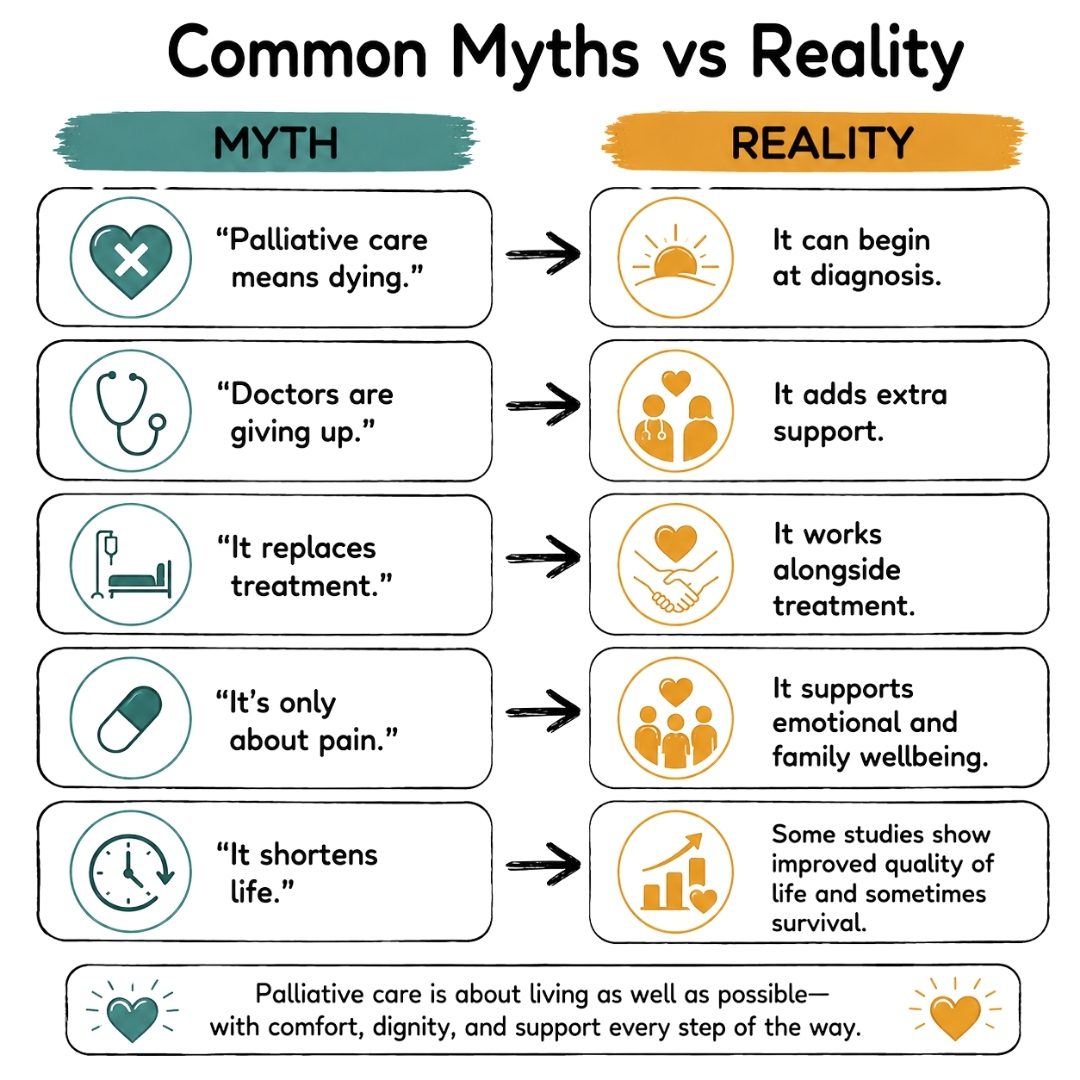
The most common misconception about palliative care is that it's the same as hospice care or that it's only for people who are near the end of life. This is simply not true. While hospice care is specifically designed for people who are no longer seeking curative treatment and have a life expectancy of six months or less, palliative care is something entirely different.
Palliative care is specialised medical care focused on improving quality of life for anyone living with a serious illness, and it can begin at any stage. You can receive palliative care on the day of your diagnosis, during active treatment, and yes, also at the end of life if that time comes. The NHS explains that palliative care can be provided alongside active treatment and at any stage of serious illness. It's not about giving up; it's about living as well as possible while managing the challenges of your illness.
Think of it like managing a chronic condition such as diabetes. You take medication to control blood sugar, but you also focus on maintaining overall well-being. Palliative care works similarly: it helps you cope with the physical, emotional, and practical effects of serious illness while you continue with the treatments that are right for you.
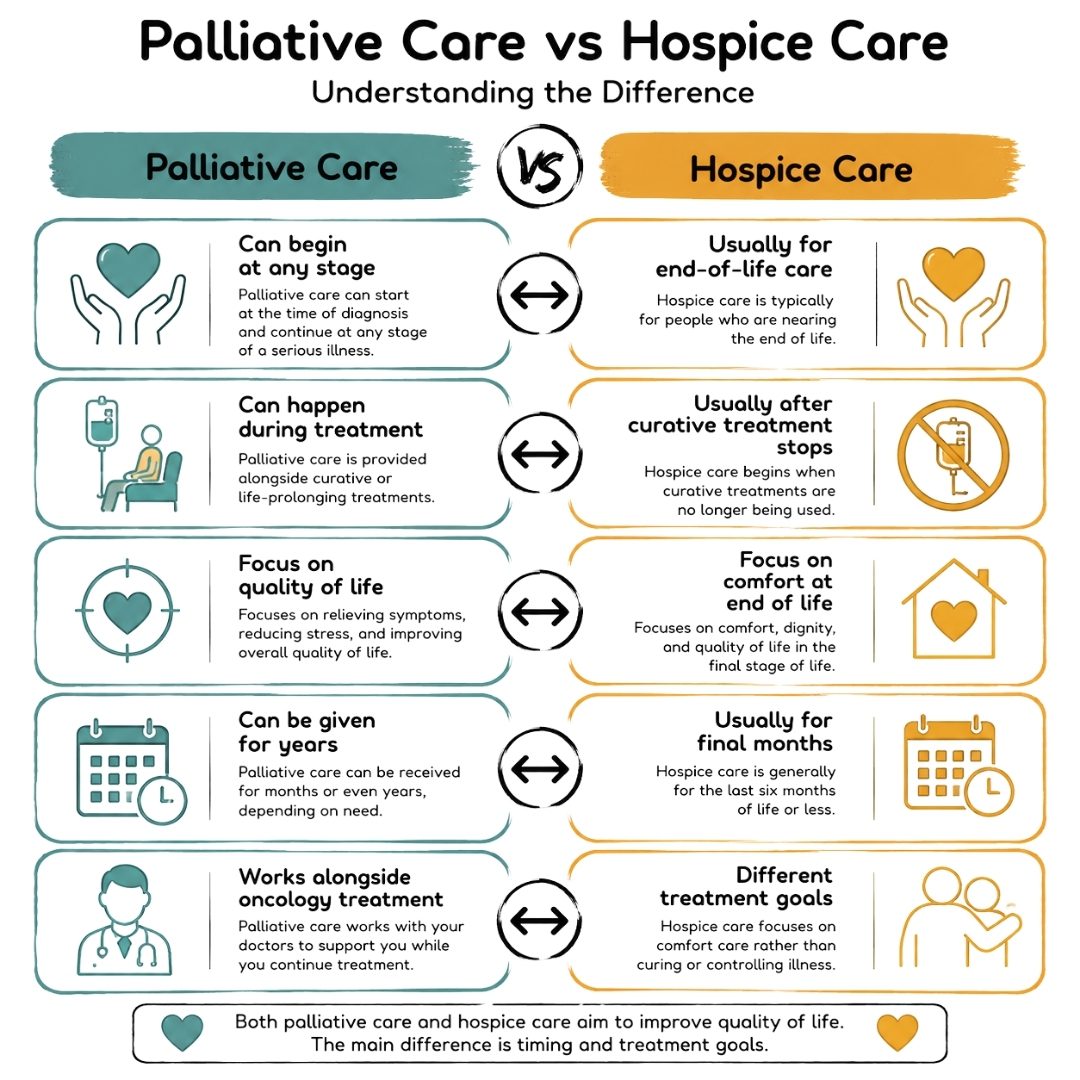
Another persistent myth is that choosing palliative care means you're giving up on curative treatment or "throwing in the towel." This couldn't be further from the truth. Palliative care is designed to work alongside your regular medical treatments, whether that’s chemotherapy, radiation, surgery, immunotherapy, or any other therapies your oncology team recommends.
In fact, many people find that palliative care helps them tolerate their cancer treatments better. When you're managing symptoms such as nausea, pain, fatigue, or anxiety, it supports you in completing your treatment plan as intended. In fact, some research, including a landmark study published in the New England Journal of Medicine, suggests that some patients who receive palliative care early in their treatment may live longer and experience a better quality of life than those who don't.
The goal of palliative care isn't to replace your oncologist or change your treatment plan; it's to add another layer of support that focuses specifically on your comfort and quality of life. Your palliative care team works in partnership with your existing doctors, ensuring that treatment and quality of life go hand in hand.
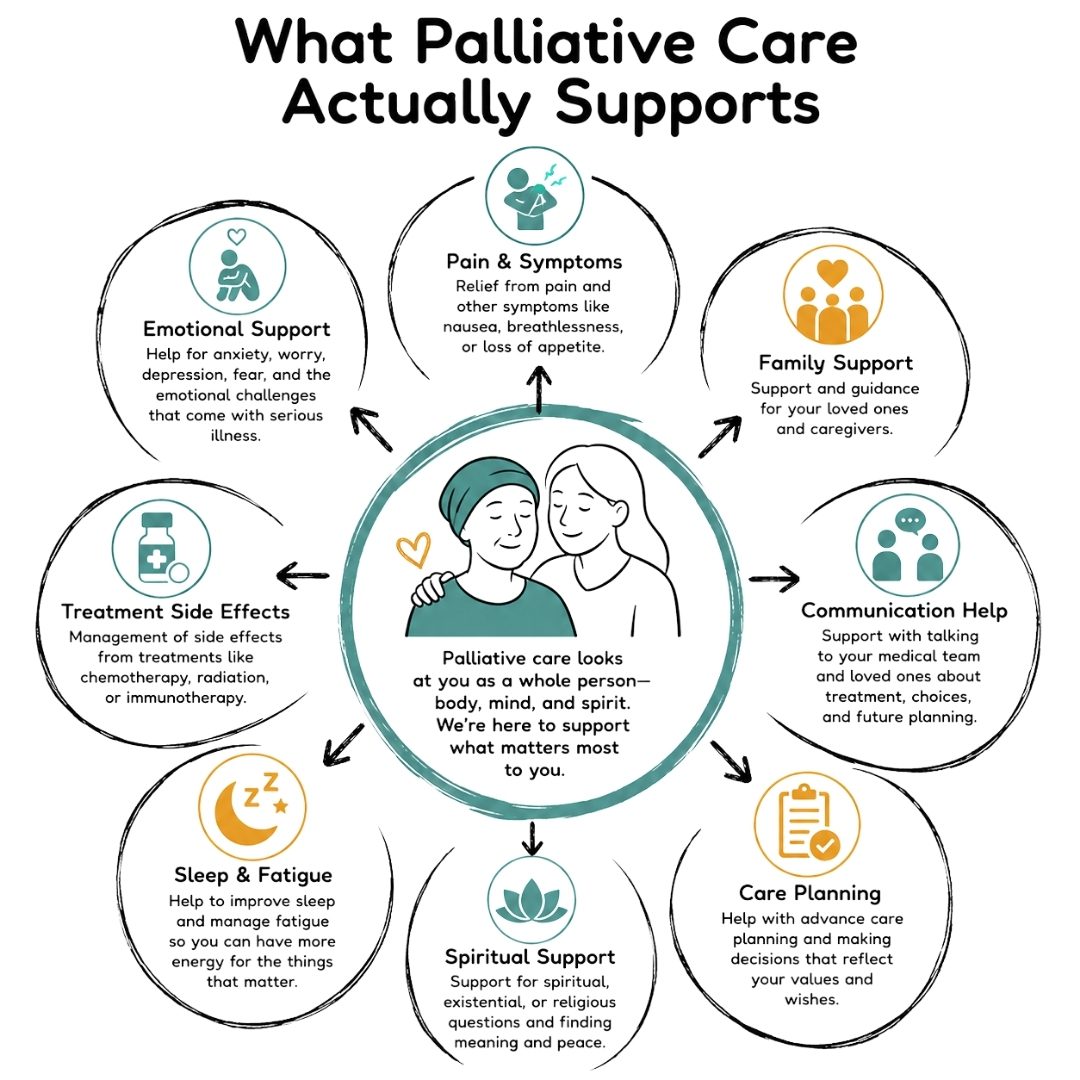
Many people think palliative care is simply about controlling pain. While pain relief is often an important part of it, this view drastically underestimates what palliative care can actually offer. At its core, palliative care takes a holistic approach to your wellbeing, addressing the full range of challenges that come with serious illness.
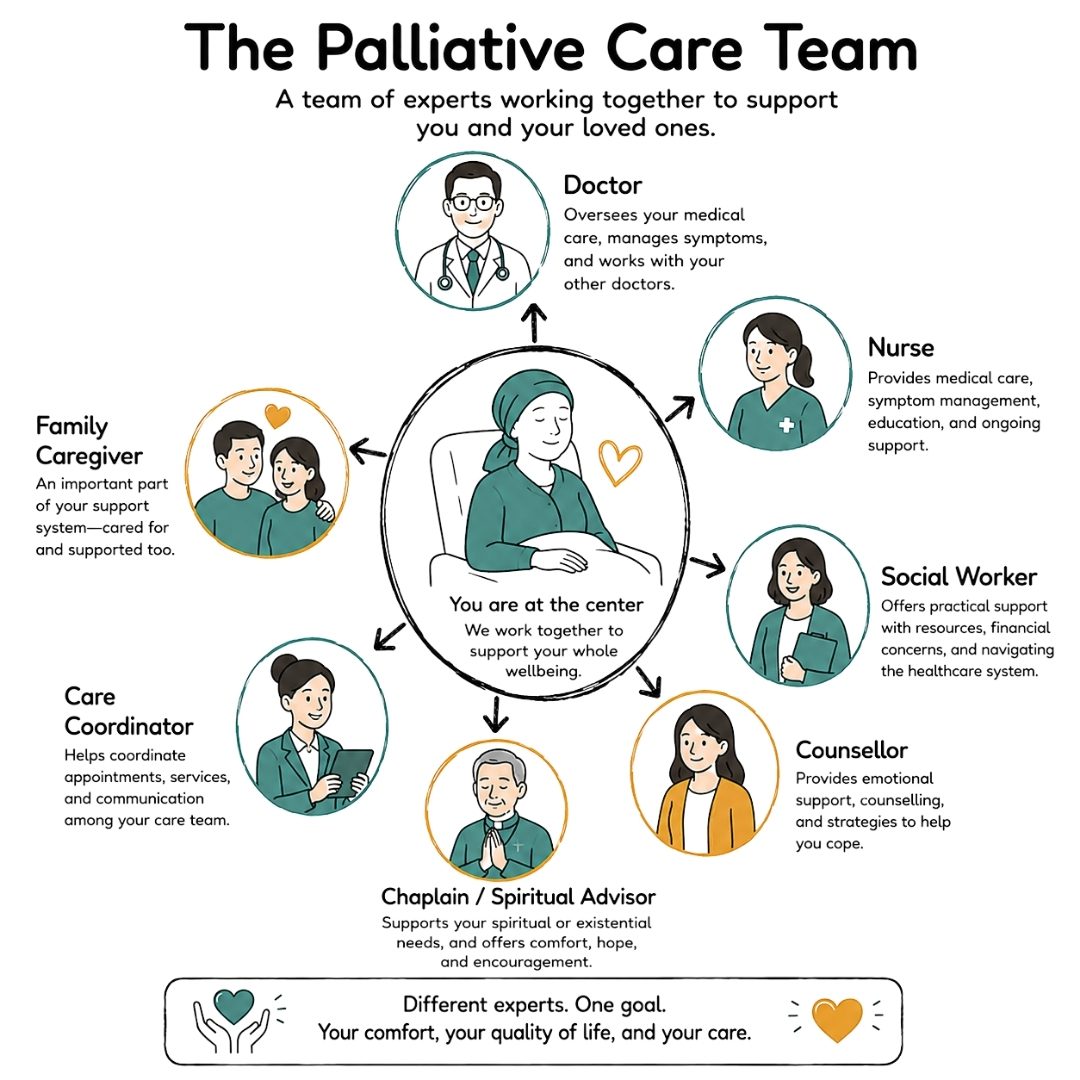
A palliative care team typically includes doctors, nurses, social workers, chaplains, and other specialists who work together to help with:
This comprehensive approach recognises that you're not just a collection of symptoms: you're a whole person with relationships, values, hopes, and concerns that extend far beyond your medical condition. Palliative care is designed to honour that reality, supporting both your health and your humanity.
When a healthcare provider suggests palliative care, it doesn't mean they've lost hope or given up on your recovery. This recommendation demonstrates their commitment to treating you as a whole person, rather than focusing on the cancer itself. It shows they want to ensure you have the best possible quality of life throughout your treatment journey.
Many doctors are beginning to recommend palliative care earlier in the process because they've seen firsthand how much it can help their patients. It's not a sign of defeat; it's a sign of comprehensive, thoughtful medical care that values both your treatment and your wellbeing.
If your doctor raises the option of palliative care, take it as an opportunity to have an open conversation. Ask how it would work alongside your current treatments, what specific benefits they expect for you, and how the palliative care team would coordinate with your existing medical team. These discussions can help you understand the recommendation fully and see it as an added layer of support, not a withdrawal of care.
One of the most troubling myths about palliative care is the belief that it somehow hastens death or encourages people to die sooner. Research consistently shows the opposite is true. Some studies have found that patients receiving early palliative care may live longer and experience better quality of life. The National Cancer Institute notes that palliative care can improve quality of life for both patients and families dealing with serious illness.
This makes sense when you consider that palliative care helps people manage symptoms that might otherwise interfere with their treatment or overall health, such as pain, anxiety, poor sleep, or loss of appetite. It may help people cope better with treatment by improving sleep, nutrition, emotional well-being, and symptom control. This can help people feel more physically and emotionally able to cope with treatment.
Palliative care is not about shortening life. It's about living as fully and comfortably as possible for however long you have: whether that's months, years, or decades.
Cancer doesn’t only affect the person who has been diagnosed; it impacts everyone who cares about them. Palliative care recognises this reality and extends its support to family members and loved ones as well.
Family members and caregivers can access counselling, join support groups, and receive practical guidance on how to care for their loved one while also taking care of themselves. This support is particularly valuable for cancer caregivers, who often experience their own physical and emotional challenges while supporting someone through cancer treatment.
The palliative care team can also help facilitate difficult conversations between family members about treatment preferences, future planning, end-of-life wishes, and practical concerns. These conversations are never easy, but having skilled professionals to guide them makes the process more constructive and less overwhelming.
By supporting both patients and families, palliative care strengthens the entire circle of care, ensuring that no one feels alone in the journey.
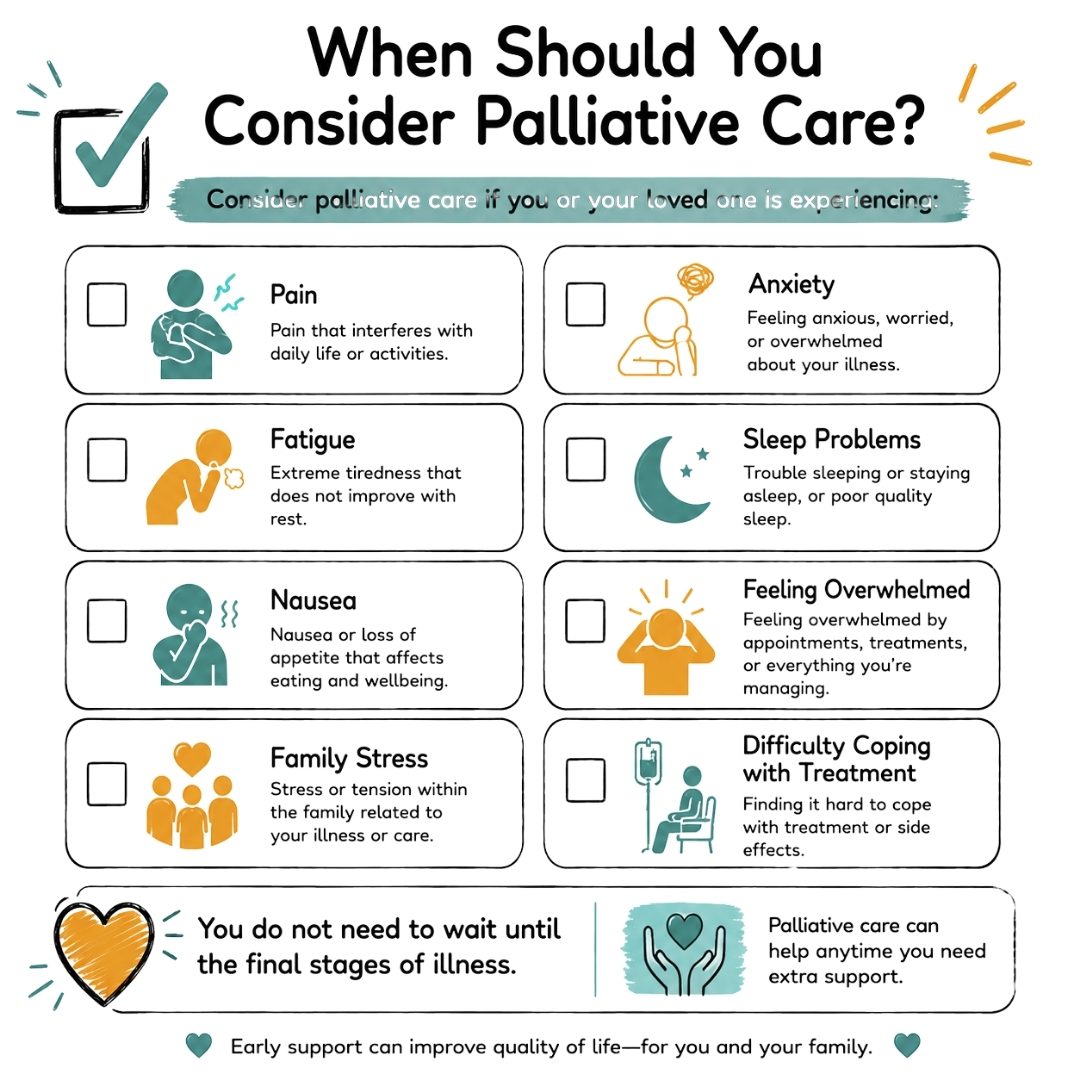
So when might palliative care be helpful? The simple answer is: probably sooner than you think. It isn’t reserved for the final stages of illness; it can be helpful from the moment symptoms or stress begin to affect daily life.
Consider seeking palliative care if you're experiencing:
You don't need to wait until symptoms become severe or until other treatments aren't working. In fact, the earlier palliative care begins, the greater the benefit you're likely to receive. Early support can ease the burden of illness, strengthen resilience, and help you and your family feel more in control.
If you think palliative care might be helpful, the best first step is talking with your primary oncologist or GP. They can provide referrals to palliative care specialists and help you understand how this care would fit into your overall treatment plan.
You don’t need to have everything figured out before you bring it up. A simple, honest opener like this can work well:
“I’ve been thinking about palliative care and wondering if it might help me manage things better. Could we talk about whether it would be right for me?”
You might also want to discuss this option with your family, particularly if they share some of the common misconceptions about palliative care. Explaining that this is about improving your quality of life, not a sign of giving up on treatment, can help them understand the value and support your decision.
Open, honest conversations with both your medical team and loved ones make it easier to access the benefits of palliative care early, ensuring you receive the comfort and guidance you deserve.
Palliative care isn't what most people think, and that's actually wonderful news. Instead of being a last resort or a sign of giving up, it's a valuable form of support that can improve your quality of life from the very beginning of a cancer diagnosis.
Understanding what palliative care really offers: comprehensive symptom management, emotional support, family counselling, and close coordination with your existing medical team, can help you make informed decisions about your care. It's not about dying; it's about living as well as possible, with dignity and comfort.
For many people dealing with cancer, palliative care provides a greater sense of control and comfort that makes an enormous difference in their day-to-day experience. By clearing up these common misconceptions, we hope more patients and families will feel empowered to explore whether palliative care might be right for them.
Remember, choosing palliative care doesn't mean you're giving up hope: it means you're prioritising your wellbeing and quality of life, which is one of the most hopeful and courageous decisions you can make.
We strongly advise you to talk with a health care professional about specific medical conditions and treatments.
The information on our site is meant to be helpful and educational but is not a substitute for medical advice.
Addressing the reality that not all cancer patients have equal access to cutting-edge treatments
Navigating travel insurance for cancer can feel impossible. Our guide simplifies pre-existing conditions, finding the right cover, and what you must declare.
Even amid treatments and tough days, life offers moments worth celebrating, bring connection, meaning, and strength. This guide shows how to honour milestones and cherish everyday moments without pressure.