When breast cancer travels from the breast and nearby lymph nodes to other, more distant parts of the body, we call it metastatic breast cancer. You might also hear it referred to as secondary breast cancer or Stage IV.
While a diagnosis of metastatic breast cancer means the cancer isn't curable, it's incredibly important to know that it is treatable. For many people, it can be managed as a long-term condition for years.
Hearing the words metastasis and breast cancer can be incredibly daunting, so let's break down what it actually means.
A good way to visualise metastasis is to picture a dandelion clock. When the wind blows, it scatters the seeds far and wide. If those seeds land in fertile soil, they can take root and grow into new dandelions.
Cancer cells can behave in a similar way. Sometimes, cells break away from the original tumour in the breast. They can then travel through the bloodstream or the lymphatic system (the body's drainage and immune network) to other places in the body.
If these stray cells settle somewhere new—like the bones, liver, lungs, or brain—they can start to multiply and form new tumours. These new tumours are the metastases.
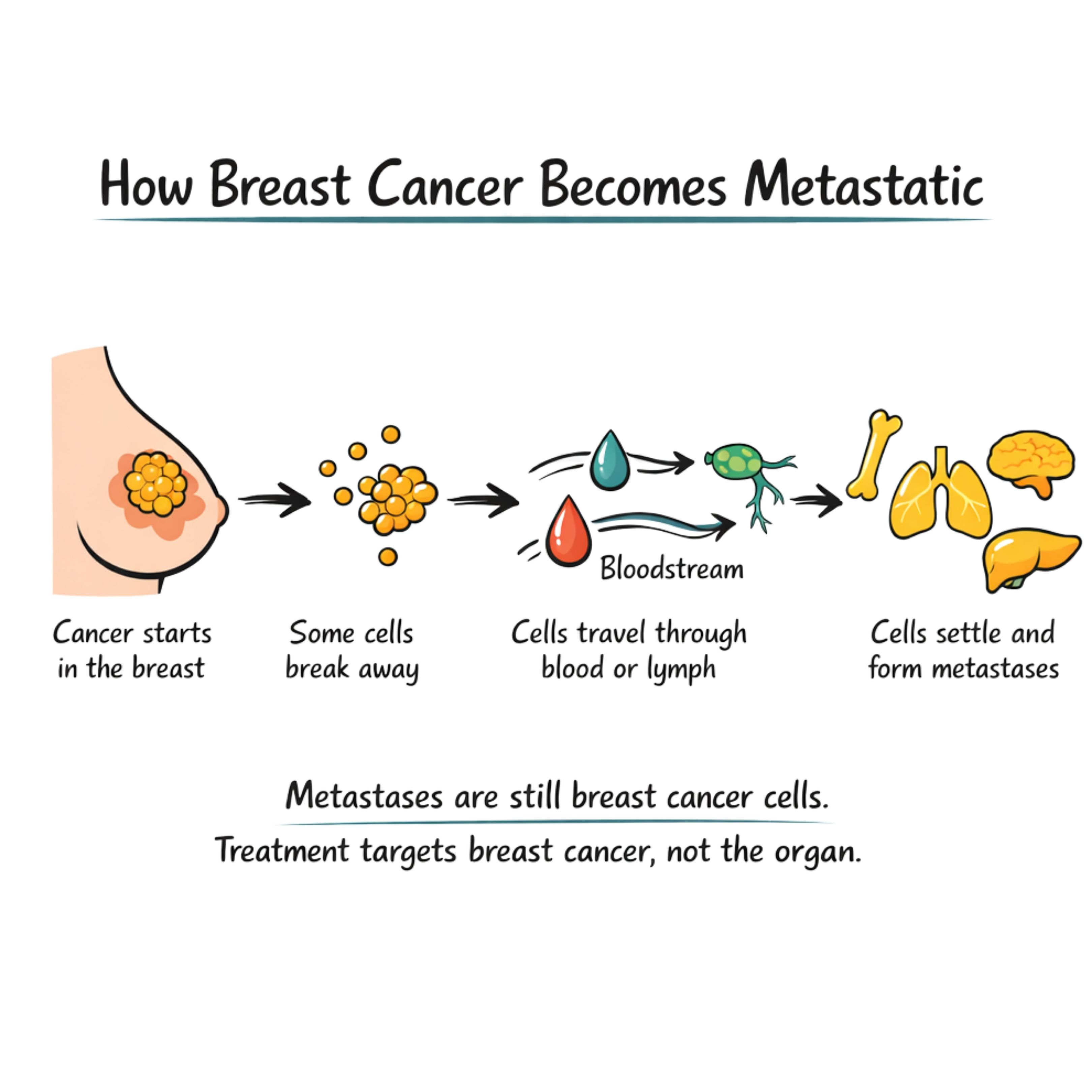
Here’s a crucial point: if breast cancer spreads to the lungs, it is still breast cancer, not lung cancer. The cells that make up that new tumour are breast cancer cells, and they'll be treated with drugs that target breast cancer.
This is different from a local recurrence, which is when cancer comes back in the same breast or on the chest wall after treatment. Metastasis means the cancer has appeared in a completely new and distant organ.
With metastatic breast cancer, the goal of treatment changes. Instead of aiming for a cure, the focus shifts to controlling the cancer's growth and spread, managing symptoms, and preserving your quality of life for as long as possible.
Despite how serious this is, there's a surprising lack of public awareness. It is estimated that thousands of people are living with secondary (metastatic) breast cancer, and it remains a leading cause of cancer death for women between 40-59 years old in many countries.
Recent surveys have highlighted this gap, finding that a significant percentage of adults had never even heard of it. Worryingly, many mistakenly believe it can be cured.
Living with this diagnosis requires ongoing, specialised care. Gaining a solid understanding of the basics is the first step toward feeling more in control. For a broader look at what this diagnosis means, you might find our overview of metastatic cancer helpful. Building this foundational knowledge can help turn confusion into clarity and provide a much-needed starting point for the road ahead.
When breast cancer begins to spread, it tends to follow certain pathways in the body. Knowing what signs to look for gives you the power to spot changes early and bring them up with your medical team.
It’s completely normal for many of these symptoms to be caused by something far less serious, but being tuned in to your body is one of the most important things you can do. The goal isn't to cause alarm, but to equip you with the knowledge to have clear, confident conversations with your doctors.
The most common places breast cancer spreads to are the bones, lungs, liver, and brain. The symptoms you might notice are usually linked to where the cancer cells have settled.
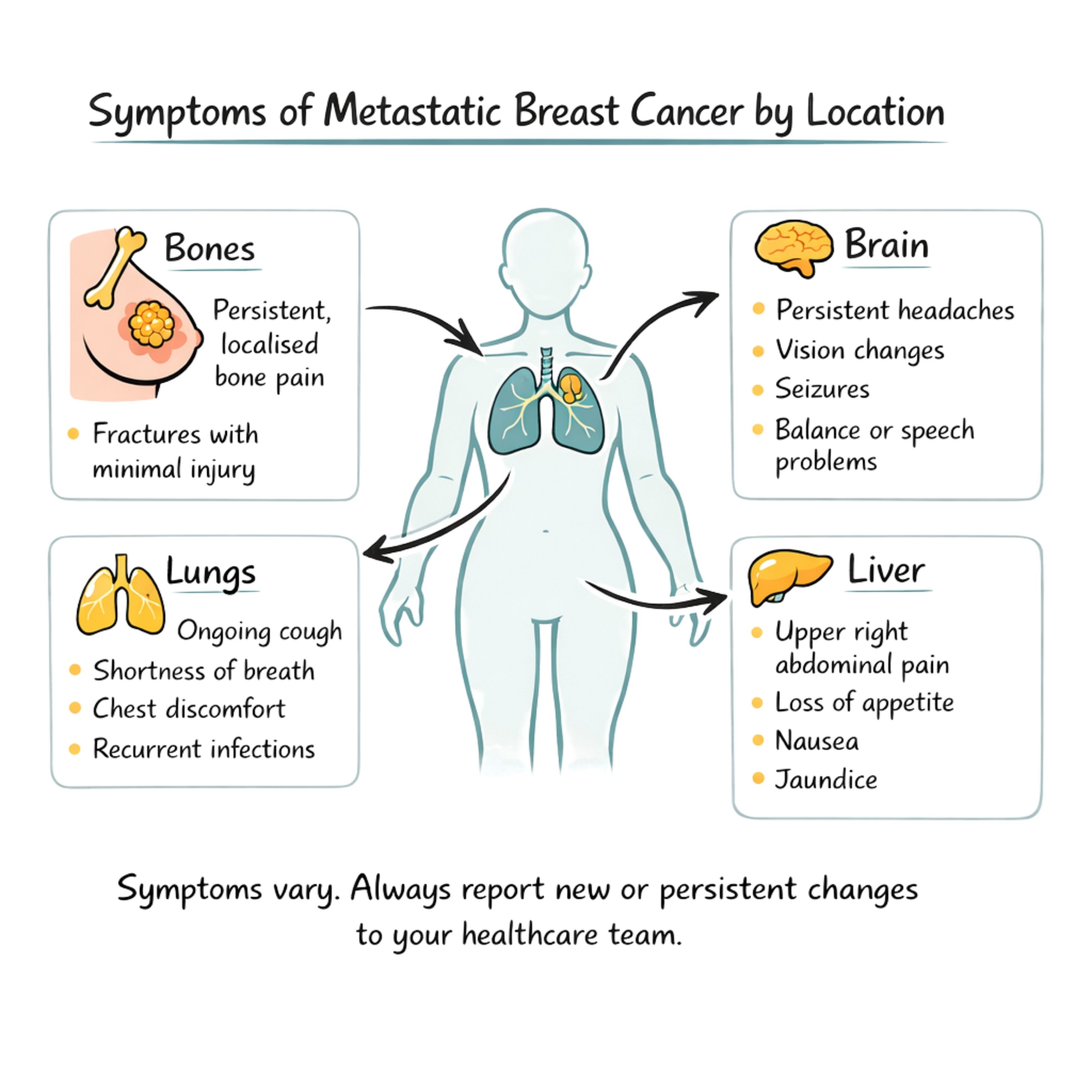
Bone metastases are the most frequent complication of advanced breast cancer, affecting roughly 70% of people with a metastatic diagnosis. Cancer cells often find their way to the spine, pelvis, ribs, and the long bones of your arms and legs.
The classic first sign is a new, nagging pain in a specific spot. This isn't like a muscle strain that eases with rest; it's often a deep, dull ache that sticks around and can even feel worse at night.
Other signs to watch for include:
The lungs are another common destination for breast cancer cells. When they settle there, they can form one or more tumours that might start to get in the way of normal lung function.
Often, lung metastases don't cause any symptoms at first. When they do, it's easy to mistake them for a common cold or bronchitis. The biggest clue is that the symptoms don't go away—they linger or gradually get worse.
A cough that just won't clear up, or a new feeling of breathlessness, should always be discussed with your healthcare provider. Think of these as important signals from your body that need looking into.
Symptoms of breast cancer that has spread to the lungs can include:
You might also notice a wheezing sound when you breathe. Our guide on wheezing with lung cancer offers more detailed information on this specific symptom.
While less common than bone or lung metastases, it's still vital to know the signs of spread to the liver or brain.
Liver metastases can be particularly subtle and may not cause symptoms until they are more advanced. When they do appear, you might notice a dull ache in your upper-right abdomen, a poor appetite, unexplained weight loss, or nausea. A key sign to watch for is jaundice, which causes a yellowing of the skin and the whites of the eyes.
When breast cancer spreads to the brain, the symptoms are usually neurological. This can look like:
The table below summarises the key symptoms to be aware of for each common site of metastasis.
| Site of Metastasis | Potential Symptoms to Watch For |
|---|---|
| Bones | New, persistent pain (often a dull ache), bones that fracture easily, back/neck pain, numbness in legs, confusion, nausea, or intense thirst. |
| Lungs | A persistent cough that won't go away, shortness of breath, ongoing chest pain or discomfort, repeated chest infections. |
| Liver | Abdominal pain (especially upper right side), loss of appetite, unexplained weight loss, nausea, fatigue, or yellowing of the skin/eyes (jaundice). |
| Brain | Persistent headaches, vision changes (blurry/double vision), seizures, dizziness, balance problems, weakness/numbness, or personality/mood changes. |
Remember, your healthcare team is your best resource. Reporting any new, unexplained, or persistent symptoms is always the right thing to do. It allows them to investigate the cause and make sure you get the right support as quickly as possible.
When there's a possibility that breast cancer has spread, your medical team will start a careful investigation. It can feel like a lot to take in, but understanding what each test is for can make the whole process feel less like a mystery and more like a clear plan.
Think of it as your team creating a detailed map of what's going on. They act like detectives, using a range of tools to build a complete picture of the cancer. This picture is essential because it allows them to create a treatment plan that’s tailored specifically to you.
The first step is usually a series of scans to look for any signs of cancer cells in other parts of the body. These tests are non-invasive and give your doctors a visual guide.
There are a few different scans they might use, each providing a unique view:
These scans are the bedrock of diagnosis, helping doctors to pinpoint the exact location and size of any secondary tumours.
Alongside the scans, blood tests give a wealth of information about your general health and can drop hints about the cancer's activity. A standard blood test will check how well your liver and kidneys are working and look at your blood cell counts.
Your team might also check for specific tumour markers – substances in the blood that can rise when cancer is present. One of these is CA 15-3. It’s not a standalone diagnostic tool, but a rising level can sometimes suggest the cancer is active or spreading. You can learn more about the role of the CA 15-3 test in our detailed guide.
The final, definitive step is nearly always a biopsy. This means taking a tiny sample of tissue from one of the areas of concern identified on your scans.
A pathologist examines these cells under a microscope to be absolutely sure they are breast cancer cells. This is a critical step because it also re-confirms the cancer's specific features, like its hormone receptor and HER2 status. Sometimes, these characteristics can change from the original primary tumour.
This detailed information about the cells is the cornerstone of modern, personalised treatment. It ensures your plan is aimed squarely at the unique biology of the cancer, giving you the best possible chance of success.
This thorough diagnostic journey is crucial. The National Audit of Metastatic Breast Cancer found that a significant percentage of patients survived for at least one year. The report also highlighted the importance of teamwork, with many cases having documented input from a multidisciplinary team at diagnosis. This ensures a comprehensive, well-thought-out strategy from the very beginning. To learn more, you can read the full NATCAN report on their website.
When breast cancer spreads, or metastasises, the entire approach to treatment changes. At this stage, the goal isn't necessarily a cure in the traditional sense. Instead, the focus shifts to managing the cancer as a chronic condition, much like someone might manage diabetes or heart disease over the long term. Your medical team’s priority is to control the cancer's growth, ease your symptoms, and ensure you have the best possible quality of life.
Thankfully, the toolkit for managing metastatic disease has grown immensely. We’ve moved far beyond a one-size-fits-all strategy. Today, your treatment plan will be highly personalised, built around the unique biology of your cancer, where it has spread, and what’s most important to you. This is a collaborative effort, involving a multidisciplinary team of oncologists, specialist nurses, radiologists, and other experts all working together for you.
Before treatment starts, doctors need a clear picture. They follow a specific sequence of tests to confirm what they’re dealing with.
The diagnostic process typically involves imaging to spot any suspicious areas, blood tests to look for tell-tale markers, and finally, a biopsy to get a definitive confirmation.
Each step provides a deeper layer of information, giving your team everything they need to design the most effective plan for you.
The cornerstone of treating metastatic breast cancer is systemic therapy. Think of these treatments as soldiers travelling through your bloodstream to fight cancer cells wherever they might be hiding in your body. This approach is essential because metastasis, by its nature, means the cancer is no longer confined to one place.
The main types of systemic therapy are:
Often, these therapies are used in combination to hit the cancer from different angles. Someone with HR+ cancer, for instance, might receive a hormonal therapy drug alongside a targeted one called a CDK4/6 inhibitor, a pairing that makes the hormonal treatment work even better.
So, how does your oncology team choose the right combination for you? It's a careful, multi-faceted process.
First, they look at the cancer's subtype. Is it HR-positive, HER2-positive, or triple-negative? This is the single most important piece of the puzzle, usually confirmed by a biopsy of one of the metastatic spots. The cancer's fundamental biology dictates which drugs will have the best chance of working.
Next, they consider where the cancer has spread. A few small spots on the bone might be managed very differently from widespread disease affecting the liver or lungs. The location and extent of the metastases help determine the urgency and intensity of the treatment needed.
Your personal health and treatment history also play a huge role. Previous treatments, your overall fitness, and any other medical conditions you have will be taken into account to ensure the chosen therapy is both effective and tolerable for you.
Finally, and most importantly, your own priorities and preferences are at the heart of every decision. Your team will talk you through the potential benefits and side effects of each option, helping you make a choice that aligns with your life goals. It’s all about finding that delicate balance between controlling the cancer and protecting your day-to-day wellbeing. And as genetic analysis gets more sophisticated, this process is becoming even more precise; you can read more about how decoding DNA brings personalised chemotherapy closer than ever.
While systemic therapies provide the foundation, local therapies are used to tackle problems in specific areas. These treatments aren’t designed to eliminate all the cancer, but they can be incredibly effective at managing symptoms like pain and dramatically improving quality of life.
The main local treatments include:
These local treatments are brought in strategically, when and where they are needed, to solve problems as they arise. They are a crucial part of the overall management plan, keeping your comfort and function as the top priority. Your oncologist will work closely with other specialists, like radiation oncologists and surgeons, to weave these treatments seamlessly into your care.
Receiving a metastatic breast cancer diagnosis changes everything, but it's a path you don't have to walk alone. While medical treatment is the cornerstone of your care, learning to navigate the daily realities is just as crucial for protecting your quality of life. Think of this section as a practical toolkit—real-world advice from someone who gets it, designed to help you feel more in control.
The goal here is to step outside the hospital walls and talk about the human side of this experience. We’ll explore practical ways to manage common side effects, look after your emotional wellbeing, and plug into the right support systems. By building a strong foundation of practical and emotional resources, you and your family can feel less overwhelmed and more prepared for what's ahead.
Living with ongoing treatment often means learning to live with persistent side effects. Fatigue and pain are two of the most frequent hurdles, but there are effective ways to cope.
The fatigue that comes with metastatic cancer isn't just ordinary tiredness; it can be a profound, bone-deep exhaustion. Pacing yourself is everything. Try to plan important activities for times of the day when you know you have more energy, and never be afraid to ask for help with everyday chores like shopping or housework. It might sound counterintuitive, but gentle exercise, even a short walk, can genuinely give you a little energy boost.
Pain management is another huge piece of the puzzle. Your oncology team has a whole arsenal of options to help, from medications to complementary therapies. Keeping a simple pain diary can be incredibly useful—just jot down when it happens, what it feels like, and what seems to make it better or worse. This helps your doctor pinpoint the most effective solution for you. For physical side effects like lymphoedema, which can result from breast cancer treatments, learning about supportive therapies can be empowering; you might want to explore a complete guide to lymphatic drainage massage to understand your options.
The emotional weight of a metastatic diagnosis is immense. It’s completely normal to feel a whole tangle of emotions—anxiety, fear, and a deep sense of uncertainty. Finding healthy outlets to process these feelings is a vital part of your overall care.
Many people find enormous relief in talking to a professional, like a counsellor or psychologist who specialises in working with cancer patients. Support groups, whether online or in person, can also be a lifeline. There's something incredibly powerful about connecting with others who truly understand what you're going through without you having to explain a thing.
Talking openly with your loved ones is also key. Letting them know how you're feeling and what you need can strengthen your bonds and help you get the kind of support you actually want. And remember, it's more than okay to set boundaries and take time for yourself when you feel emotionally drained. Our guide offers more thoughts on 30 things you should know about living with cancer.
"Living well with metastatic cancer is about finding a new balance. It's about honouring your feelings, accepting support, and focusing on what brings you joy and comfort each day."
This balance looks different for everyone. Whether it's mindfulness, rediscovering a creative hobby, or just spending quiet time in nature, finding what replenishes your spirit is a powerful act of self-care.
Beyond the physical and emotional, practical support can make a world of difference. This covers everything from financial advice to help with day-to-day logistics. The social workers attached to your hospital are fantastic resources for navigating benefits, grants, and other types of assistance.
Palliative care is another crucial layer of support that is frequently misunderstood. It isn't just for the end of life. Palliative care is specialised medical care focused on giving you relief from the symptoms and stress of a serious illness, with the goal of improving quality of life for both you and your family. The team works right alongside your oncologist to help manage pain, fatigue, nausea, and other symptoms, making your comfort a top priority.
The wider context of breast cancer highlights just how important these support systems are. Breast cancer is the most common cancer in women globally, and incidence rates have climbed in recent decades. While it's fantastic news that mortality rates have fallen in many countries, metastatic breast cancer continues to be a major challenge, with its impact on wellbeing and the economy projected to grow.
Getting a metastatic breast cancer diagnosis can feel overwhelming, and it's natural to have a lot of questions swirling in your mind. We've put together some straightforward answers to the things people most often ask, helping you get the clear information you need.
Right now, metastatic breast cancer isn't considered curable, but it is very much treatable. The main goal of treatment is to manage it as a long-term, chronic condition.
Think of it less like a sprint to a cure and more like a marathon of management. The focus is on controlling the cancer's growth, keeping symptoms at bay, and making sure you have the best possible quality of life. With the incredible pace of medical advances, many people are living well for many years with the disease.
Absolutely not. It's easy to feel this way, but the reality is much more complex. Sometimes, a handful of cancer cells are tough enough to survive the initial treatment. These cells can lie dormant, sometimes for many years, before they wake up and spread.
This isn't a reflection on you, your doctors, or the treatments you had. It’s simply a characteristic of the cancer itself.
It's so important to remember that metastasis is about the behaviour of the cancer, not a failure of past treatments. The focus now shifts completely to managing the disease as it is today.
Understanding this helps everyone move forward, away from any sense of blame and towards a clear, proactive plan for the future.
Living with metastatic breast cancer does mean that ongoing treatment and check-ups will become part of your new normal. You might experience side effects like fatigue, but many people find a new rhythm and continue to work, travel, and do the things they love.
Your healthcare team is there to help you figure this out. Specialist nurses and palliative care experts are fantastic at helping you manage symptoms and side effects. Their entire focus is on making sure you can live as well as possible, with your comfort and priorities leading every decision.
Don't forget, your hospital's breast care nurse is an amazing resource and often your best first point of contact. They can plug you into local support groups and services, helping you build a community you can lean on.
We strongly advise you to talk with a health care professional about specific medical conditions and treatments.
The information on our site is meant to be helpful and educational but is not a substitute for medical advice.
Learn how to support someone with cancer. This guide provides actionable advice on what to say, how to help, and providing meaningful emotional support.
Struggling to find the right words? Discover 8 types of comforting words for someone with cancer, with examples and tips for meaningful support.
Learn how surgical scars can affect movement, comfort, lymphatic health, and confidence long after cancer treatment.