Manual Lymphatic Drainage (MLD) is a gentle massage technique using soft, rhythmic strokes to encourage lymph flow and relieve swelling. It’s widely recognized for easing lymphoedema after surgery, managing chronic fluid build-up, and supporting overall immune function. Below, you’ll find a concise introduction to why MLD is an essential component of modern healthcare.
Manual Lymphatic Drainage gently guides excess fluid toward nearby lymph nodes. As a result, swelling diminishes and immune function receives a boost. Clinicians often prescribe MLD for post-surgical recovery and persistent fluid retention.
MLD is never a stand-alone solution. Instead, it integrates with compression garments, tailored exercises and skincare routines. Each session begins with a thorough assessment to match the technique to individual needs.
Key Takeaway
Gentle strokes in MLD act like soft pumps, directing surplus lymph along natural pathways toward draining nodes.
Below is a summary of MLD’s core elements, illustrating how its technique, aims and clinical applications align:
| Aspect | Description |
|---|---|
| Technique | Very light, rhythmic hand strokes direct fluid toward lymph nodes |
| Goals | Reduce swelling, support immune function |
| Conditions | Post-surgical lymphoedema, chronic swelling |
Throughout this guide, you will explore the physiology of lymph flow, the history of MLD, the clinical evidence supporting its use, how to locate trained therapists, session expectations and safe self-care techniques at home. You might also find useful insights in our webinar on the lymphatic system: The Lymph and the Short of It.
MLD is particularly well-suited for individuals recovering from cancer surgery, liposuction or traumatic injuries. Chronic conditions like lymphoedema often improve when MLD is combined with compression and exercise. Even the skin’s health can benefit as fluid balance and nutrient exchange normalise.
The following sections break down each of these topics step by step, offering both academic context and practical advice.
The lymphatic network collects excess fluid and returns it to the bloodstream. When vessels or one-way valves become blocked, fluid backs up and causes swelling, discomfort and even skin changes. Grasping this process lays the groundwork for appreciating why manual lymphatic drainage (MLD) can make a real difference.
MLD therapists use very light, rhythmic strokes to guide stagnant fluid toward healthy lymph nodes. Think of gently wringing out a sponge, movement is encouraged without deep pressure. In delicate, congestion-prone tissues, this subtle touch reactivates the body’s natural flow.
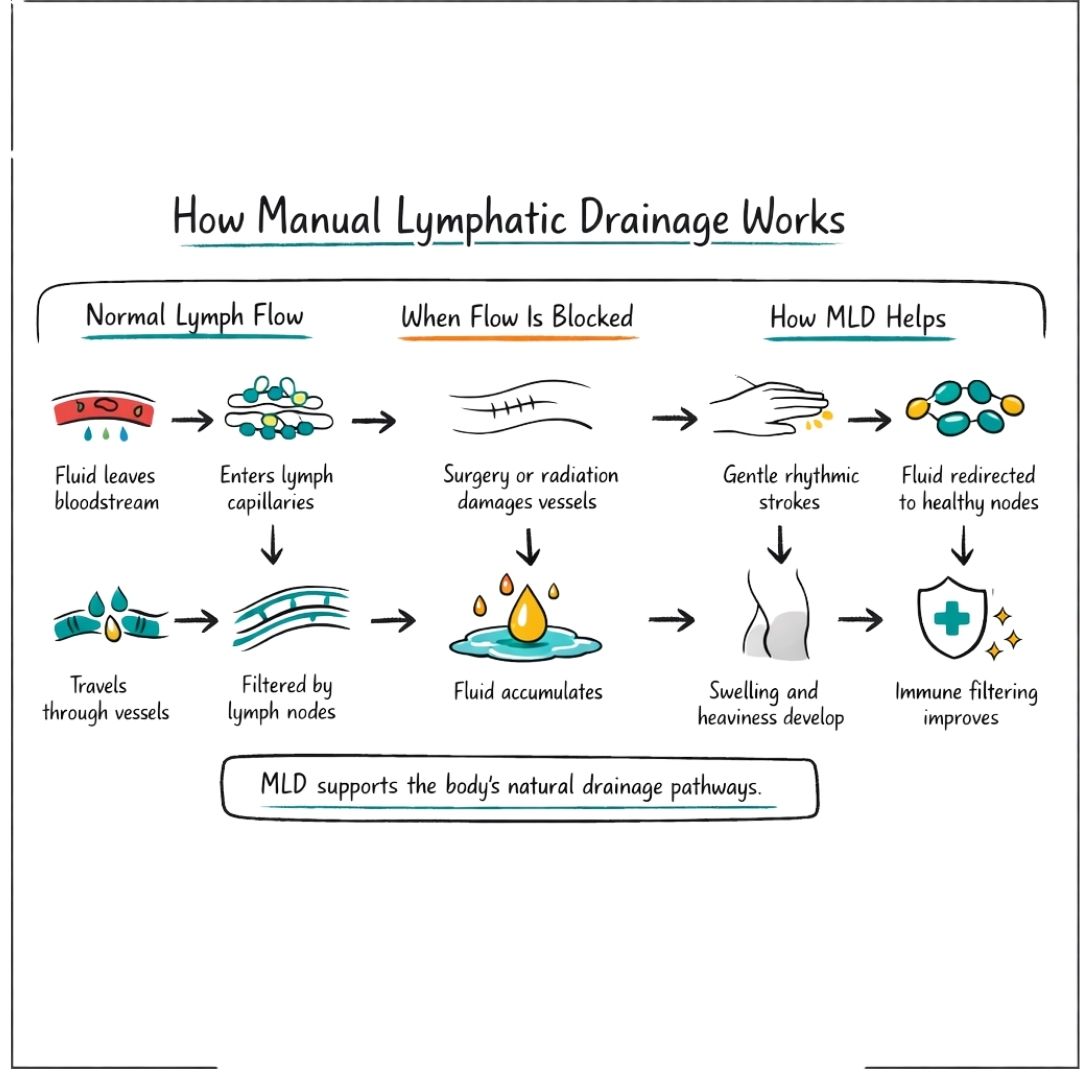
Fluid enters minute lymphatic capillaries through overlapping cells that act like one-way valves. From there, it travels through larger vessels and passes through lymph nodes where debris and pathogens are filtered out.
Obstructions at any point can cause fluid to pool and weaken local immune defences. Common triggers include:
Typical signs of lymphatic disruption are:
Gentle strokes in manual lymphatic drainage mimic natural flow, easing pressure as a sponge releases held water
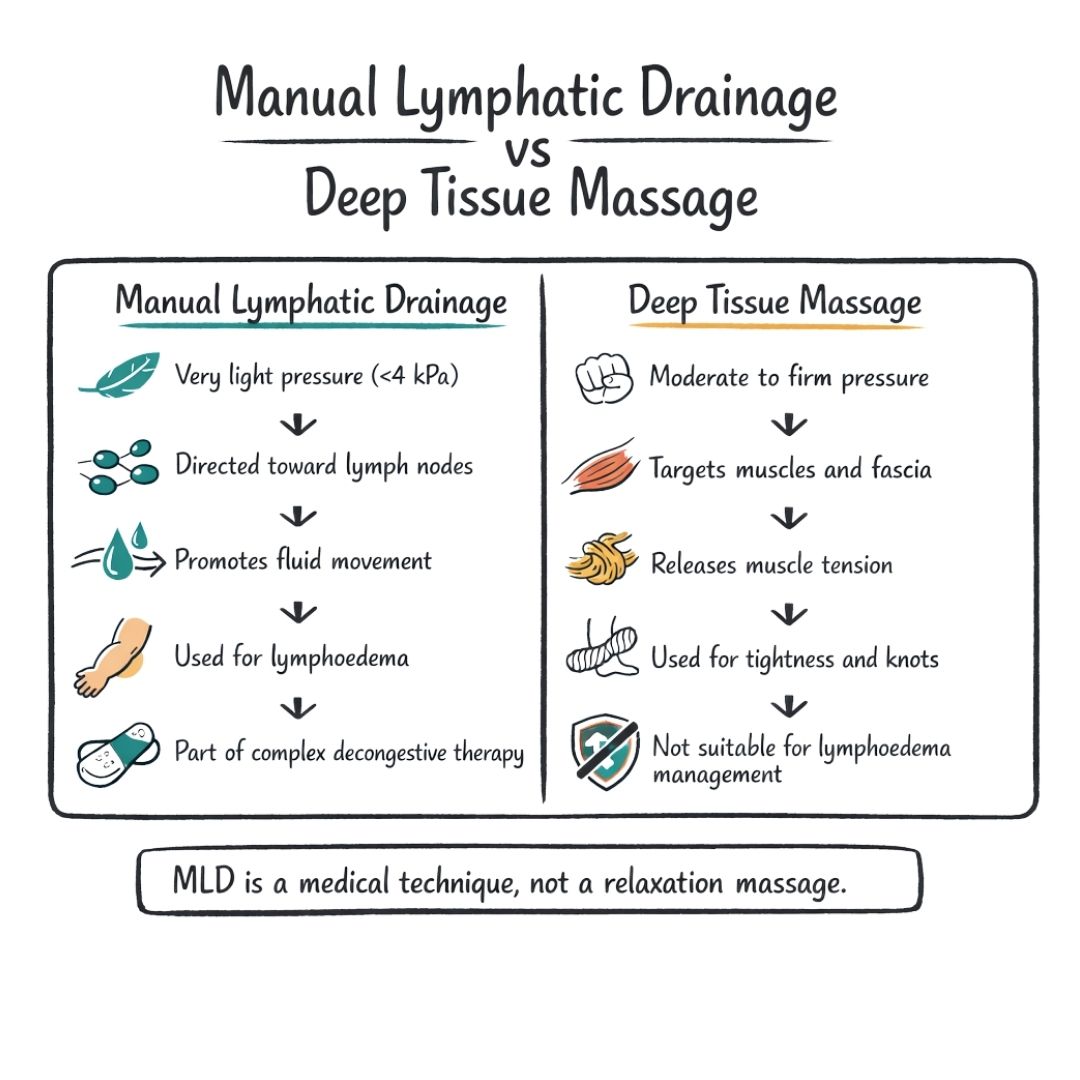
Deep tissue massage applies firm pressure to release tight muscles and fascia. By contrast, MLD relies on minimal force, approximately 4 kPa, and highly precise hand patterns. Therapists trace pathways toward the lymph nodes rather than kneading muscle, which helps avoid bruising or discomfort.
| Feature | Manual Lymphatic Drainage | Deep Tissue Massage |
|---|---|---|
| Pressure Level | Very Light (Less Than 9 oz psi) | Moderate To Firm |
| Hand Patterns | Directed Toward Lymph Nodes | Focused On Muscle Tension |
| Primary Purpose | Promote Fluid Circulation And Immune Support | Relieve Muscle Tightness And Knots |
| Sensation | Gentle, Rhythmic Waves | Firm, Sometimes Intense Pressure |
Many patients report reduced limb volume, eased discomfort and an improved sense of calm. For instance, a breast cancer survivor experienced a 30% decrease in swelling after just four sessions. This gradual benefit exemplifies the goals of MLD before exploring more advanced therapies.
Discover our in-depth guide on lymphoedema management at All You Need to Know About Lymphoedema.
In the early 1930s, Danish therapists Emil and Estrid Vodder noticed patients with chronic colds often had persistently swollen lymph nodes. Intrigued, they began experimenting with gentle, rhythmic hand movements to encourage lymph flow and ease tissue congestion.
Their observations led to a system of precise strokes characterised by:
By 1936, the Vodders had introduced their technique to Paris, where leading clinics quickly adopted it. Over the following decades, their approach informed formal training standards and professional guidelines across Europe, North America and Australia.
MLD protocols worldwide trace back to the Vodder method. For example:
Learn more about the pioneers on Manual Lymphatic Drainage on Wikipedia.
By the 1980s, MLD had become a cornerstone of complex decongestive therapy, woven together with compression bandaging and therapeutic exercise. Training institutes around the globe adopted Vodder’s principles, establishing consistent certification criteria and best-practice guidelines.
Modern MLD practitioners complete in-depth courses covering anatomy, lymphatic physiology and precise hand-stroke techniques. Many institutions now offer:
Key Insight
Vodder’s original techniques remain at the heart of today’s lymphoedema care protocols.
Manual lymphatic drainage (MLD) has been the subject of numerous clinical trials exploring its role in reducing limb swelling and relieving discomfort. Researchers typically measure outcomes such as limb‐volume reduction and symptom improvement.
Systematic reviews reveal short-lived decreases in limb volume after individual MLD sessions. Without adjunctive therapies, these benefits usually diminish rapidly.
Before reviewing the table below, consider that MLD is rarely prescribed on its own. The addition of compression garments or bandaging can significantly extend the therapy’s impact.
| Intervention | Volume Reduction | Duration Of Effect |
|---|---|---|
| MLD Alone | 10–20% average drop | 20–30 minutes |
| MLD With Compression | 15–25% average drop | Several hours to days |
Prominent organizations recommend MLD as one element in complex decongestive therapy (CDT):
“MLD should not be considered a standalone cure but one component of comprehensive lymphoedema management,” states the British Lymphology Society.
Functional imaging such as lymphoscintigraphy and fluoroscopy visualise how MLD encourages fluid to reroute through alternate channels.
For further analysis, see the UK literature review on MLD outcomes. Clinicians typically integrate MLD with compression and skin care to achieve durable results. Learn more about managing lymphoedema in oncology patients in our comprehensive guide.
Locating a qualified manual lymphatic drainage therapist usually begins with a medical referral or self-referral to a private clinic. Referral sources vary by country but often include oncologists, physiotherapists or specialist nurses.
Funding criteria differ by region and insurer, so confirm coverage levels and any required pre-authorizations.
Service provision for manual lymphatic drainage varies widely around the world. In several countries, MLD is part of hospital-based rehabilitation programmes; where public services are limited, dedicated private clinics fill the gap.
A recent UK survey found that only about 12% of lymphoedema care was provided by therapists identified specifically as MLD practitioners, most working in private practice rather than integrated NHS roles. For more detail, see the Wounds International report.
| Setting | Region | Typical Access Time |
|---|---|---|
| Hospital-Based | UK, Canada, Australia | Weeks to Months |
| Outpatient Clinic | USA (rehab centers) | Days to Weeks |
| Private Clinic | Global | Days to Weeks |
Hospital programmes often integrate MLD into broader oncology follow-up or physiotherapy pathways. This coordinated approach benefits patients by aligning lymphoedema care with other recovery services.
Private clinics cater to those seeking rapid access and greater flexibility. Therapists usually offer varied session lengths, multi-session packages and appointment times outside standard working hours. Costs fluctuate, and some insurers limit the number of covered treatments.
Access to specialist MLD training differs significantly by region. Some areas host dedicated Lyphology courses, while others rely on online modules. Common credentialing bodies include:
74.8% of surveyed services reported caring for all lymphoedema types, yet low response rates suggest actual nationwide coverage may be lower.
When selecting a therapist, look for recognised credentials such as LANA certification, membership in the British Lymphology Society or affiliation with the International Society of Lymphology. Confirm they hold formal MLD training and have experience managing cancer-related lymphoedema. It’s also wise to ask about:
To complement manual lymphatic drainage sessions, check out our guide on exercise tips for cancer patients for safe, targeted movement strategies.
A Manual Lymphatic Drainage (MLD) session customarily begins with a detailed review of your medical background. This conversation ensures your therapist appreciates any cancer treatments you’ve undergone and recognises possible risks.
During this phase, the therapist will:
You’ll be encouraged to ask about session cost, duration and frequency.
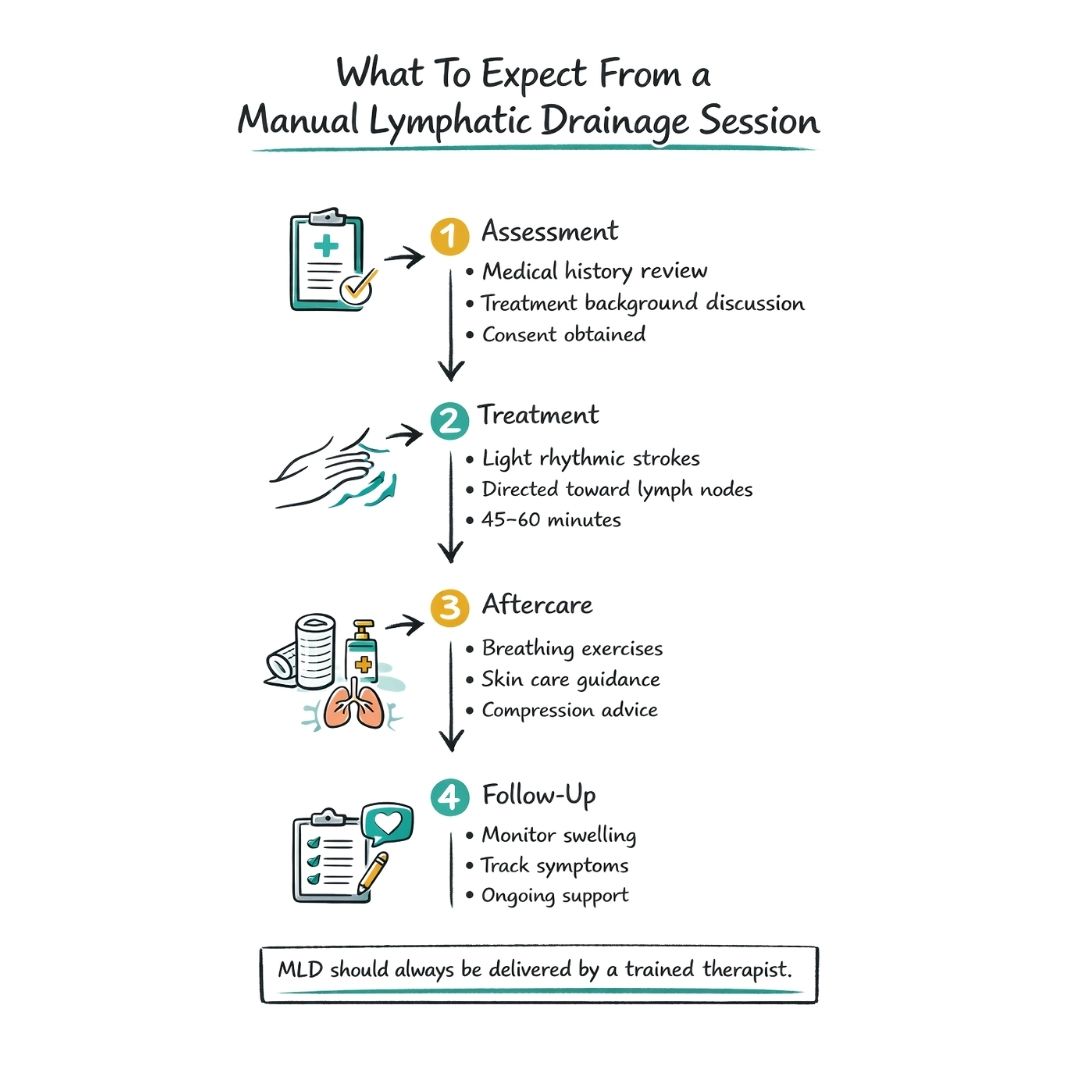
Once the assessment concludes, the therapist will demonstrate the core MLD techniques. Light, rhythmic strokes are applied to stimulate lymph flow and accommodate your comfort.
“Lymphatic flow responds best to very light, precise touch,” a seasoned lymphoedema specialist observes.
| Technique | Purpose | Pressure Level |
|---|---|---|
| Negative Stroke | Encourage fluid entry | Less than 4 kPa |
| Stationary Circles | Break up adhesions | Very Light |
| Pumping Movements | Improve node function | Gentle Rhythmic Waves |
Typical sessions last 45–60 minutes, with an initial appointment extending up to 90 minutes. Fees generally range between £50–£100 (or $70–$140 USD) per visit, depending on location and therapist qualifications.
Expert Insight
Verifying a therapist’s credentials and requesting references is your best safeguard.
After your session, the therapist will outline simple home-care techniques such as breathing exercises and gentle stretches. You’ll be encouraged to maintain a symptom diary, noting any changes in swelling or discomfort. Should you observe sudden redness, heat or increased pain, contact your therapist immediately.
Between visits, your efforts can support manual lymphatic drainage and help maintain fluid balance. Gentle routines at home complement, but never replace, the advice of your clinical team. Always share any questions or observations with your healthcare professionals to ensure your plan stays aligned with your needs.
Begin with light, rhythmic strokes that follow your body’s natural lymph pathways:
Performing this routine daily can help reduce swelling and reinforce what you learn in therapy sessions.
Lie on your back in a comfortable position and rest one hand on your abdomen. As you inhale, feel your belly rise—this confirms your diaphragm is at work.
Regular practice of these breathing patterns can boost lymphatic return during ordinary activities.
Key Tip Consistent breathing exercises support fluid movement and may reduce discomfort.
Healthy skin is your first defence against infection. Cleanse gently and moisturise daily to preserve the barrier that protects underlying tissues.
Diligent skincare lowers the chance of complications and supports your overall lymphatic health.
Home self-care is valuable, but certain signals demand immediate attention. If you experience sudden pain, unexpected swelling or persistent temperature changes, seek professional review without delay:
If any of these occur, pause self‐massage and contact your therapist or healthcare provider straight away. Early evaluation safeguards your recovery and ensures manual lymphatic drainage remains safe and effective.
To explore targeted exercise routines after cancer surgery, take a look at our detailed guide: Exercises After Breast Surgery
Bringing together at-home practices and clinical sessions creates a balanced approach to lymphoedema management. A structured routine helps you keep track of progress and adjust as needed.
By weaving these steps into your daily life, and staying in close communication with your care team—you build a solid foundation for long-term wellbeing.
We strongly advise you to talk with a health care professional about specific medical conditions and treatments.
The information on our site is meant to be helpful and educational but is not a substitute for medical advice.
Understand what prognosis of bladder cancer means, what influences your outlook, and how it helps guide treatment and follow-up care.
Discover Why Post-Surgery Bras Are Crucial After A Mastectomy, Offering Support, Reducing Swelling, And Aiding Recovery. Find The Right Fit For Comfort And Healing.
An Inspiring Story Of Resilience, Strength, And Hope In Overcoming Life's Unexpected Challenges.