When someone receives a cancer diagnosis, the medical world suddenly becomes their new reality. But alongside the clinical protocols and treatment plans, something profound is happening in cancer care: real stories from real people are becoming just as important as medical expertise.
Patient narratives are fundamentally reshaping how we approach cancer care, moving beyond purely clinical interactions to embrace the full human experience of living with cancer. These stories aren't just anecdotes; they're becoming recognized tools for healing, education, and connection that complement traditional medical care in remarkable ways.
Research consistently shows that cancer stories provide genuine benefits for people affected by cancer, supporting positive emotions and helping with day-to-day coping. Unlike medical pamphlets or clinical information, patient stories offer something irreplaceable; the knowledge that others have walked this path before.
When someone hears about another person's experience with chemotherapy fatigue, the practical reality of managing appointments, or the unexpected emotions that arise during treatment, it validates their own experience. This validation often comes at crucial moments when people feel most isolated or uncertain about what they're experiencing.
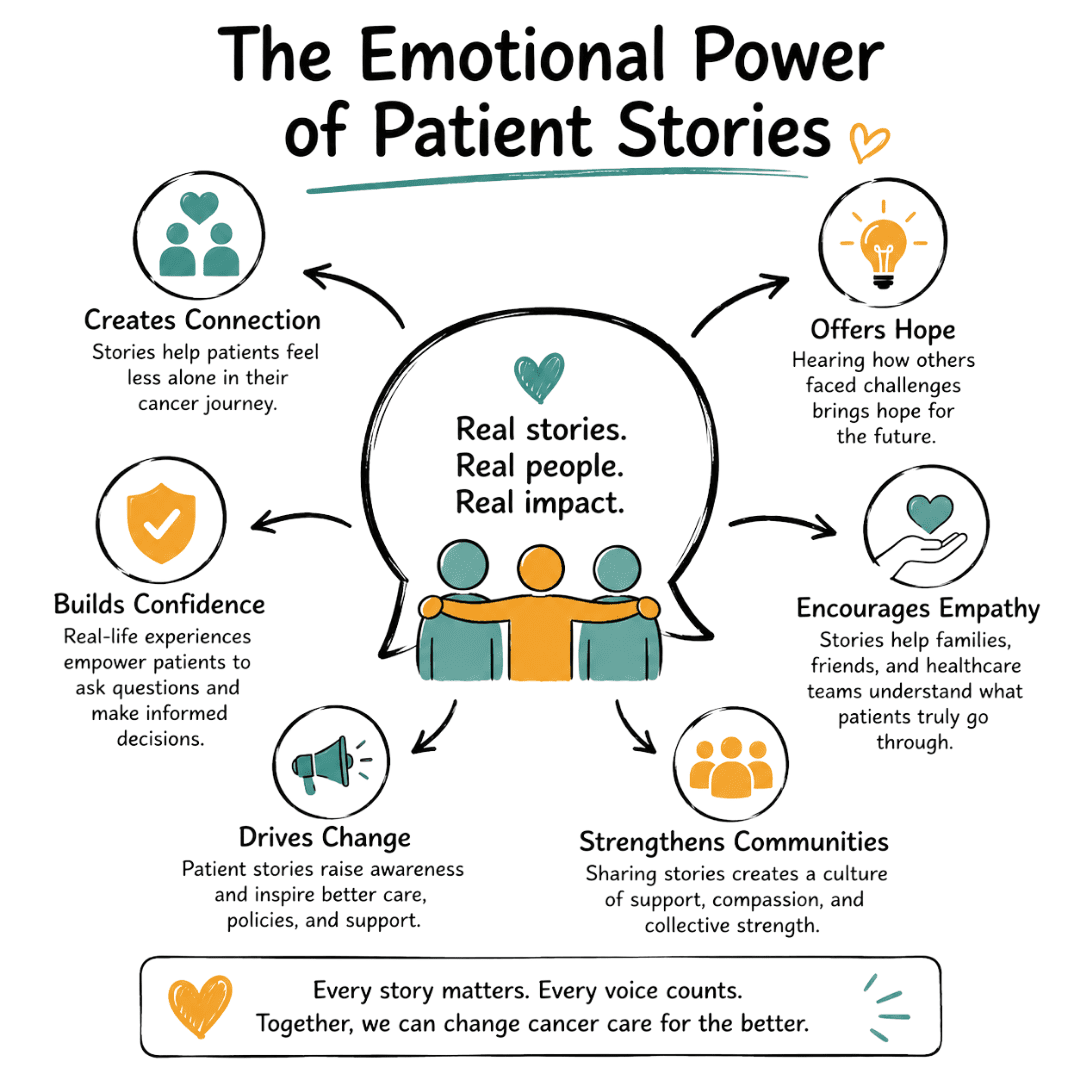
The beauty of patient stories lies in their timing flexibility. Some people find them most helpful immediately after diagnosis, when everything feels overwhelming and uncertain. Others turn to stories during active treatment, seeking guidance on managing side effects or maintaining relationships. Many find stories particularly valuable after treatment ends, when the medical support structure changes but the emotional processing continues.
Not all patient stories have the same impact. Research has identified four key characteristics that make cancer stories particularly beneficial and emotionally supportive:
Genuine perspectives on living with cancer show that it's possible to maintain identity and purpose beyond a diagnosis. These stories demonstrate how people continue to find meaning and joy, even while managing the realities of treatment and recovery.
Honest accounts of the cancer journey provide realistic expectations without sugar-coating the difficulties. People appreciate stories that acknowledge both the challenging and positive aspects of their experience, helping them prepare mentally and emotionally.
Practical approaches to everyday challenges offer concrete strategies that others can adapt to their own situations. Whether it's managing nausea, communicating with children, or maintaining work relationships, these practical insights prove invaluable.
Open sharing of vulnerable moments give permission for the full range of emotions that accompany cancer. Stories that include fear, sadness, anger, or uncertainty help people feel normal for experiencing these emotions themselves.
Patient stories are also changing how healthcare teams communicate with the people they care for. When medical professionals hear directly from patients about their experiences, it encourages more honest, transparent dialogue about what to expect during treatment.
This transparency leads to better-informed decisions and stronger therapeutic relationships. When healthcare providers understand the patient perspective more deeply, through hearing stories about treatment experiences, side effects, and emotional responses, they can provide more comprehensive support that addresses both medical and emotional needs.
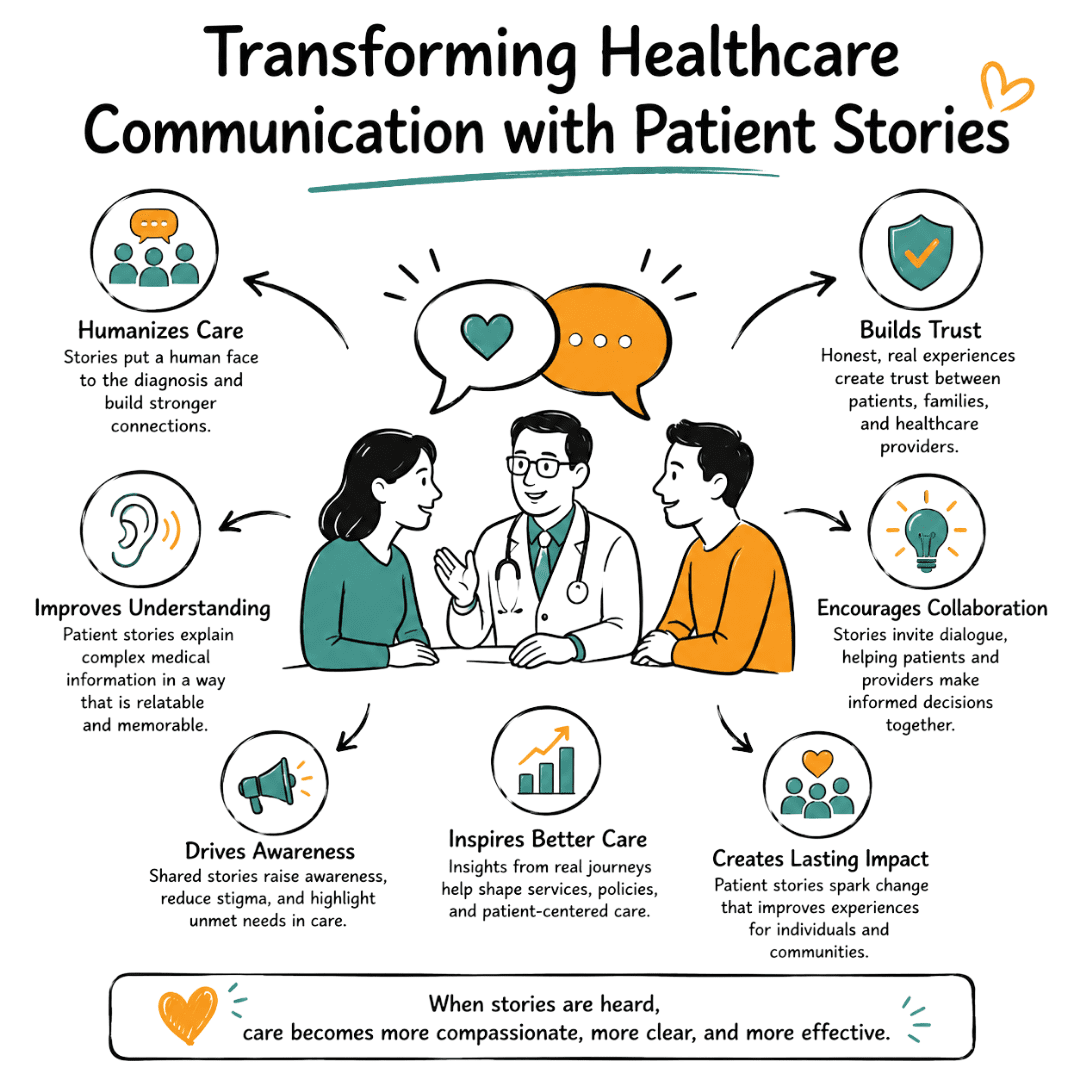
Patient stories also support shared decision-making between patients and their healthcare teams. When people hear about others who made different choices about treatment options, it empowers them to have more active conversations about their own care preferences and values.
Healthcare organisations increasingly recognise patient narratives as valuable educational tools that complement traditional medical information. These stories help people understand what cancer treatment actually feels like on a day-to-day basis, beyond the clinical descriptions found in medical literature.
Patient stories serve as a bridge between medical knowledge and lived experience. They help people prepare practically for treatment, understand common side effects from a patient perspective, and learn coping strategies that others have found helpful.
This educational aspect extends to families and friends as well. When loved ones hear patient stories, they better understand how to provide appropriate support and what their person with cancer might be experiencing emotionally and physically.
One of the most significant ways patient stories are changing cancer care is by creating communities of understanding. When people share their experiences, whether through support groups, online platforms, or informal conversations, they create networks of mutual support that extend far beyond individual medical appointments.
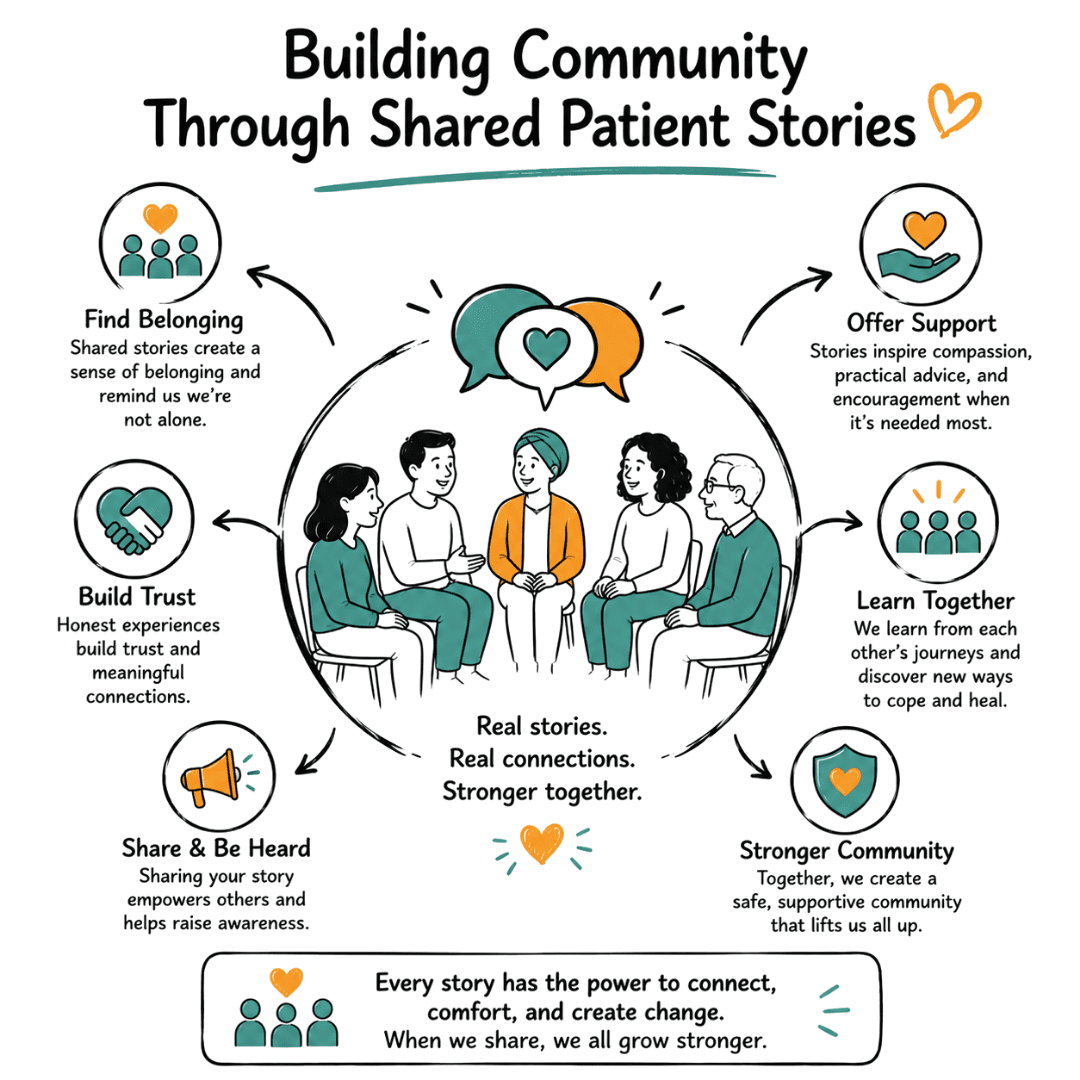
These story-based communities often provide the kind of peer support that medical teams, despite their expertise and caring, cannot offer. There's something uniquely comforting about hearing from someone who has personally navigated chemotherapy, radiation, or the emotional complexity of life after treatment.
At Cancer Care Parcel, we've seen how powerful these connections become. When people share their experiences with managing treatment side effects, maintaining relationships during cancer, or finding new perspectives on life, it creates ripple effects of support and understanding that extend to everyone who hears these stories.
Patient stories don't just impact the people with cancer; they're changing how families and caregivers understand their roles too. When caregivers hear stories from others who have supported someone through cancer treatment, they gain practical insights and emotional validation for their own experiences.
These stories help family members understand that their feelings of helplessness, fear, or exhaustion are normal parts of the caregiving experience. They also provide practical strategies for everything from managing medical appointments to maintaining their own wellbeing during a challenging time.
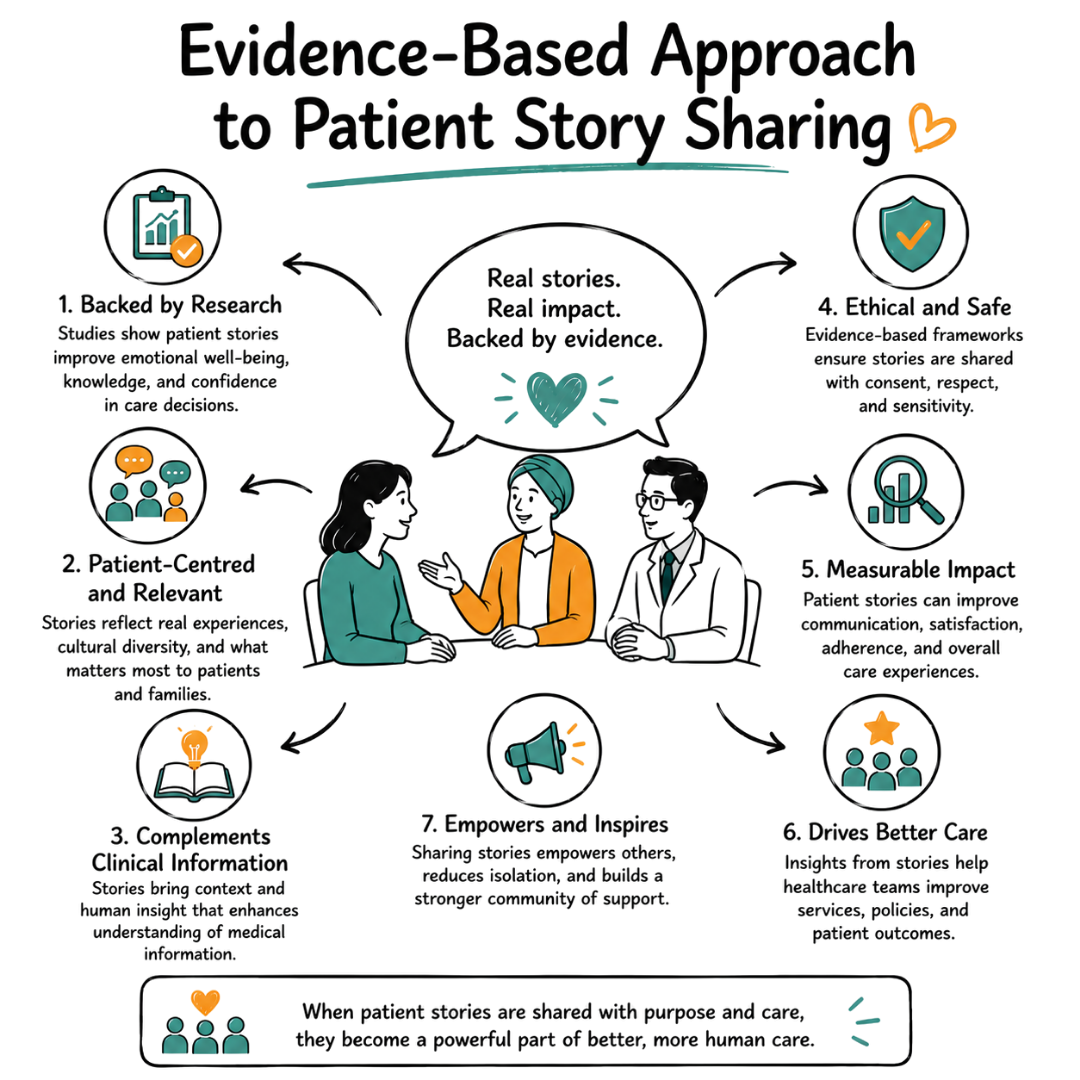
The integration of patient stories into cancer care isn't just happening informally; it's becoming an evidence-based practice. Researchers are studying which types of patient stories provide the most benefit, when they're most helpful, and how they can be best integrated into formal healthcare settings.
This research validates what many people instinctively know: stories matter. They provide emotional support, practical guidance, and community connection in ways that purely medical information cannot. As healthcare becomes increasingly patient-centred, stories are becoming recognised as legitimate tools for healing and support.
Not all patient stories are uplifting, and this diversity is actually part of their value. Patient stories that acknowledge the real difficulties of living with cancer; the fear, the uncertainty, the grief, provide validation for others experiencing these challenges.
Creating space for these more difficult narratives is crucial for honest, comprehensive support. When people hear stories that reflect their own struggles, it reduces the isolation and shame that can accompany difficult emotions during cancer treatment.
As patient stories continue to reshape cancer care, we're moving towards a more holistic approach that recognises the person behind the diagnosis. This means integrating emotional support, practical guidance, and community connection alongside medical treatment.
Healthcare providers are increasingly trained to ask about and listen to patient stories, not just medical symptoms. Support services are incorporating storytelling and peer connection as formal parts of cancer care programs.
The transformation isn't complete, but the direction is clear: cancer care is becoming more human-centred, more emotionally aware, and more connected to the real experiences of people living with cancer.
Through patient stories, we're learning that healing involves more than medical treatment: it includes feeling understood, finding community, and knowing that others have walked similar paths. These stories are quietly revolutionising cancer care, one shared experience at a time.
We strongly advise you to talk with a health care professional about specific medical conditions and treatments.
The information on our site is meant to be helpful and educational but is not a substitute for medical advice.
Shara's role is Advisory Board Chair and Chief Scientific Officer and is responsible for overseeing the scientific strategy of Optimised healthcare.
There’s a quote by Ray Charles that says, “Live each day like it’s your last...” I prefer to say, “Live, each day.” Experience the highs and lows.
Demystify cancer research and biostatistics with plain language on trials, survival, and care decisions for patients and caregivers.