Starting your first chemotherapy session can feel overwhelming, even if you’ve read every leaflet, spoken at length with your medical team, and packed your chemo bag with care. Walking into the clinic or hospital marks the beginning of a journey you didn’t choose.
This guide is here to help you through that first day: from arriving at the clinic to heading home - with tips to help you feel less like a passenger and more like an active participant in your care.
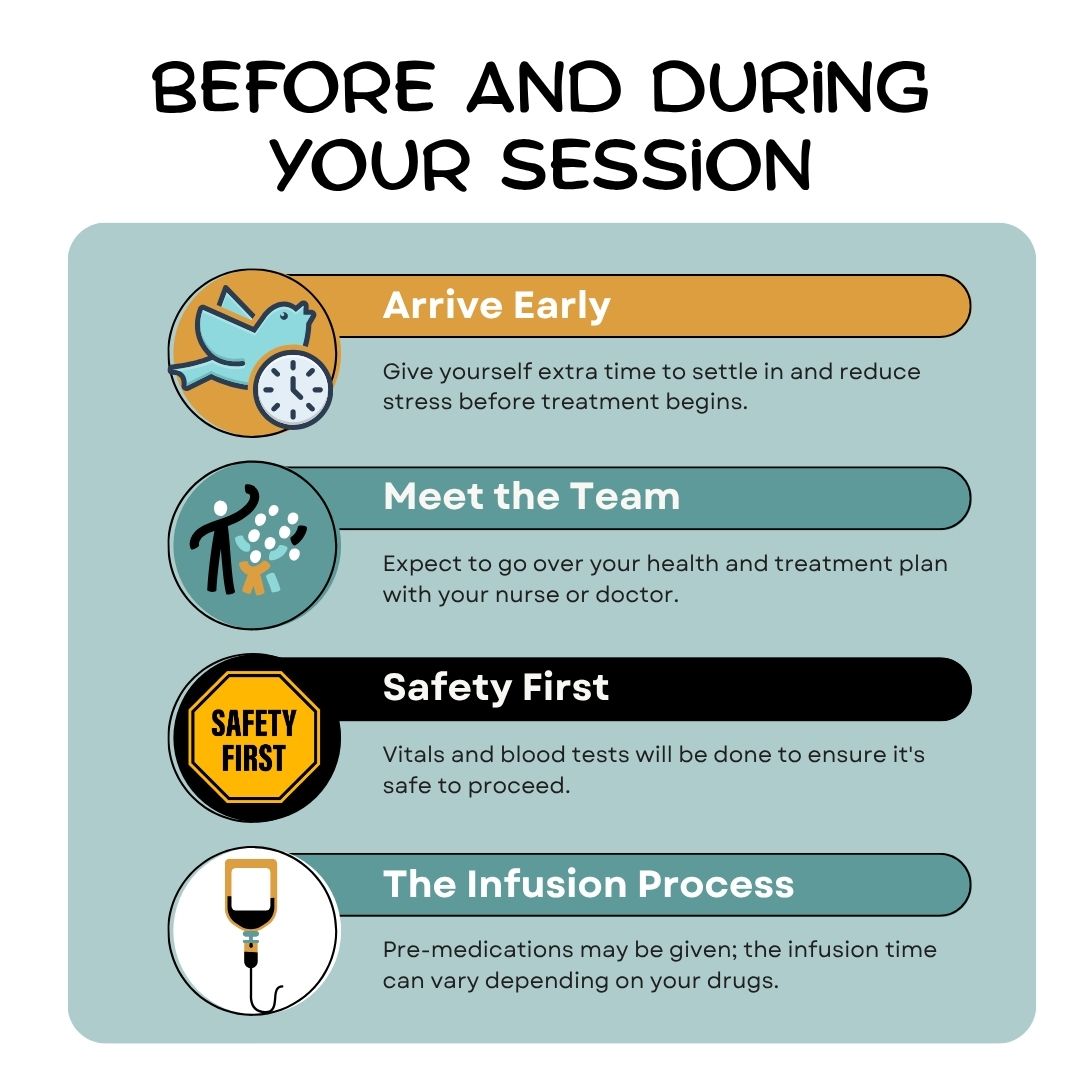
Arriving a little early on your first chemotherapy day can ease stress. Extra time helps you get your bearings, find your department, and check in without feeling rushed. A calm start can set the tone for the day. Consider packing a small bag with your first day of chemo essentials, such as a water bottle, snacks, and a comforting blanket. Bringing a friend or family member along can also provide valuable support and help distract you from any anxieties. Remember, taking care of yourself emotionally and physically can make a significant difference in your experience. Your healthcare team will discuss the best plan tailored for you, ensuring you understand each step of the process. Don’t hesitate to ask questions about the treatments and what to expect, as this knowledge can help alleviate some of your concerns.
When you arrive, you’ll likely be asked for basic details like your name, date of birth, and insurance or hospital ID. You may also receive a wristband or sticker for identification. These steps may feel routine, but they’re important for safe, efficient care.
If possible, bring a friend or family member for support. Some clinics have visitor restrictions, so check ahead. Even if they can’t stay during your infusion, having someone drop you off, wait nearby, or pick you up can be very reassuring.
Before chemotherapy begins, you’ll usually meet with a nurse or doctor to review your health and recent test results. They may ask how you’ve been feeling, including any new symptoms. Even small things like a cough, rash, or change in sleep can help them tailor your care. They may also provide you with information on how to prepare for chemotherapy, including dietary recommendations and ways to manage potential side effects. Understanding what to expect during treatment can help alleviate anxiety and ensure you feel more in control. Being proactive in your preparation can significantly enhance your overall experience throughout the chemotherapy process.
Your nurse will explain the plan for the day:
Don’t hesitate to ask questions. No question is too small—this is your treatment, and understanding it can help you feel more in control.
Before your infusion, a nurse will check your vitals, blood pressure, temperature, heart rate, and possibly your weight. You may also have blood tests to check your white cells, platelets, and other levels. If something’s off, your treatment might be delayed to keep you safe.
Once everything is in order, your nurse will insert an IV or access your port. A port is a small device implanted under the skin that allows for easier administration of chemotherapy, especially if you’ll be receiving multiple sessions.
You may also receive pre-medications to help prevent nausea or allergic reactions. These medications can be given orally or through the IV line.
The infusion can last from 30 minutes to several hours, depending on your drugs. Some are given slowly to reduce side effects. You might feel a cold sensation, taste metal, or smell something odd; these are normal, but tell your nurse if anything feels wrong, like itching or trouble breathing.
Many people wonder how to spend their time during a chemotherapy infusion. There’s no right or wrong way to use this time - it’s about what works for you. As the end of chemotherapy approaches, it can be helpful to focus on activities that bring you joy and relaxation. Consider journaling about your thoughts and experiences, or exploring new hobbies that you’ve always wanted to try. Connecting with friends or family during this time can also provide support and make the transition feel less daunting. Chemotherapy side effects can vary from person to person, so it’s important to remember that you are not alone in this experience. Many find solace in discussing these challenges with others who understand or have gone through similar treatments. Engaging in support groups can offer valuable insights and foster a sense of community as you navigate this journey.
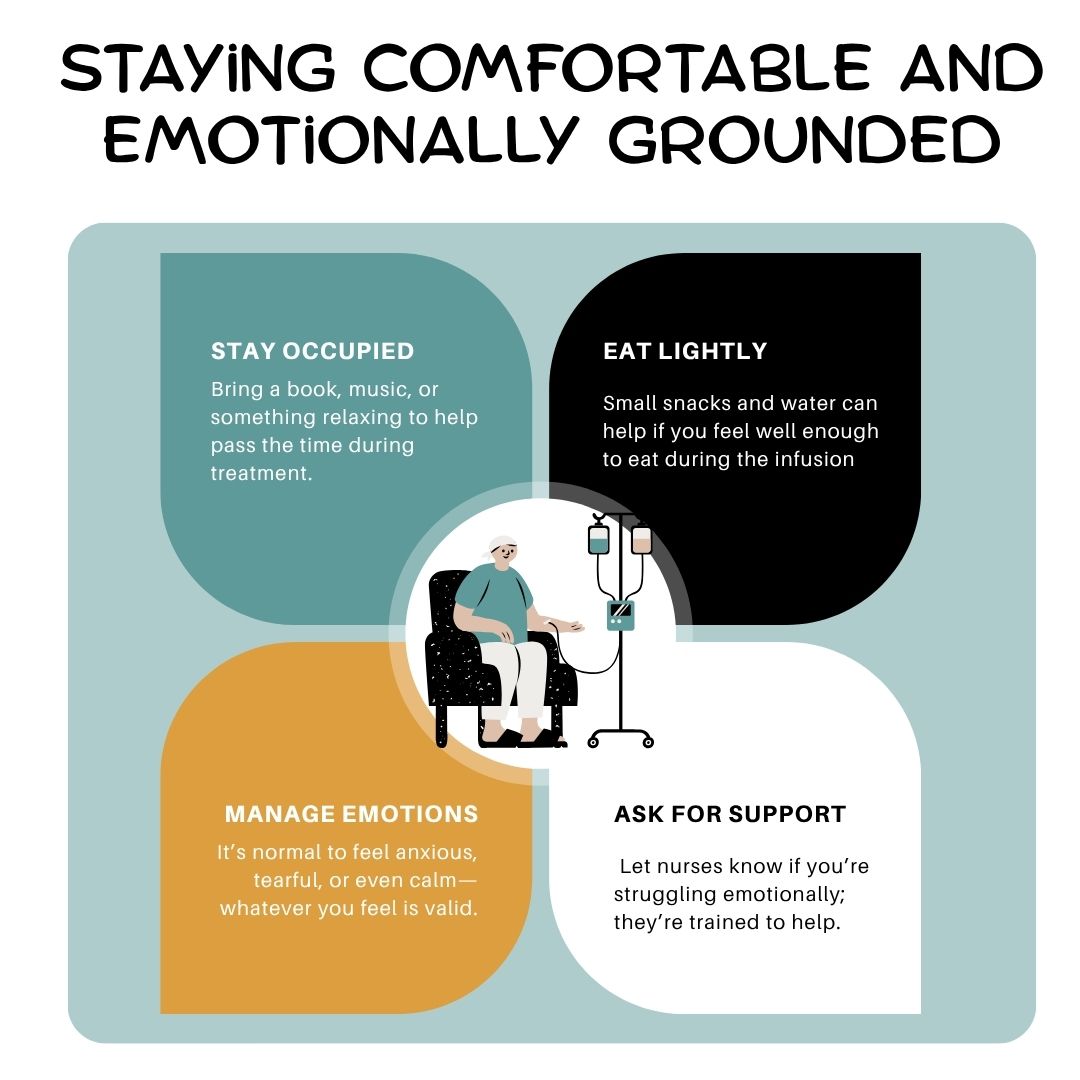
Some people enjoy chatting with staff or other patients, while others prefer to focus on books, music, or podcasts. You might also consider bringing a journal to jot down any thoughts or questions you want to remember for later.
If your clinic allows, try to move around a bit - adjust your position or stretch your legs to prevent stiffness. Some clinics permit patients to walk around with their IV pole; ask your nurse if that’s an option for you.
Eating during treatment is usually fine as long as your stomach tolerates it. Light snacks like crackers, bananas, or rice cakes can help settle your stomach. Drinking water throughout your session can also help your body process the chemotherapy drugs.
Your first session can trigger a range of emotions - anxiety, sadness, relief, or even a sense of accomplishment that you’ve reached this step.
Some people feel tearful as the reality of treatment sets in; others feel calm, focused, or even numb. Every reaction is valid.
If your emotions start to feel overwhelming, talk to your nurse. They are experienced in supporting patients through the emotional aspects of treatment. Even just saying, “I’m feeling really anxious,” can help you feel more grounded.
If you’re alone, it’s perfectly okay to take a moment to yourself. Close your eyes, listen to music, or simply sit quietly. Many clinics understand the need for privacy and will respect your space if you prefer to be left alone.
Once your infusion ends, your nurse may give you a saline flush to clear the IV line. They’ll remove the IV or disconnect your port and check your vital signs again. They’ll also ensure you’re feeling well enough to go home.
Before you leave, your nurse or doctor will review any medications you should take at home, such as anti-nausea pills or other supportive drugs. They’ll also go over which symptoms need immediate medical attention, like: managing chemotherapy-related nausea effectively is crucial for maintaining your quality of life during treatment. Your healthcare team will provide guidance on lifestyle changes and dietary adjustments that can also help mitigate these symptoms. Additionally, they may suggest various techniques to enhance your comfort and overall well-being throughout the process. It is important to understand the chemotherapy comfort care essentials to create a supportive home environment. This includes arranging comfortable seating, ensuring proper hydration, and preparing easy-to-digest meals. By focusing on these essentials, patients can better manage their side effects and improve their overall experience during treatment.
You’ll also be given contact details for your healthcare team. Don’t hesitate to call if you have any concerns between sessions.
Most people can go home on their own or with a companion after their first chemotherapy session. Fatigue is common, and while some people feel fine initially, side effects like tiredness or nausea may develop later in the day. Plan to rest when you get home, and if possible, have someone stay with you for the first 24 hours just in case you need extra support. An overview of the chemotherapy treatment side effects could be useful for understanding what to expect. Many individuals experience a range of symptoms, including changes in appetite and potential hair loss, as treatment progresses. Being informed can help you manage these side effects effectively and prepare both mentally and physically for what lies ahead.
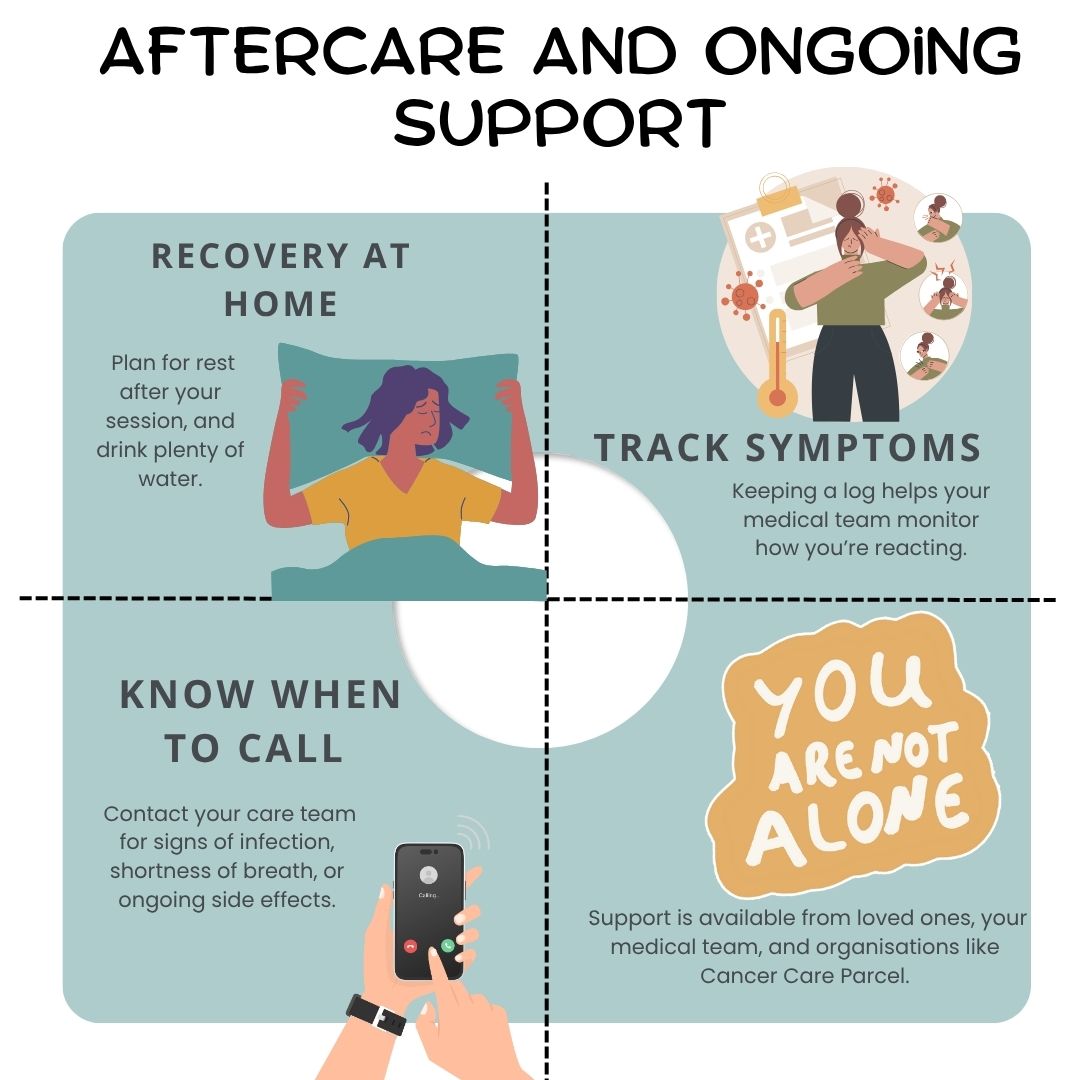
Hydration is crucial - drink plenty of water to help your body process the chemotherapy drugs. Eat a light meal if you’re hungry, and don’t be surprised if your appetite changes. Small, frequent snacks may be easier to manage than one big meal. The chemotherapy impact on daily life can also affect your energy levels, making it challenging to maintain your usual routine. Many individuals experience fatigue and may need to adjust their daily activities to accommodate this change. It's important to listen to your body and prioritize rest while navigating these shifts. Incorporating nourishing meals for chemotherapy recovery can significantly aid in regaining strength and supporting overall well-being. Focus on consuming nutrient-dense foods that are easy to digest, such as smoothies, soups, and small portions of lean proteins. Additionally, seeking guidance from healthcare professionals or nutritionists can provide tailored advice to enhance your recovery journey.
As soon as you get home, start a symptom log or use an app to track how you’re feeling. Write down any side effects - nausea, fatigue, headaches, mood changes - and any questions you want to ask your healthcare team at your next visit.
This record isn’t just for your next appointment – it will help your team tailor your treatment and give you a clearer sense of pattern and progress over time. By closely monitoring your progress, your healthcare team can make informed decisions about any necessary adjustments to improve efficacy. This personalized approach ensures that you receive the most suitable treatment plan tailored specifically for you.
Allow yourself to rest as much as you need. Chemotherapy is both physically and emotionally demanding. Even small acts of self-care - watching a favourite show, listening to music, journaling, or spending time with a pet can help lift your spirits. It’s also important to be mindful of chemotherapy restrictions for patients, as certain foods can interact with treatment and affect recovery. Consulting a nutritionist can provide valuable guidance tailored to individual needs. Maintaining a well-balanced diet can enhance your overall well-being during this challenging time. Managing side effects after chemotherapy can significantly impact your recovery journey. Engaging with healthcare professionals who specialize in supportive care can also be beneficial. They can suggest strategies to alleviate discomfort and help you cope with any challenges that arise during treatment.
Additionally, reach out for support. Let friends and family help, even with small things like a friend making you a cup of tea or a neighbor picking up your groceries. These small acts of kindness matter.
Keep your care team’s contact info handy and know when to reach out. If something doesn’t feel right, it’s always better to check. Call your medical team immediately if you experience:
Trust your instincts. You know your body best, if something doesn’t feel right, don’t wait. It’s okay to ask for help or reassurance at any time.
Your first chemo session is more than just a medical treatment; it’s a brave step forward. No matter how much preparation you have done, it’s normal to feel a mix of emotions.
Take things one step at a time. Remember: you’re not alone. Your medical team, your loved ones, and organisations like Cancer Care Parcel are here to support you at every stage. Your health and well-being should always come first, so don’t hesitate to ask questions and seek second opinions if needed.
Stay informed, stay supported, and most importantly, be kind to yourself!
Edited by: Divsha Bhat
We strongly advise you to talk with a health care professional about specific medical conditions and treatments.
The information on our site is meant to be helpful and educational but is not a substitute for medical advice.
Discover How To Recognise And Manage Lymphoedema After Cancer Treatment With Expert Guidance From Sylwia Labecka-Czarnik. Learn About Early Signs, Treatment Options, And Self-Care Strategies.
We’ve all heard inspirational stories of cancer fighters and
survivors, about the challenge and change, how it transformed theirs and others lives. That moment is never expected, a once in a lifetime experience, right?
Despite PCOS And Cancer, Sarah Miraculously Conceived And Delivered A Healthy Baby, Showing Hope Thrives Against All Odds.