Donating hair to cancer charities is one of the most personal and meaningful ways to support someone undergoing cancer treatment. It’s a simple act, just a haircut, but the impact is profound. That hair you’ve grown and cared for can be transformed into a real-hair wig, helping to restore confidence, a sense of normality, and a bit of yourself at a time when both are often deeply shaken. It’s a tangible gift of hope and kindness that truly makes a lasting difference, offering comfort and strength to someone facing one of life’s most vulnerable moments.
For many people undergoing cancer treatment, losing their hair is far more than just a physical side effect of treatment. It becomes a visible, constant reminder of their illness, often the first thing others notice, and it can deeply affect self-esteem, identity, and emotional well-being. While synthetic wigs are available, they often can’t match the natural look, feel, movement, or versatility of a wig made from real human hair, leaving many patients longing for something that helps them feel more like themselves again.
That’s where hair donation makes a profound difference. Knowing the requirements for donating hair to cancer charities ensures your contribution can truly make an impact. You’re offering someone the chance to look in the mirror and recognise themselves with confidence again. This simple act of kindness can ease the emotional burden of treatment and help them return to school, work, or social life with more confidence and less anxiety about their appearance. It’s a powerful, personal way to stand alongside someone during one of the hardest parts of their cancer journey, creating a ripple effect of kindness and hope that truly makes a difference.
For many children, teens, and adults facing cancer, receiving a custom-fitted, real-hair wig can be genuinely life-changing. It restores a sense of normalcy. Helping them return to daily life, school, work, and social settings, with greater ease and less self-consciousness. For adults, it often restores a sense of privacy and control, the ability to choose when and how to share their cancer story. This return to a version of normal isn’t just cosmetic; it’s a vital part of easing the emotional weight of treatment and supporting the healing journey.
Your donation helps provide three powerful things:
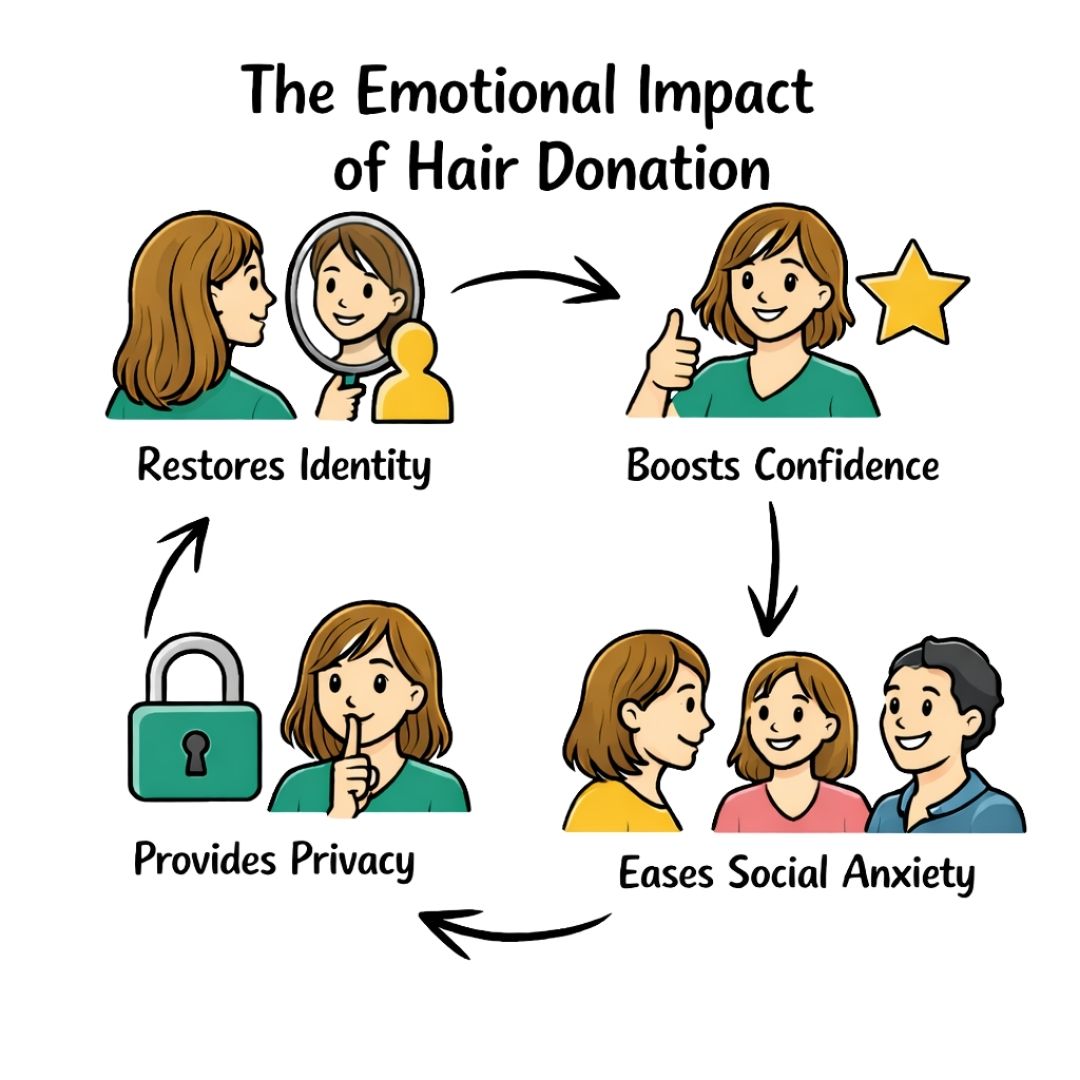
Donating your hair is a direct and deeply personal way to stand with someone through one of the hardest parts of their cancer journey. Your ponytail can help someone feel like themselves again, restoring comfort and control during a difficult time, offering them the chance to feel more at ease in their appearance and daily life.
This single act of generosity sets in motion a process involving dedicated charities and expert wig makers. These organisations work incredibly hard to transform your kindness into a life-changing gift. In doing so, you become part of a wider community of hope, strength, and compassion that supports patients through their recovery. You can learn more about the incredible contributions of various UK-based cancer charities and the work they do.
Before booking a salon appointment, it’s important to check whether your hair meets the specific requirements of the charity you plan to support. Each organisation has slightly different guidelines, and following them closely ensures that your generous donation can be transformed into a wig for someone experiencing medical hair loss. Taking a few minutes to review these criteria helps maximise the impact of your donation.
The most important factor is hair length. While the minimum requirement varies, most charities require hair that’s at least 8 to 14 inches (20 to 36 cm) long. Remember, this measurement is taken from the top of the secured ponytail or braid, down to the very tips, not from your scalp. To avoid disappointment on donation day, it’s always wise to measure your hair at home first with a tape measure and confirm it meets the charity’s standards.
One of the most common questions people ask about donating hair is whether layered hair qualifies. And the good news is, yes, you can absolutely still donate! The key requirement is that the shortest layer in your ponytail or braid must meet the charity’s minimum length.
If your hair has heavy layers and you want to maximise what you can donate, here’s a simple pro tip that makes a big difference:
If your hair is just a few inches short of the minimum requirement, don’t worry, it’s often worth growing it out a little longer. You might find some useful tips on how to grow hair faster naturally.
Following these steps ensures your donation is as usable as possible; every inch counts toward giving someone a real-hair wig when they need it most. Always check your chosen charity’s exact guidelines before cutting to avoid any surprises.

Beyond length, the actual condition of your hair plays a major role in whether it can be used for a wig. The hair must be healthy and strong enough to withstand the cleaning, processing, and styling involved in wig-making. It’s essential that your hair is freshly washed and completely dry before cutting. Sending damp hair is a big risk, as it can develop mould during transit and become unusable.
The rules around dyed or chemically treated hair vary between charities. Some accept hair that has been dyed a natural colour (as long as it’s in good condition), while others only take “virgin” hair that has never been dyed, bleached, permed, or chemically processed. Heavily bleached hair, hair with lots of highlights, or visibly damaged strands are usually not accepted because the chemical processing weakens the hair, and it won’t hold up during the wig-making process.
Crucial Tip: Always double-check the specific guidelines of your chosen charity before you cut. This simple step avoids disappointment and ensures your donation can actually help someone.
On a positive note, most charity organisations are delighted to accept grey or silver hair. It’s often in high demand for creating natural-looking wigs for older recipients, so don’t let your silver strands stop you from donating; they’re especially valuable.
Understanding the emotional journey of chemo-related hair loss helps put into perspective how much these wigs mean to people. By ensuring your hair meets the charity’s standards, you’re taking the single most important step to ensure your generous contribution can truly be transformed into a life‑changing gift.
To help you see the requirements more clearly, here’s a quick overview of what charities are generally looking for (always confirm the latest details on the charity’s official website):
This table provides a general summary. It's always best to visit the charity's official website for the most up-to-date and detailed information before you proceed.
| Requirement | General Guidelines (Check Specific Charity) |
|---|---|
| Minimum Length | Usually 8–14 inches (20–36 cm), measured from the top of the ponytail/braid to the tips. |
| Hair Condition | Must be in good condition, healthy, and strong. No split ends or significant damage. |
| Cleanliness | Hair must be freshly washed and 100% dry before cutting and posting (damp hair can mould in transit). |
| Dyed/Coloured Hair | Varies greatly. Some accept naturally coloured dyed hair; others require "virgin" (undyed) hair. |
| Bleached/Highlighted | Generally not accepted due to chemical damage that weakens the hair. |
| Permed/Chemically Straightened | Usually not accepted. The chemical process compromises the hair's integrity. |
| Grey Hair | Yes! Most charities happily accept and often need grey hair for natural-looking wigs for older recipients. |
| Layered Hair | Yes, provided the shortest layer in the ponytail meets the minimum length requirement. |
Remembering these key points will help ensure your donation is as effective as possible.
Once you’ve checked that your hair meets your chosen charity’s requirements, the next step is the most important part: preparing, cutting, and sending it off. Getting these steps right ensures your generous donation arrives in perfect condition and can be turned into a real-hair wig for someone going through cancer treatment.
Preparation begins with clean hair. Start with freshly washed hair, use a mild shampoo, and no conditioner or styling products. The hair must be completely dry before cutting. Even a small amount of dampness can cause mould to develop during transit, making the donation unusable. This small detail makes a huge difference in preserving the quality of your donation. Let your hair air-dry fully, or use a cool-dryer setting if you're in a hurry. Make sure it's 100% dry before you cut or package it.
Avoid any mousse, gel, hairspray, or any other styling products before the cut. The wig makers need your hair in its most natural state so they can assess and process it properly.
Once your hair is clean, dry, and free of products, you’re ready to secure and cut it. This careful preparation protects your donation and helps ensure it reaches the charity in the best possible condition.
With your hair freshly washed and completely bone-dry, the next step is to secure it properly before cutting. Tying your ponytails or braids tightly keeps the strands perfectly aligned. This preparation ensures that the hair remains neat and usable throughout the donation process.
If your hair is all one length, a single ponytail at the nape of your neck works perfectly. For layered hair, you can maximise your donation by creating several smaller ponytails. Try sectioning your hair into four distinct bunches (one on each side and two at the back). This simple trick helps capture more of the shorter layers that might otherwise fall short of the minimum length.
When you’re ready to cut, whether at a salon or at home, make the snip about one inch (2–3 cm) above the top hairband. This keeps the bundle tight, secure, and neat, preventing any precious strands from escaping or getting tangled during transit. If you feel confident, learning how to cut your own hair is a great way to handle this step yourself.
Key Takeaway: Always cut above the highest hairband. This one small action ensures your ponytail arrives at the charity in the best possible condition, protecting the quality of your donation and giving it the best chance to become a wig for someone who needs it.
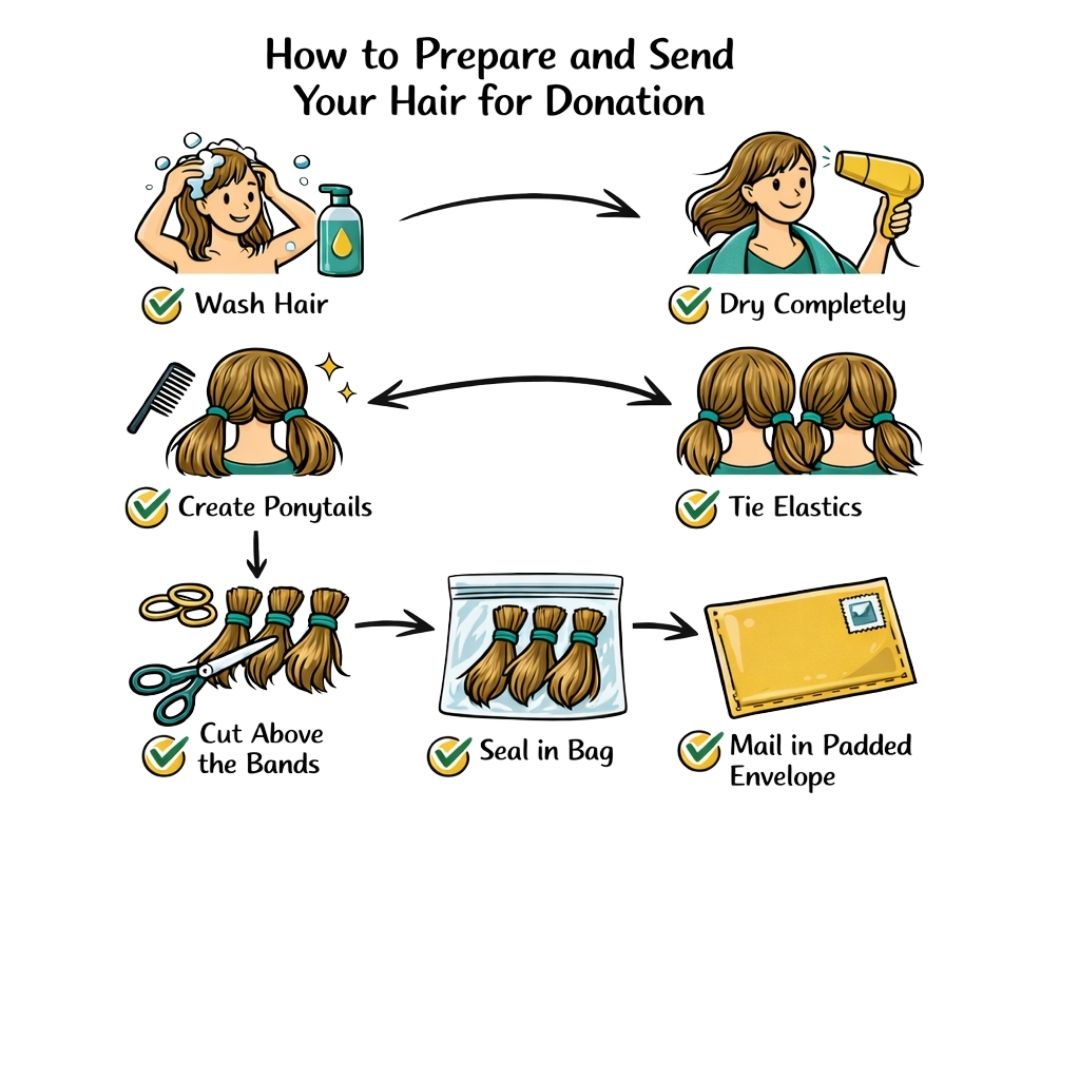
Once your hair is cut, packaging it correctly is the final and vital step. This is your gift, and you want to ensure it arrives at the charity center in perfect condition, safe, sound, and ready to be turned into a wig for someone who needs it.
Here’s a simple but effective way to pack it:
This careful approach ensures your donation arrives in perfect condition, stays tangle-free, dry, and undamaged on its journey. The support from communities and organisations is invaluable for people with cancer, and your thoughtfully prepared donation is a beautiful part of that network. You can learn more about how Cancer Care Parcel partners with other organisations to build these crucial support networks.
Before sealing your envelope, there’s one last small but important step: completing any required paperwork. Most charities ask you to include a hair donation form, which you can download directly from their website. Completing this form allows them to track your donation, match it to their records, and, in many cases, send you a thank-you certificate to acknowledge your contribution and kindness.
Finally, double-check and write the mailing address clearly on the front of the envelope. You’ll find the correct address on the charity’s website, usually on their dedicated “Donate Hair” or “How to Donate” page. Taking a moment to double‑check the details ensures your thoughtful gift arrives safely and quickly, ready to begin its journey toward becoming a real-hair wig for someone who needs it.
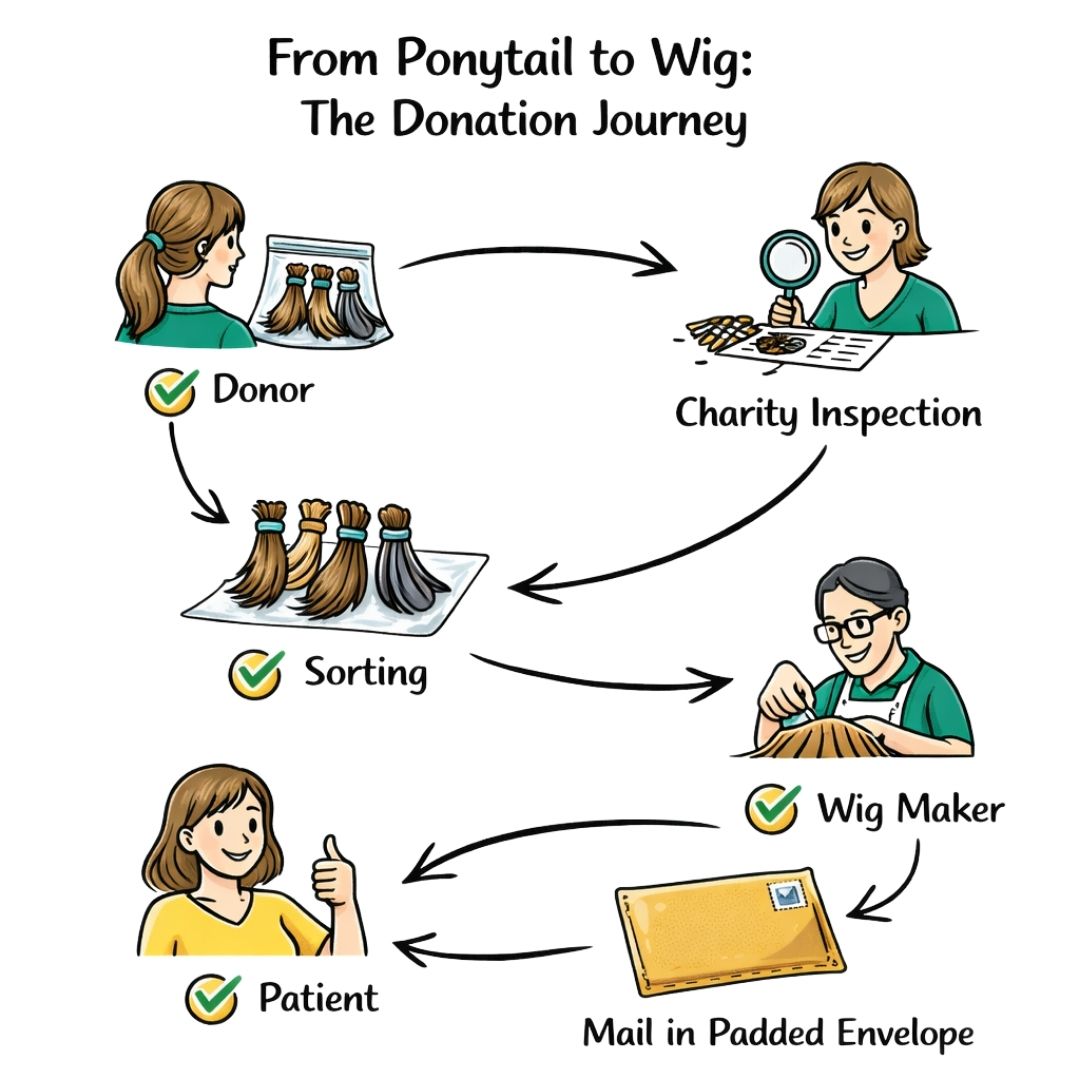
Once your carefully packaged ponytail is in the post, its incredible journey truly begins. Your single act of kindness becomes part of a collective effort joining thousands of other donations from generous people around the world, all arriving at the charity to be part of something much larger. This is where the detailed, dedicated process of turning donated hair into hope and comfort for someone with cancer really starts.
Upon arrival at the charity, every donation is carefully unboxed and thoroughly inspected by a dedicated team. This essential first step ensures the hair is in good condition, properly bundled, and free of any issues or damage during transit.
After inspection, the hair is sorted and measured again, then carefully grouped by its key characteristics such as length, colour, texture, and type. This precise organisation allows it to be matched with other similar donations, creating the perfect combination needed for the wig-making process. This thoughtful handling protects the quality of your generous gift and gives it the best chance to become a beautiful, natural-looking wig that brings real comfort and confidence to someone who needs it most.
The sorting process at the charity is surprisingly more detailed and thorough than most people expect. Volunteers and staff carefully examine and categorise each ponytail, building a well-organised library of hair that wig makers can use when assembling a custom piece. This meticulous organisation ensures every donation is ready for the next stage of production.
They sort each donation according to several key characteristics:
This careful organisation is essential because a single wig is rarely made from just one person’s hair. In fact, it usually takes between 7 and 15 carefully matched ponytails to gather enough hair of similar length, colour, and texture to create one high-quality, natural-looking wig. Understanding the nuances of different wigs for cancer patients really highlights why this careful selection is so important. Learn more in the American Cancer Society Wig Guide.
Turning individual donations into a finished wig is a collaborative craft. Skilled wig makers blend and weave matched bundles into a single, cohesive piece that restores confidence, comfort, and a sense of normalcy to the new owner. Your ponytail becomes part of that collective effort, helping to create a beautiful, life‑changing result.
After sorting, the selected hair is sent to specialised wig makers who transform raw bundles into finished pieces. They carefully hand-tie and sew each strand onto a custom-fitted cap, a meticulous process that can take weeks to complete. The result is a durable, comfortable, and beautifully realistic wig, expertly tailored to meet the recipient’s individual needs.
In a remarkable show of dedication, some people go to extraordinary lengths to help. Two inspiring individuals recently set world records for the largest single hair donations: Ruth Tripp donated an incredible 172 centimetres, and Jack Drever donated 90 centimetres, both to The Little Princess Trust. You can read the full story of their record-breaking hair donations to support children with cancer.
While this journey is deeply personal for you, it’s helpful to set realistic expectations about what happens next. Because the hair is carefully blended and privacy is extremely important, charities won’t tell you exactly who receives a wig made with your donation. However, most organisations will send you a thank-you certificate to acknowledge your generous contribution and the real difference it has made.
Donating your hair is an incredibly personal and powerful way to support someone with cancer, but what if you can’t? Maybe your hair isn’t quite long enough yet, or it’s been dyed, bleached, or treated in a way that doesn’t meet the charity’s guidelines. Don’t worry, there are so many other meaningful ways to help and make a real difference.
It’s easy to forget that turning a simple ponytail into a finished wig is a long and expensive process. The cost of manufacturing, custom-fitting, and delivering just one high-quality real-hair wig is high. This is exactly where your support in other forms becomes incredibly valuable and truly helps keep these life-changing programmes running.
Direct financial donations are the lifeblood of these charities that provide real‑hair wigs and support services. Your contribution goes far beyond just covering the cost of making wigs; it funds custom fittings, distribution, family support programmes, and even vital cancer research projects. It’s one of the most direct and effective ways to create real, lasting impact.
If you want to get more actively involved, fundraising can be a fantastic and rewarding experience. Here are a few simple ideas to get you started:
This blend of donating hair and raising money is becoming increasingly popular. The Little Princess Trust, a leading UK charity, has reported a significant rise in the number of hair donors who also fundraise. It shows that more people are beginning to understand the full cost behind each wig and are choosing to support in multiple ways. You can explore the latest statistics and stories in their annual review of charitable engagement.
Your time and your voice are just as valuable as any financial donation. By raising awareness, sharing your own donation story, or volunteering your time, you help amplify the message and build a stronger, more supportive community for everyone affected by cancer. Every contribution, no matter the form, truly matters.
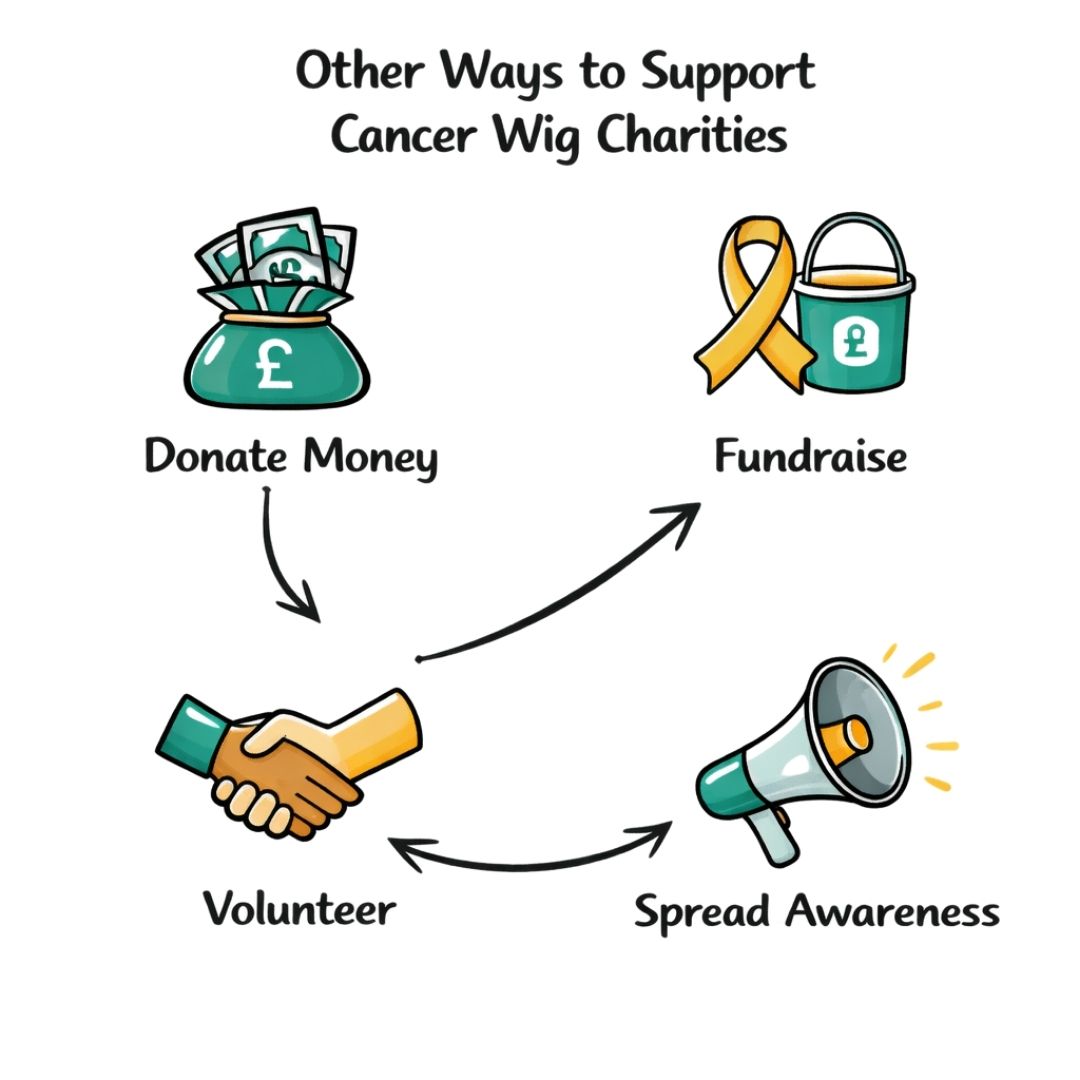
If you have a little time to spare, charities are almost always grateful for an extra pair of hands. Volunteers are often needed to help sort through donations, manage administrative tasks, or support fundraising events, roles that suit a wide range of skills and schedules. It’s worth checking the websites of your chosen organisations to see what local volunteering opportunities they currently have, short‑term shifts, or remote tasks; even a few hours can make a real difference to the teams that turn donations into wigs and support services.
Never underestimate the power of your own network. A simple post on social media about your donation journey or sharing a charity’s campaign can create a huge ripple effect. You’re not just sharing a link, you’re raising real awareness and inspiring others to get involved, whether that’s by growing their hair, donating, volunteering, or fundraising themselves. Every story shared helps build a stronger, more supportive community.
Thinking about donating your hair is a wonderful step, and it’s completely normal to have a few last-minute questions before you commit to cutting your hair. Getting the facts straight can make the whole experience feel much less daunting and a lot more rewarding. Let’s go through some of the most common questions people ask, so you can feel confident you're doing it right.
Many people worry that their hair won’t be “good enough” to donate. The good news is that the guidelines are often more flexible than you might expect; you may be pleasantly surprised by what actually qualifies. The best first step is to check the specific guidelines of the charity you plan to support, since each organisation sets its own criteria.
This is one of the most common questions people ask, and the honest answer is: it depends entirely on the charity. Each organisation sets its own rules, so what’s acceptable for one may be rejected by another. Some organisations, such as The Little Princess Trust in the UK, often accept hair that has been dyed a natural colour, as long as it’s still in good condition.
However, heavily bleached hair, extensive highlights, or very vibrant, unnatural colours are usually not accepted. The strong chemicals used in bleaching and colouring can weaken the hair’s structure, making it too brittle and difficult to work with during the wig-making process.
My Top Tip: Before you cut a single strand, always check the specific guidelines on your chosen charity’s website. Their guidelines are the final word on what they can accept, and this quick step helps avoid any disappointment later.
Yes, absolutely, layered hair is perfectly fine to donate! You don’t need a blunt, one-length cut to make a difference. The only important rule is that the shortest layer in your ponytail or braid must still meet the charity’s minimum length requirement.
If your hair has layers and you want to donate as much as possible, here’s a simple trick that works really well:
This method helps capture more of the shorter layers that might otherwise fall short in a single ponytail. It’s a small adjustment that can make your donation go further.
We've already mentioned this, but it's worth repeating because length is the single most important rule in hair donation. Most charities in the UK require a minimum of 7–14 inches (17–36 cm).
Yes, absolutely, most charities are delighted to receive grey or silver hair! In fact, it’s often in short supply and highly valued because it helps create natural-looking wigs for older adults and anyone with grey hair. Cancer doesn’t discriminate by age, and the need for realistic wigs exists across every generation. A diverse range of hair colours, including grey, is always appreciated and can make a real difference for someone who needs a wig that matches their natural look.
Donating your hair is a powerful, personal act of kindness that can restore dignity, confidence, and hope for someone facing cancer. Whether you give a ponytail, offer financial support, fundraise, volunteer, or raise awareness, your contribution truly matters. Every effort helps build a stronger, more compassionate community, one where no one has to face their cancer journey alone. Thank you for considering this meaningful way to make a difference.
We strongly advise you to talk with a health care professional about specific medical conditions and treatments.
The information on our site is meant to be helpful and educational but is not a substitute for medical advice.
This new YouTube review is from the popular lifestyle blog "Alejandra's Life"
Explore thoughtful ideas for cancer and mothers day, offering low-stress ways to honor her and support the whole family.
We just wanted to say a quick thank you to Nickie O'Hara from the popular Typecast for her lovely review of our "Comfort For Chemotherapy" gift box.