After you've been sick, the main goal is to prevent it from happening again. Rehydration is the most important first step, but it must be done gently. The best way to start is with small, frequent sips of clear liquids.
However, don't reach for that glass just yet. It's best to wait until you've stopped being actively sick for at least 30-60 minutes.
Your First Steps Back to Feeling Better
That first hour after you've been sick is a delicate time. Your immediate instinct might be to drink a large glass of water, but that's a common mistake. It's often too much for an upset stomach to handle and can easily trigger another round of nausea.
The key is to be patient. Give your stomach a proper break to let the irritation settle down. Once you feel ready, start small. Very small sips are far easier for your body to process without causing further issues.
Why Clear Liquids Are Your Best Bet
In these early stages, clear liquids are the ideal choice. They’re easy on the stomach, don't require much digestive effort, and work to replace the fluids you've lost without causing more trouble.
Here are a few good choices to get you started:
Water (of course)
Weak, sugar-free herbal tea – peppermint or ginger can be especially calming
Clear broths, like a simple vegetable or chicken one
Diluted fruit juice – think apple or white grape, not acidic orange juice
An oral rehydration solution (ORS)
You can purchase an ORS from any pharmacy, and it’s often a better choice than plain water. Why? Because it’s specially formulated with the right balance of electrolytes like sodium and potassium that your body loses when you vomit. These are crucial for helping you get properly hydrated again. Managing fluid intake is particularly vital if you're navigating treatment side effects; you can find more on this in our guide to dealing with chemotherapy dehydration.
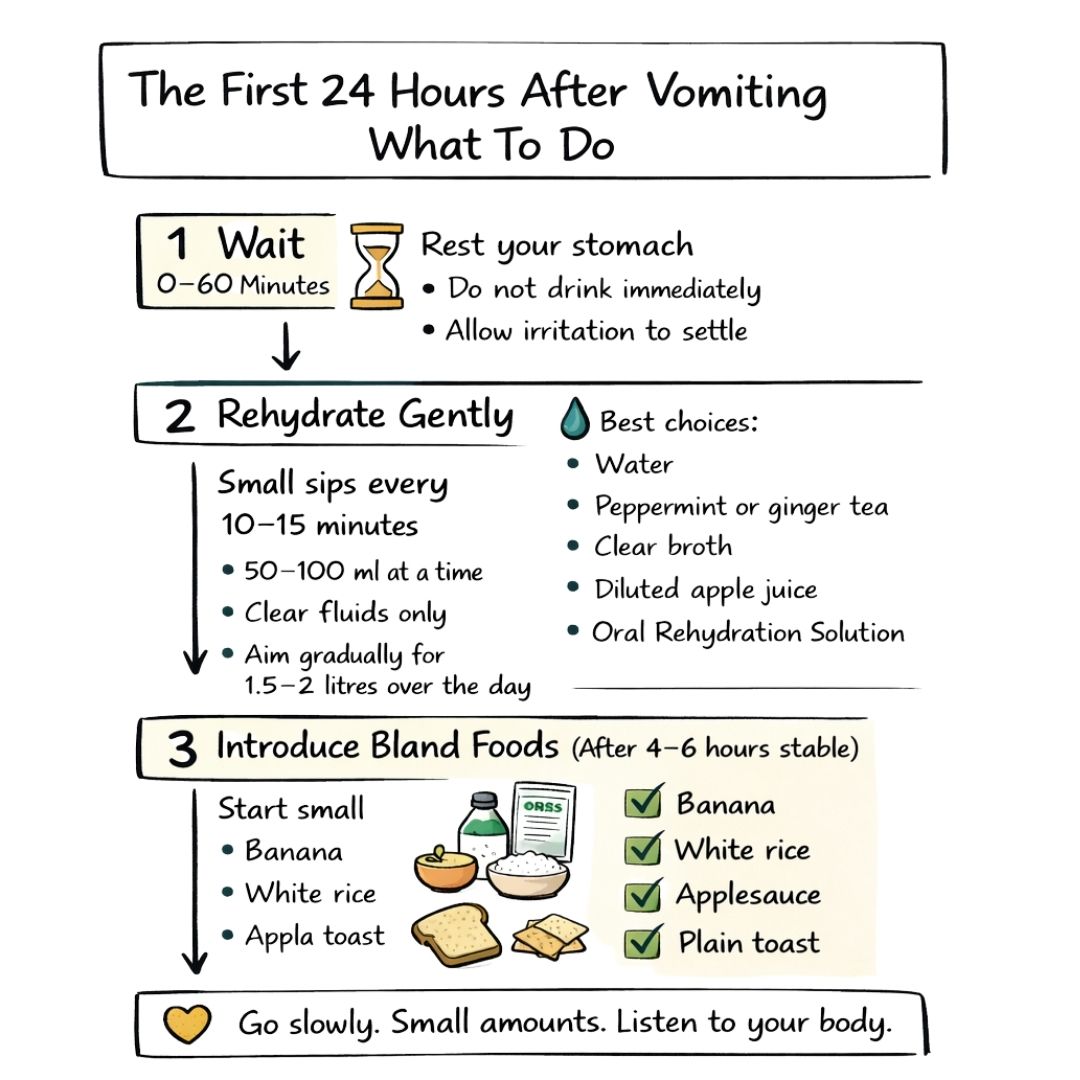
A Simple Rehydration Timeline for the First 24 Hours
To avoid accidentally overwhelming your system, it’s helpful to follow a gentle timeline. This isn't about hitting targets; it's about listening to your body and reintroducing fluids slowly and steadily.
As the timeline shows, the first move is always patience. After that, it’s all about a slow, steady reintroduction of fluids to keep your stomach settled.
This measured approach is backed by solid medical advice. For instance, a good rule of thumb is to sip around 50–100 ml (about 1.5-3.5 fluid ounces) every 10–15 minutes. This method minimises irritation while still working towards a decent daily total of 1.5–2 litres (about 6-8 cups). It’s a safe and effective way to replace those lost fluids and electrolytes. For more on managing a stomach bug, check out these excellent hydration tips for the 24-hour bug.
Your goal isn't to fill your stomach up. It's to give your body a constant, gentle trickle of fluids it can actually absorb. Rushing it is the most common pitfall and almost always sends you back to square one.
On that note, there are a few drinks you should definitely steer clear of. Anything sugary like fizzy drinks, caffeinated like coffee, or alcoholic will only make things worse by either irritating your stomach lining or dehydrating you further. Stick to the simple stuff for now.
Reintroducing Foods with the BRAT Diet and Other Gentle Options
Once you've managed to keep clear liquids down for a few hours without any trouble, your stomach might be ready to tackle some solid food. This is where the well-known BRAT diet really shines. It's a simple, reliable way to ease your system back into eating after being sick.
The name itself is a handy acronym: Bananas, Rice, Applesauce, and Toast. There’s a good reason these four are the go-to choices. They’re all incredibly bland, low in fat and fibre, and starchy, which makes them easy on a sensitive gut. This combination helps to firm up your stool and gives your digestive system a much-needed break.
Expanding Beyond the Basics
While the BRAT diet is a brilliant starting point, you don’t have to stick only to those four foods. The main idea is to pick simple, starchy things that won’t ask too much of your digestive system right now.
Think of these as your next-level gentle foods:
Plain crackers: Saltines or simple water biscuits are perfect.
Boiled or steamed potatoes: Keep them plain – no butter, milk, or pepper just yet.
Plain pasta or noodles: Again, hold off on any rich sauces or cheese.
Oatmeal or other hot cereals: Prepare it with water instead of milk and skip the sugar.
When you take that first bite, start small. A single spoonful of rice or a quarter of a banana is enough. Then, just wait a bit and see how you feel before eating more. Going slow and steady is your best bet for keeping nausea from making a comeback.
The whole point here is to give your body some easy energy without sparking another round of stomach upset. Anything fatty, fibrous, or spicy can definitely wait.
This gradual return to bland foods is a standard practice in clinical nutrition. The advice is always to begin with soft textures and low-fat options, as they’re the least likely to cause a problem. In fact, one hospital report showed that when patients were offered suitable food choices after being sick, 78% ate most or all of their meal. That’s a huge jump from the 26% who did so under the standard service. It just goes to show how much the right food at the right time matters for recovery.
Practical Tips for Preparation
How you cook these foods is just as important as what you choose. A few little adjustments can make all the difference.
For instance, if you're having toast, eat it dry or with just a tiny bit of non-dairy spread. The fat in butter can be surprisingly hard on an unsettled stomach. Likewise, go for plain white rice instead of brown rice at first. Brown rice is usually the healthier choice, but its high fibre content can be tough to digest when you're just getting back on your feet. Listening to your body and prioritising gut health during this time is crucial, especially if you're also dealing with treatment side effects.
Foods and Drinks That Can Set Back Your Recovery
Knowing what to eat after you’ve been sick is one thing, but knowing what not to eat is just as important for getting back on your feet. When your stomach is feeling fragile, the wrong food or drink can easily trigger another wave of nausea and undo all your careful progress.
It’s best to think of this as your temporary ‘off-limits’ list.
Greasy, fried, and fatty foods are a primary concern. They are notoriously hard to digest and can sit heavily in your stomach, which is the last thing you need right now. This means holding off on takeaways, rich creamy sauces, and anything cooked with a lot of oil or butter.
The Usual Suspects to Sideline for Now
It’s not just the obviously greasy stuff you need to watch out for. Several other common foods and drinks can cause trouble, so it’s wise to keep them off the menu until you’re feeling much more like yourself.
Be sure to steer clear of these for a bit:
Spicy Foods: Anything with a kick, like curries, chillies, or hot sauce, can directly irritate your stomach lining.
Acidic Foods: Citrus fruits (oranges, grapefruit), tomatoes, and pineapple can ramp up stomach acid and cause discomfort.
Sugary Treats: Sweets, fizzy drinks, and even some fruit juices are often too intense for a sensitive gut.
Dairy Products: For some people, milk, cheese, and even yoghurt can be tough to handle after a bout of sickness.
Caffeine and Alcohol: Both are well-known stomach irritants that can also make dehydration worse.
It's not just about single ingredients, but also complex meals. Highly processed foods often contain a mix of fat, sugar, and additives that can overwhelm a recovering digestive system.
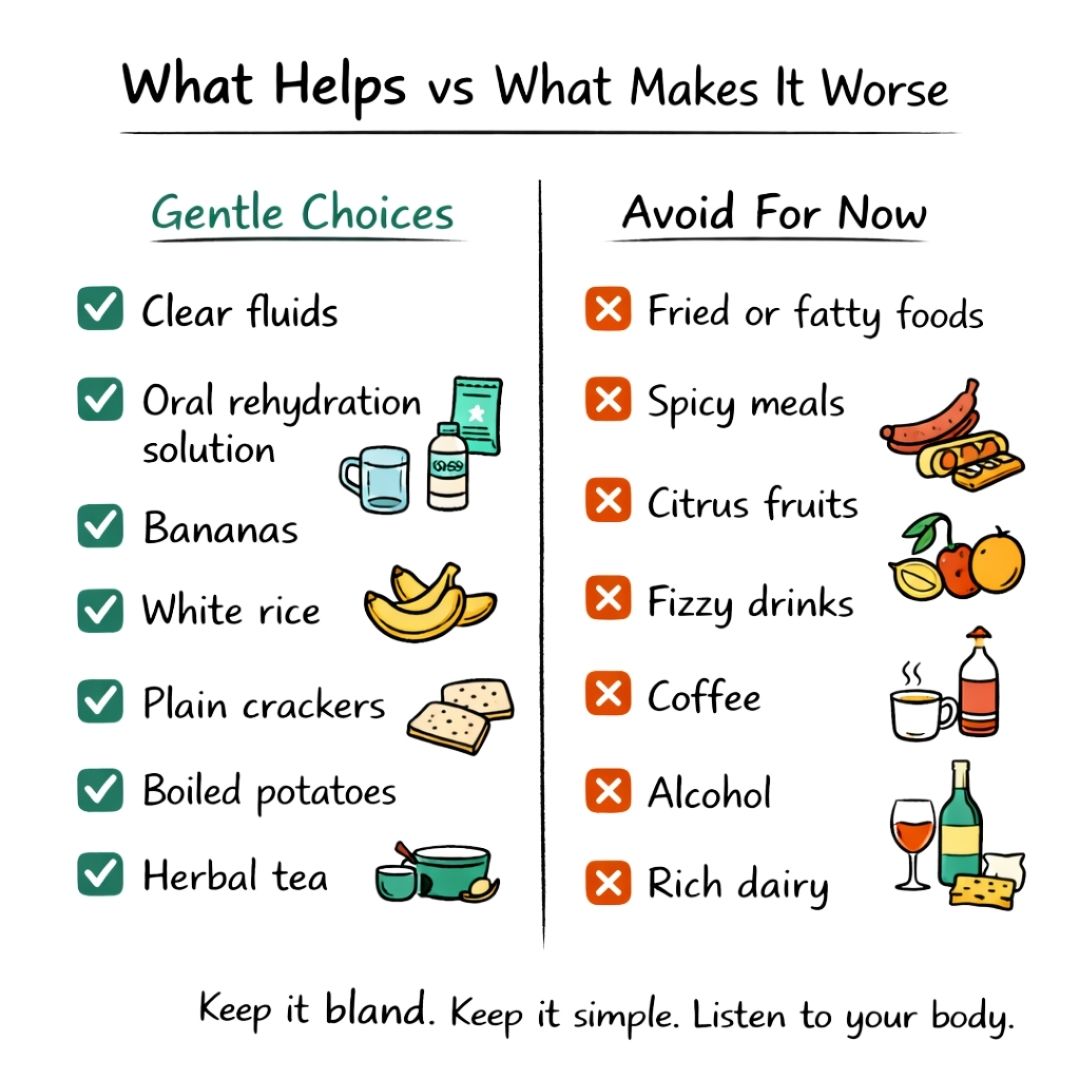
To help you make the right choices without having to think too hard, here’s a quick comparison.
Quick Guide to Stomach-Friendly Foods
Use this simple comparison to make smart food choices while you're recovering from vomiting.
Choose These Gentle Foods
Avoid These Potential Irritants
Plain toast, crackers, pretzels
Rich sauces, buttery or fried foods
White rice, plain pasta, potatoes
Spicy curries, hot sauces, chillies
Bananas, applesauce, melons
Oranges, grapefruit, pineapple, tomatoes
Clear broths and soups
Creamy soups, full-fat milk, cheese
Boiled or steamed chicken, fish
Sausages, bacon, processed meats
Herbal tea (peppermint, ginger)
Coffee, alcohol, fizzy drinks, juices
Keeping this guide in mind can make your recovery a lot smoother and help you avoid any accidental setbacks.
The main idea is to keep things simple. Gaining a better understanding of what makes up ultra-processed foods can really help guide your choices long-term, too.
If you’re going through treatment and need more tailored guidance, our comprehensive guide to creating a cancer-friendly diet offers more specific advice. For now, sticking to bland, simple options is always your safest bet.
Special Considerations for Managing Treatment Side Effects
Nausea and vomiting from treatments like chemotherapy isn't the same as a 24-hour stomach bug. It can be a persistent challenge, making nutrition a vital part of your cancer care.
The best approach is to rethink how you eat. Forget three big meals a day. Instead, try grazing on five or six small, snack-sized portions. This keeps your stomach from getting too full, which is a common trigger for nausea.
Gentle Strategies for Treatment-Related Nausea
When you're going through treatment, even the smell of cooking can be enough to turn your stomach. A simple but surprisingly effective trick is to stick with cold or room-temperature foods. Hot meals release strong smells that can trigger nausea instantly. Cold options like a simple sandwich, a pot of yoghurt, or a fruit salad are much easier to face.
Here are a few other tips that can make a real difference:
Sip, don't gulp. Drink your fluids slowly throughout the day instead of with your meals. A stomach that’s too full of both food and liquid is more likely to react.
Keep plain snacks nearby. A few crackers or a bit of dry toast can work wonders. Having a little something in your stomach often helps to settle it.
Stay upright after eating. Try not to lie down for at least an hour after a meal. This helps with digestion and can reduce discomfort.
It’s very important to talk to your oncology team about this. They can prescribe anti-sickness medications (antiemetics) to take before treatment, heading off the nausea before it even starts. If what you're doing isn't working, let them know.
Finding what helps you is often a process of trial and error. For more in-depth tips, our guide on what to eat during chemotherapy has plenty of extra ideas. The main goal is to keep your strength and hydration up, one small and gentle step at a time.
When You Should See a Doctor
Most of the time, an upset stomach is a temporary issue you can manage at home. But it's important to recognise the signs that something more serious might be happening. Knowing when to stop self-treating and contact your doctor is crucial for a safe recovery.
Think of vomiting as your body’s defence mechanism, forcefully getting rid of something it doesn't like. While often effective, it can also be a red flag for an underlying issue that needs a proper diagnosis. If you spot any warning signs, don't just 'wait and see'.
Key Symptoms to Watch For
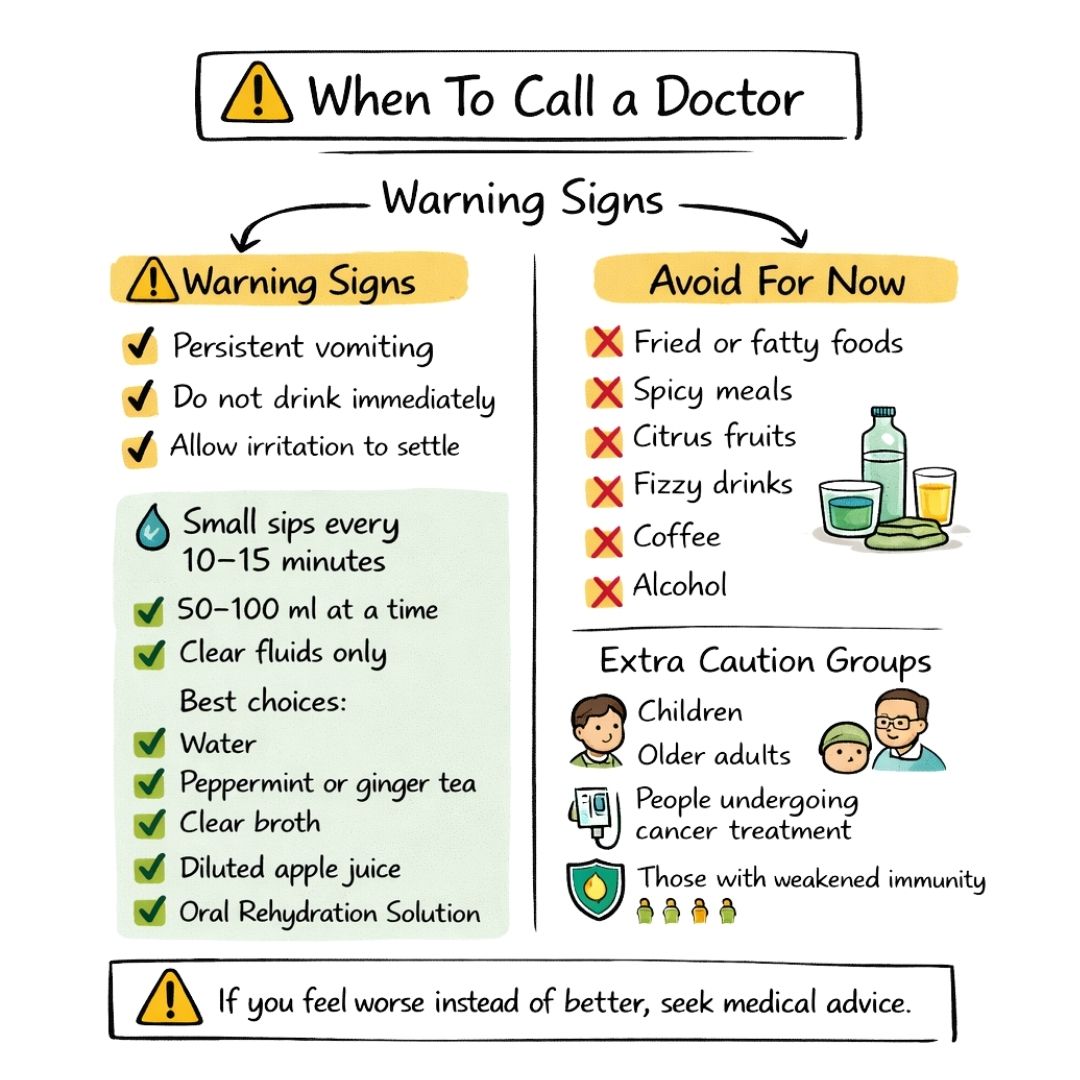
A single bout of vomiting usually isn't cause for alarm. However, if any of the following symptoms appear, it’s time to seek medical advice. These can point towards severe dehydration or a more significant health problem.
Keep an eye out for these warning signs:
Persistent Vomiting: You just can't keep any fluids down for more than 24 hours.
Signs of Dehydration: Feeling dizzy or light-headed, a very dry, sticky mouth, and not urinating very much (or if you do, it's dark yellow and has a strong smell).
Severe Pain: Intense or constant pain in your stomach isn't typical for a simple stomach bug.
High Fever: Your temperature is stubbornly high and isn't coming down with rest and fluids.
Trust your instincts. If you feel like something is seriously wrong or you’re getting worse instead of better, it's always best to get checked out.
When to Be Extra Cautious
For some people, vomiting can lead to complications much more quickly, so you need to be extra vigilant. This is especially true for children, older adults, and anyone with an existing health condition like diabetes or a weakened immune system. For these groups, seeking advice sooner is always the safer option.
If you’re dealing with sickness as a side effect of medical treatment, the rules can be a bit different. Getting to grips with the specifics of chemo-induced nausea will help you understand your body’s signals and know when it’s time to call your care team for support.
Your Top Questions About Vomiting Recovery, Answered
When you're feeling unwell after being sick, it’s natural to have questions. Here are some quick, straightforward answers to the things people ask most often.
How Long Should I Wait to Eat After Vomiting?
Give your stomach a proper rest for at least a few hours after the last time you were sick. Don't rush it. For now, your only job is to focus on sipping small amounts of clear fluids.
Once you’ve managed to go 4-6 hours without any more vomiting and you're keeping liquids down, you can then try a tiny bit of bland food. Think a couple of saltine crackers or even just a single spoonful of plain white rice. It’s all about testing the waters gently to see what your stomach can handle.
Are Sports Drinks a Good Idea for Rehydration?
It’s a common go-to, but you have to be careful. While sports drinks do have electrolytes, they're also loaded with sugar. That high sugar content can actually make diarrhoea worse, which often goes hand-in-hand with a stomach bug.
Your best bet is always an oral rehydration solution (ORS) from a pharmacy, as it’s perfectly balanced for this exact situation. If a sports drink is genuinely all you have, diluting it with an equal amount of water can help reduce the sugar content.
Expert Tip: The goal after vomiting is to replace lost fluids and electrolytes, not to refuel for a marathon. An ORS is scientifically formulated for recovery, whereas sports drinks are designed for athletic performance and their sugar can be too harsh for a sensitive gut.
What Should I Do If My Child Has Been Vomiting?
The core advice is the same for kids, but the stakes are higher because dehydration can set in much faster. Use a paediatric oral rehydration solution and offer it in tiny, frequent sips, a spoonful or even a small syringe every few minutes.
For babies, stick to breast milk or formula if they can keep it down. The most important thing is to get in touch with your paediatrician or GP for advice. Little ones can become dehydrated very quickly, so professional guidance is key.
Is Ginger Ale Good for an Upset Stomach?
This is a classic piece of advice, but it needs a modern update. While real ginger is fantastic for easing nausea, most commercial ginger ales contain very little of it. They're mostly sugar, flavourings, and carbonation, which can easily irritate an already upset stomach.
A far better choice is to make a warm, soothing tea with a few slices of fresh ginger root. That way, you get all the anti-nausea benefits without the fizz and sugar overload.
We strongly advise you to talk with a health care professional about specific medical conditions and treatments. The information on our site is meant to be helpful and educational but is not a substitute for medical advice.
Written by Cancer Care Parcel
In a world full of conflicting and sometimes misleading information about cancer, Cancer Care Parcel stands out by offering resources backed by solid facts. Funded entirely by the sale of our products and donations, we ensure that every resource on our site is accurate, trustworthy, and focused on supporting the cancer community.
A clear guide to FOLFOX chemo. Understand how the treatment works, what to expect during each cycle, and how to manage common side effects effectively.