When you're going through cancer treatment, the big picture can feel overwhelming. But sometimes it's the smallest comforts that help you get through each day with a little more ease. These are not grand gestures or expensive solutions. They are simple, thoughtful approaches that can make your treatment experience more manageable and help you feel more like yourself.
One of the biggest challenges during treatment is handling those taste changes. That metallic taste in your mouth, what many people call "chemo mouth" can make even your favourite foods feel foreign and unappetising.
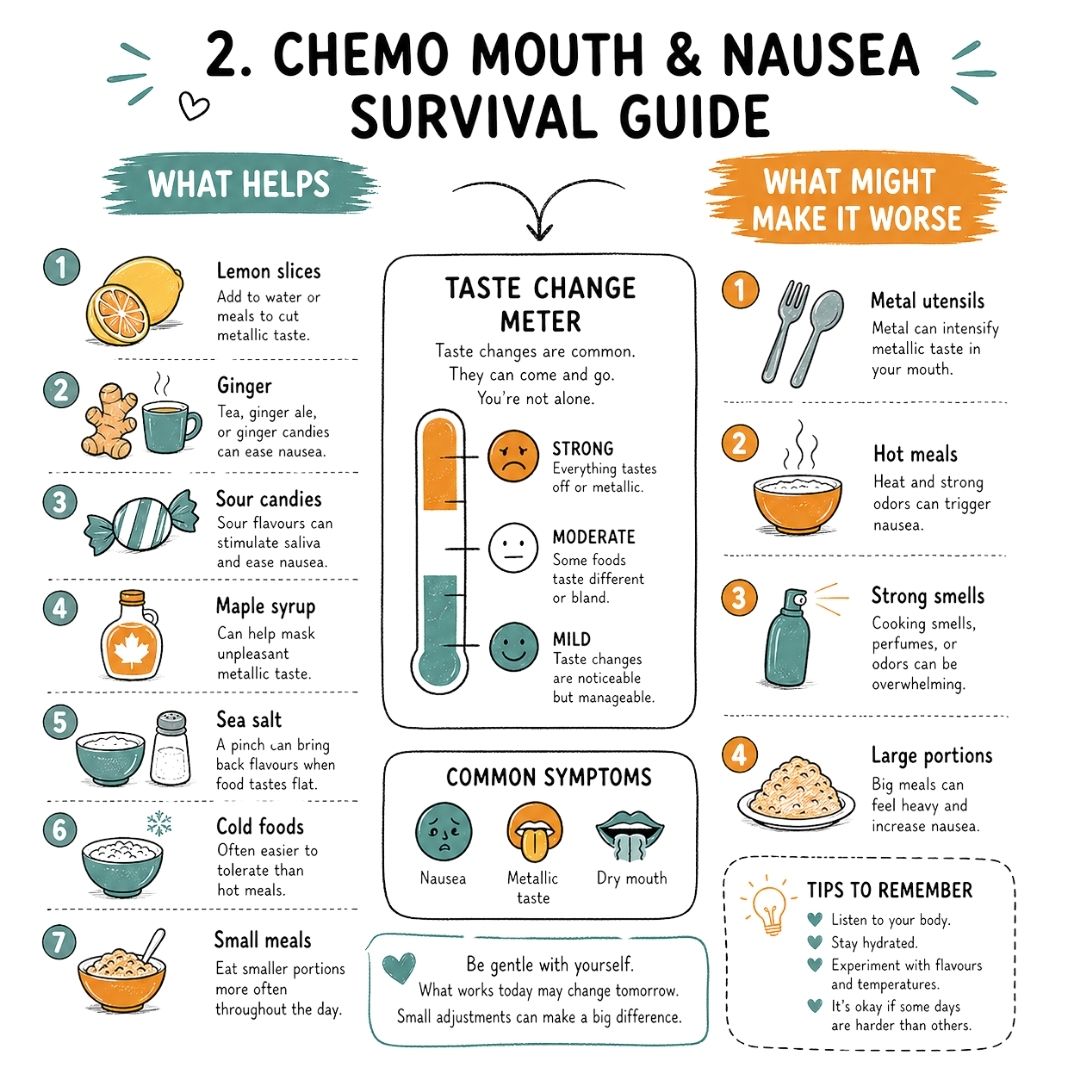
You might find that adding a squeeze of lemon to your water or meals helps cut through that metallic flavor. Some people discover that maple syrup can mask unpleasant tastes in dishes, while a pinch of sea salt can bring back some flavours when food tastes like cardboard.
If you're finding that metal utensils make that metallic taste worse, switching to plastic cutlery during meals can eliminate that extra layer of unpleasantness. It's such a small change, but it can make eating feel more normal again.
For nausea, keeping peppermints or peppermint oil nearby can bring quick relief. Some people find that sour candies or ginger in any form whether it's crystallised ginger, fresh ginger tea, or even ginger ale helps settle their stomach.
Since large meals might feel impossible some days, eating smaller portions more often throughout the day can be gentler on your system. Cold or room-temperature foods often feel more tolerable than hot meals, and simple options like plain toast, crackers, or a cold smoothie might be just what you need.
Your treatment space and recovery spot at home deserve just as much attention and care as your medical routine. While hospitals and clinics provide what they can, bringing familiar items from home can make all the difference in feeling settled and comfortable.
That favourite blanket from home, your softest pillow, or comfortable slippers with good grip can transform a clinical space into something more welcoming. If you're experiencing night sweats or hot flashes, switching to bedding from natural fibers like cotton, linen, or bamboo can help regulate your temperature better than synthetics.
A heating pad or heated blanket becomes invaluable on days when your body aches or when you just need extra warmth and comfort. If you've had surgery, especially in the chest area, small pillows placed right can ease swelling and provide support exactly where you need it.
Keeping basic comfort medications like ibuprofen or acetaminophen within easy reach means you don't have to hunt for relief when you're already feeling unwell. Having these small essentials organised and handy is one less worry.
Hydration matters even more during treatment, even when drinking feels like a chore. If plain water doesn't appeal to you, try small sips of clear, sweet liquids slowly throughout the day to stay hydrated.
Some people find ice-cold drinks feel refreshing, while others prefer room temperature. Fizzy drinks can sometimes ease nausea, and fruit juices offer both hydration and calories when solid food feels challenging.
Popsicles or smoothies can serve double duty, they provide hydration while soothing a sore mouth or throat. These cold, smooth textures often feel easier than trying to chugging large amounts of liquid at once.
Your energy levels might swing wildly during treatment, and that's totally normal. On days when you feel up to it, gentle stretching can boost both with physical comfort and emotional well-being. The best part of stretching is that you can do it at home, even while seated, without any gear or much energy.
Movement doesn't have to be intense to be beneficial. Sometimes just shifting positions, gentle shoulder rolls, or stretching your arms above your head can ease stiffness and improve how you feel overall.
If massage appeals and feels good, it can significantly help with mood, energy levels, and overall comfort. While professional massages might not always work, even gentle self-massage or asking a family member to rub your shoulders can provide relief.
Treatment days often mean lots of waiting, and having entertainment handy can make those more bearable. Whether it's streaming a favourite show, listening to audiobooks, or having a good playlist ready, these distractions can shift your focus away from discomfort.
Some people find comfort in journaling during treatment. It gives a way to process emotions and experiences while also creating a record of this meaningful time. There's no right or wrong way; it's simply about what feels helpful to you.
Relaxation techniques like deep breathing or visualization can help manage anticipatory anxiety before treatments. These skills become more natural with practice, and you might find them useful in many situations beyond your medical appointments. For caregivers and friends, suggesting gentle distractions, sharing calming activities, or simply sitting quietly together can be practical ways to support someone with cancer emotionally without needing to “fix” anything.
Having a support person, whether a family member, friend, or companion, can really change your treatment experience. They can drive you to appointments, sit with you during treatments, help remember questions for your medical team, or simply provide encouraging conversation when you need it most.
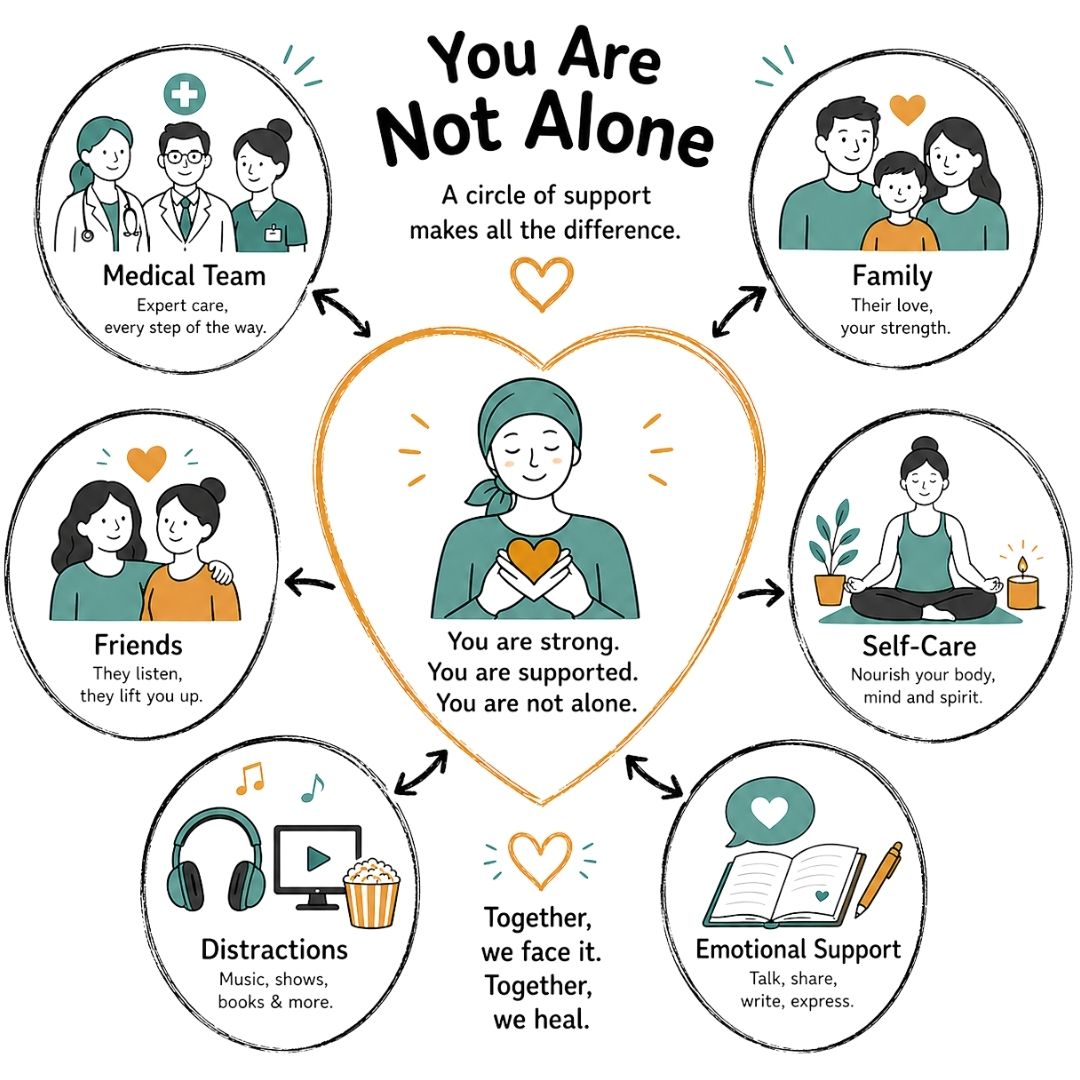
Your support person doesn't need to have all the answers or fix everything. Often, their most valuable contribution is simply being present and maintaining a calm, positive attitude that reminds you that you're not going through this alone. For many people, the most practical ways to help a family member with cancer are surprisingly simple showing up, listening, and offering steady, low-pressure companionship during treatment days.
Sometimes comfort comes from maintaining small rituals that help you feel more like yourself. This might mean using a favorite lip balm, wearing soft clothes that feel good against your skin, or keeping a special mug for your morning tea or coffee.
These seemingly minor choices can help preserve your sense of identity and normalcy during a time when many aspects of your routine might need to change. They're gentle reminders that you're still you, even as you navigate this challenging experience.
Everyone's comfort needs are different, and what works for one might not work for another. Notice what makes you feel better whether it's a particular scent, texture, temperature, or activity and build your own collection of go-to comfort strategies.
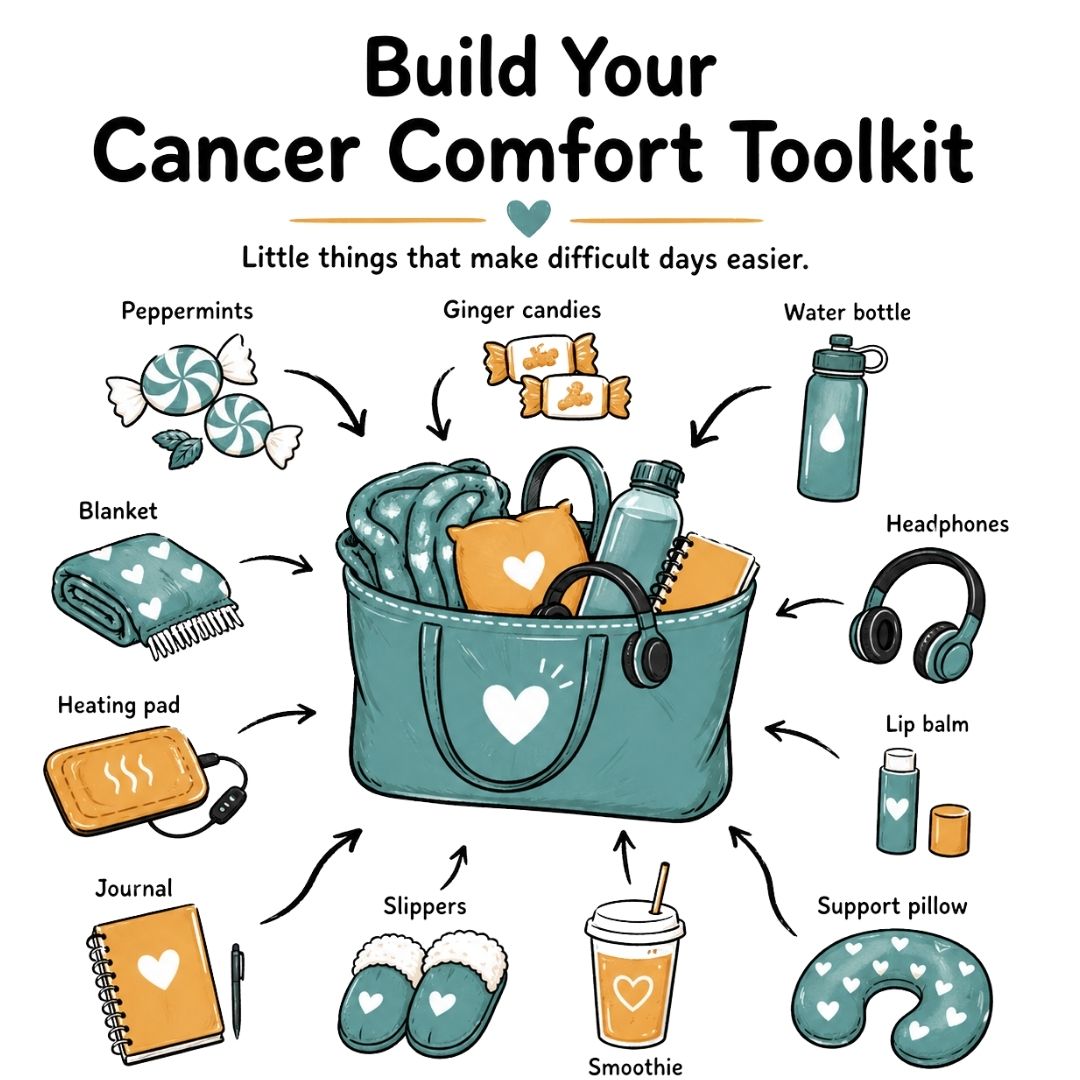
Keep your most helpful items easily accessible. Whether that's ginger candies in your bag, a soft scarf for temperature regulation, or a playlist that lifts your spirits, having these comforts within reach means you can access relief quickly when you need it.
The goal isn't to wipe out all discomfort. That’s not realistic during cancer treatment. Instead, it's about finding ways to make difficult days a little easier and helping yourself feel more comfortable and supported throughout your experience. These small comforts might seem simple, but their cumulative effect can make a meaningful difference in how you feel each day.
Remember that what brings comfort can change as your treatment progresses, and that's perfectly normal. Stay flexible and kind with yourself as you discover what works best for you during different phases of your treatment journey.
We strongly advise you to talk with a health care professional about specific medical conditions and treatments.
The information on our site is meant to be helpful and educational but is not a substitute for medical advice.
Discover How Marine-Derived Compounds Inspire Innovative Cancer Treatments From The Depths Of The Ocean
This Article Discusses The Best Hospital Bag Essentials For You To Buy. Including Items For Fun, Comfort And Practicality.
Care During Cancer Treatment: Read Matthews Story On How A Cancer Care Parcel Donated To Him Helped During His Cancer Treatment.