A short definition is: ‘the factor of being addicted to a particular substance or activity’. There are many types of addiction, although my focus in this piece will mostly be on substance addiction. Much of the beginning of this article will also be targeted to understanding substance addiction, so if it is something you are familiar with, please read along anyway, as there is some useful and interesting information included.
Substances can be dangerous and harmful not only to the body but also to the mind. An addiction to these substances can lead to overuse and, therefore, an increased risk of negative physical and mental effects, as well as prolonging the effects. This will be discussed in more depth later on, but it is important to understand right off the bat that although these substances can be harmful in a range of ways, it is also important not to stigmatise addiction. Addiction is not always a choice; in many cases, a person’s circumstances or health can lead to addiction, especially when help is not offered, often because of the stigma that they have chosen addiction.
Substance addiction can be the result of many things. Where a social gathering involving peer pressure can go from experimentation, to habit, to addiction, it is equally as simple as someone wanting to relax in a world as hectic as ours, and enjoying the feeling a substance provides them.
“It is considered a brain disorder, because it involves functional changes to brain circuits involved in reward, stress, and self-control.” - National Institute on Drug Abuse
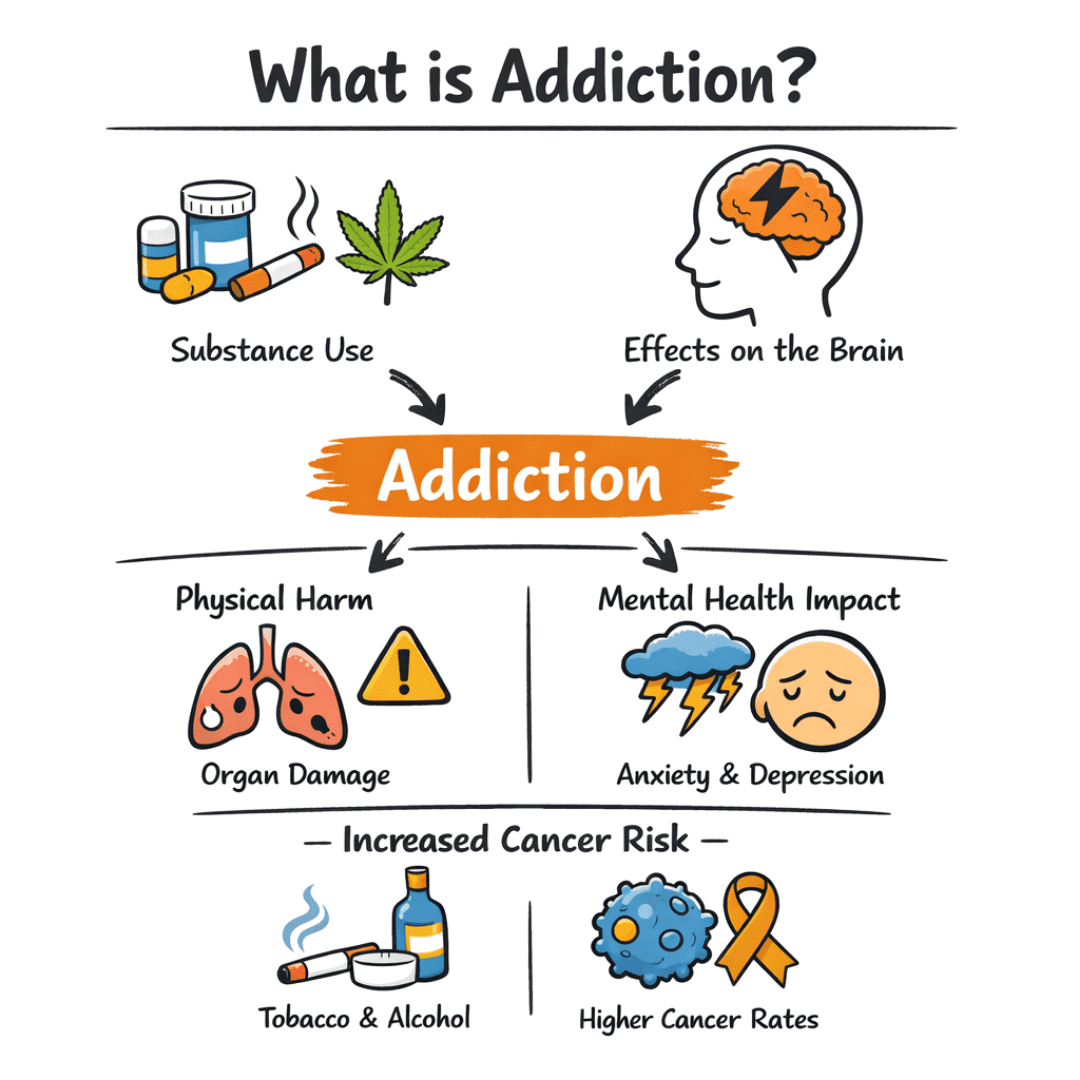
For someone with this disorder, it can only take one taste of a substance’s effects to create a craving for it. To put it into a different perspective for someone not directly affected, if you had a constant itch, and you needed to scratch that itch, but nothing available to you could help you with that itch without having some negative side effects, would you take it? The satisfaction, feeling or even slight change in mental state is then so strongly associated with these substances that your mind and body begin to loosen its grip on control, and it becomes harder and harder to say no to scratching that itch.
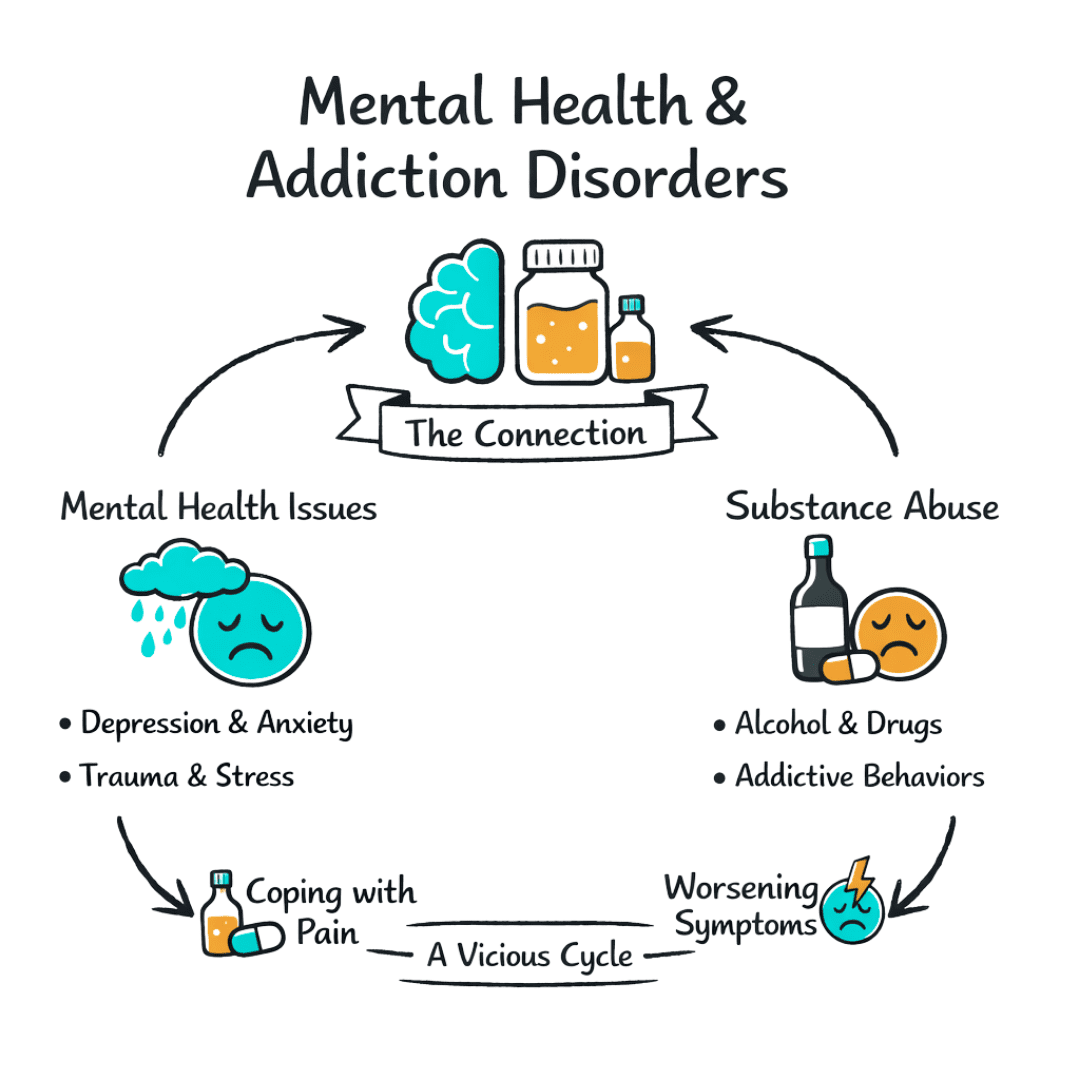
Substance addiction is often found linked to mental disorders like depression, anxiety, or bipolar disorder. As someone who has struggled a lot with anxiety myself, it can sometimes feel as though there is something fundamentally wrong with you, like you’re wired wrong, and that there is no out. This link between addiction and mental disorders, therefore, can be understood very easily when someone affected by these disorders seeks relief in substances. Especially when mental illness, although improved, is still taboo in many societies, making it difficult to find help.
Not all addictive substances are class A drugs or something you get arrested for. Some can be bought in your local corner shop, or even given to you as a teenager at the table with your parents on special occasions. Alcohol and cigarettes are very accessible today, and although taxed, they are still very affordable today in terms of average household income, compared to their affordability historically.
“Alcohol is now 74% more affordable than it was in 1987, when compared with average household income. [3] Alcohol has become 14% more affordable since 2010. [4] Most alcohol is purchased from supermarkets and off-licences, where the affordability of beer rose by 188%, and wine and spirits by 131%, between 1987 and 2018.” - Alcohol Change UK
Considering this, we can again see how addiction isn’t always how we see it depicted on television. Although this is only one section of substances. There are other substance addictions that are very much so illegal and often associated with crime, due to the illegal status of the substance itself. This is without mentioning the possible money-related and violence-related aspects that substance addiction can involve.
Considering this list, it first seems almost overwhelming; however, many of these substances are found in much more mundane parts of life that you might not have expected. For example, methamphetamine is a stimulant. Stimulants are often prescribed to people with obesity or ADHD, available as Desoxyn. The ‘meth’ we see on shows like Breaking Bad ‘resembles glass fragments and is an illegally altered version of the prescription drug that is cooked with over-the-counter drugs in meth labs.’ - DEA
Poppy seeds, as you may know, are also a natural source of opioids. This does not mean you can eat enough to get high, but they are used in teas to treat high levels of pain or anxiety. So although they seem very scary, there are safe, legal and medical uses for them.
If you are reading this, you likely may be/know someone who has dealt with substance addiction and/or cancer, so I will try and simply use this segment to help give a deeper understanding of how substance abuse can lead to cancer. Most importantly, I will request that this be a blame/guilt-free place. As we have covered already, substance abuse is not simply a choice for many, and cancer will always be a difficult issue for all involved, regardless of how, when, or where it developed. Therefore, substance addiction leading to cancer is not something to blame or feel guilty for.
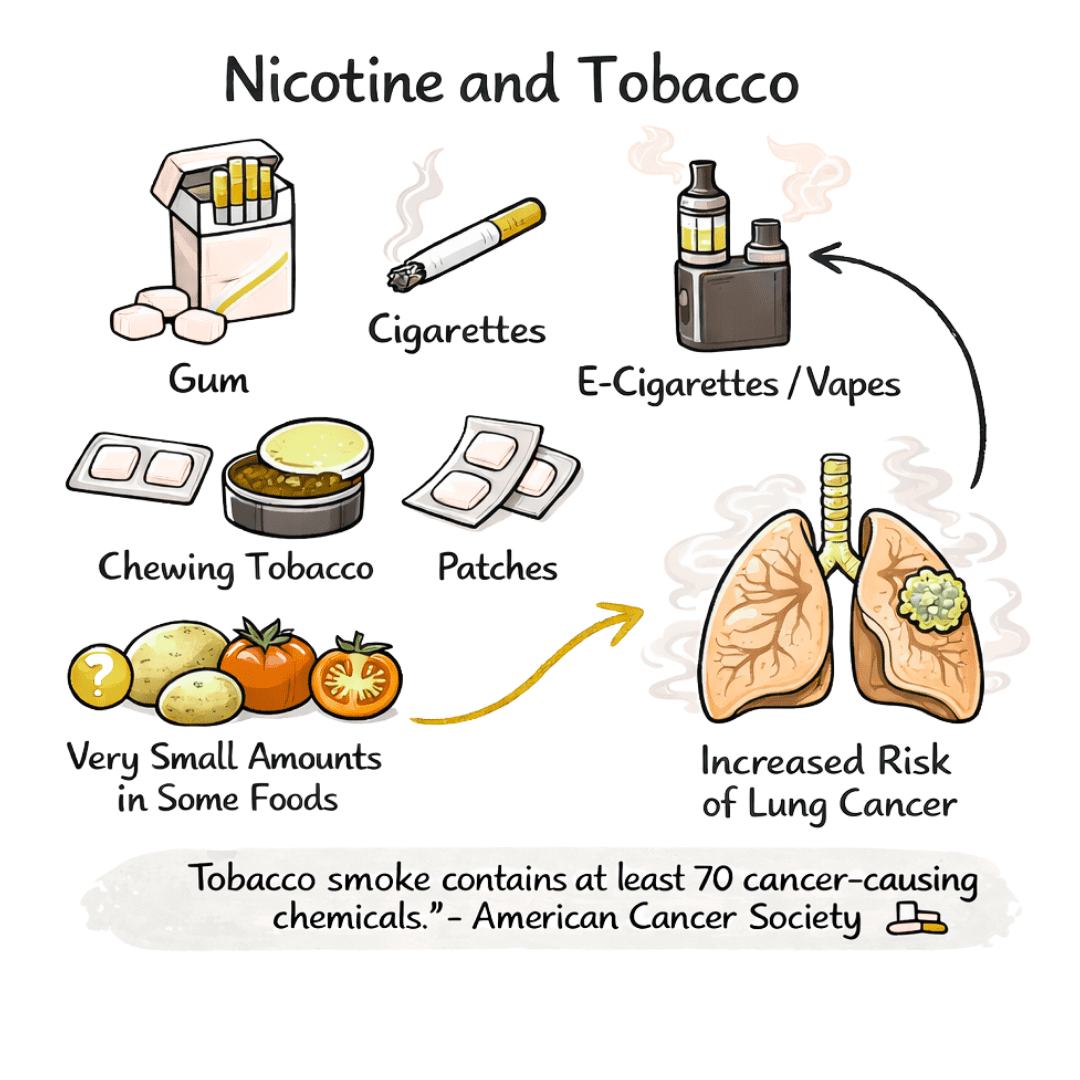
Starting with nicotine, let's establish what forms it comes in. We have: cigarettes, gum, patches, chewing tobacco and e-cigarettes/vapes. Some foods, like potatoes and tomatoes, have been said to contain nicotine, but in very, very small amounts. The main point with nicotine is that it has not been proven to directly cause cancer. Nicotine addiction is often the addiction to its effects through a chemical pathway that releases dopamine to the body’s nervous system. Repeated exposure to nicotine leads to dependence and, therefore, a withdrawal response.
So, gum and patches do not directly lead to cancer, although I will discuss their other effects on cancer later. When looking at what leads to cancer, the tobacco itself is more important. There is a commonly known link between smoking and lung cancer. It's now known that “tobacco smoke contains at least 70 cancer-causing chemicals.” (American Cancer Society)
When smoking cigarettes, the tar residue that's left behind in the lungs is the result of the incomplete burning of these chemicals. These chemicals can then cause physical damage to the lungs, leading to the development of tumours and making it difficult for the lungs to expand and contract properly. As e-cigarettes and vapes don’t contain tobacco, they do not have the same exact effects; however, not enough reliable evidence has been carried out yet to be able to confidently list the negative effects.
Alcohol can damage our cells and stop them from repairing damage. It can also increase hormone levels such as oestrogen and insulin. Meaning that the cells can divide more often, increasing the chances of cancer developing, and making it easier for the mouth and throat to absorb harmful chemicals that can lead to cancer.
There are seven common types of cancer that are linked to alcohol:
“Some cells in these areas can turn alcohol into a chemical called acetaldehyde. Acetaldehyde can cause cancer by damaging DNA and causing genetic mutations that lead to cancer developing. Acetaldehyde is also abundant in tobacco smoke.” - Worldwide Cancer Research
The route alcohol takes through the body is from the mouth to the throat, to the stomach and then the small intestines. Not only does it travel through the organs, but through the blood too. Affecting the hormones, blood, organs, and cells directly means it’s an easy connection as to how something damaging can do so much damage, and increase the risk of cancer developing.
Simply, the reasons are the same as people who smoke tobacco; however, people who smoke cannabis tend to inhale more smoke per puff and hold it in their lungs for longer.
Unfortunately, there isn’t as much research into this as other substances. Many variables make this research difficult. One of which is that many cannabis smokers also smoke tobacco, as well as there being a variable amount of THC (key ingredient in cannabis) in each cannabis cigarette.
Overall, addiction is far more complex than the stereotypes that often surround it. It sits at the intersection of brain chemistry, mental health, environment, accessibility, and personal circumstances, and its effects can extend to every aspect of a person’s life and well-being. Understanding how substances affect the mind and body — and how addiction connects with conditions like anxiety, depression, and long-term physical illness — helps us replace judgment with compassion and fear with informed awareness.
The most important takeaway is that addiction is not a moral failure but a health issue, and like other health issues, it responds best to support, education, early intervention, and accessible treatment. By approaching the topic with empathy and evidence, we create more space for people to seek help and more opportunities for recovery to begin.
We strongly advise you to talk with a health care professional about specific medical conditions and treatments.
The information on our site is meant to be helpful and educational but is not a substitute for medical advice.
Discussing What A Healthy Cancer Diet Is And How Cancer And Its Treatment Can Affect This Diet. Included Are Suggestions For Dietary Changes Which May Help.
Cancer does not need to be unduly given glory as many of us have seen it being done so far. Cancer is just a disease and we need to keep it at that. Labeling it as a fight, losing a battle, winning the war are all attitudes that can bring negativity or false positivity in everyone involved in this, be it the patient, his or her family as well as the treating team.
As someone who was once a career “expert” and even wrote books about it, I had the gall to write a blog post and make videos about returning to work […]