Finishing cancer treatment is a huge moment, a real milestone. But it’s often the start of a new chapter, one that comes with its own set of questions. For many people, a big part of this next phase is getting to grips with the potential for long-term side effects from radiation therapy, as some changes can crop up months or even years down the line. We call these 'late effects'.
Understanding The Late Effects Of Radiation Therapy
You can think of radiation's impact a bit like a sunburn that heals very, very slowly, but on the inside. During your treatment, those high-energy rays were focused on destroying cancer cells. And while modern radiotherapy is incredibly precise, it’s almost inevitable that some healthy cells in the surrounding area were affected, too.
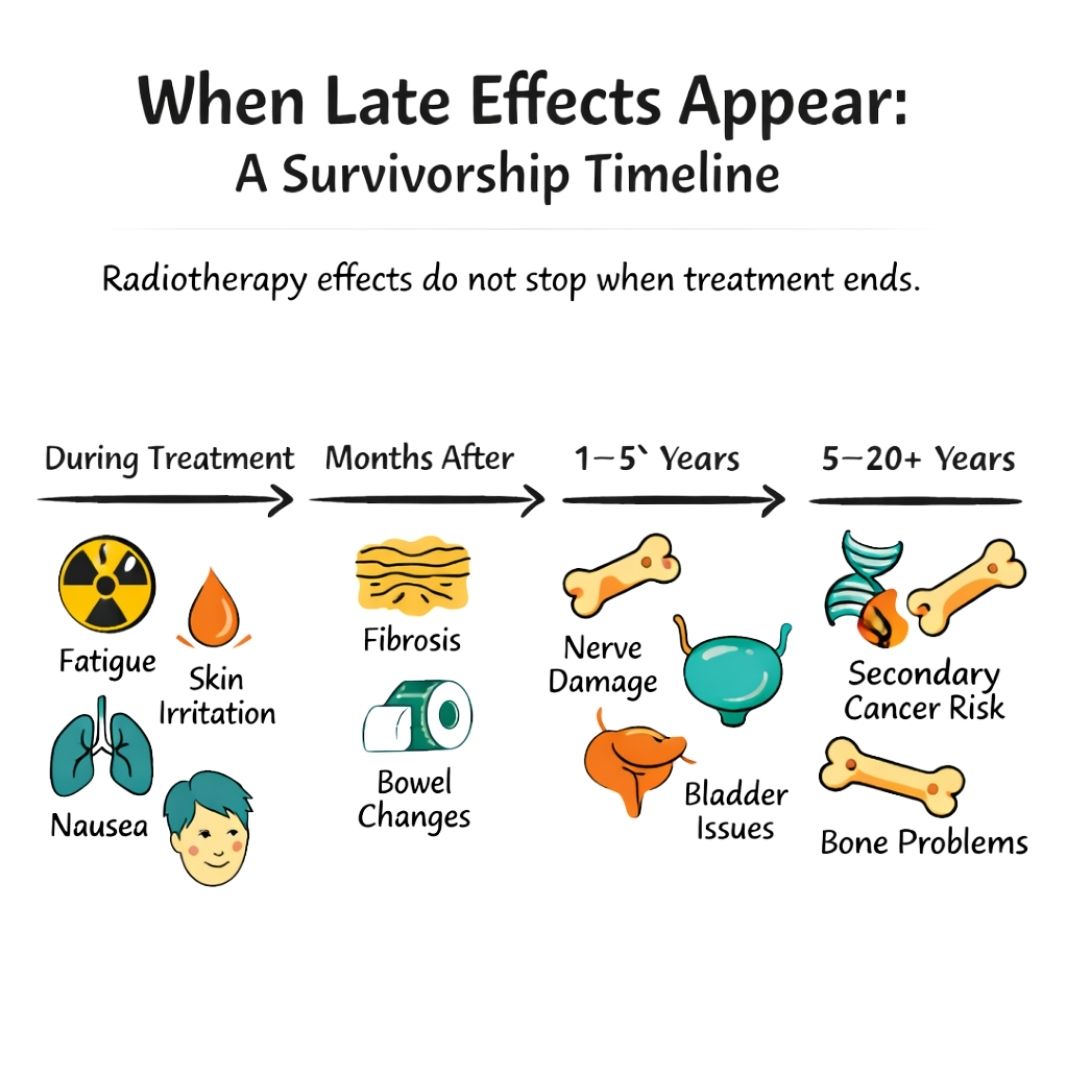
In the short term, your body gets to work on healing, which is why those immediate side effects tend to fade. But deeper down, more gradual changes can continue to unfold over a much longer timeline. This slow, subtle process is exactly why late effects can appear long after you’ve rung that bell.
Why Do Late Effects Happen?
It really boils down to how radiation impacts the body's natural repair systems and blood supply. Over time, healthy tissues in the treated area can develop scar tissue or become less flexible – a process called fibrosis. At the same time, the tiny blood vessels that feed these tissues can get damaged, which reduces blood flow and slows down the healing process.
These changes don't just happen overnight. They develop gradually and can be influenced by a few key things:
The area of the body treated: Different parts of the body, like the skin, lungs, or bowel, all respond differently to radiation.
The total dose of radiation received: A higher overall dose can increase the risk and potential severity of late effects.
Your individual health factors: Your general health, age, and whether you also had other treatments like chemotherapy can all play a part.
It's crucial to understand that radiation's impact doesn't just stop when treatment ends; the effects can continue to evolve. This is why staying in touch with your medical team and being aware of any new symptoms is so important for your long-term health.
Setting The Stage For Survivorship
Learning about potential long-term side effects isn't about causing alarm. It's about giving you knowledge and control. When you know what to look out for, you're better equipped to have meaningful conversations with your doctor and take proactive steps to manage your health for years to come. This guide is here to give you clear, reliable information to help you move forward with confidence.
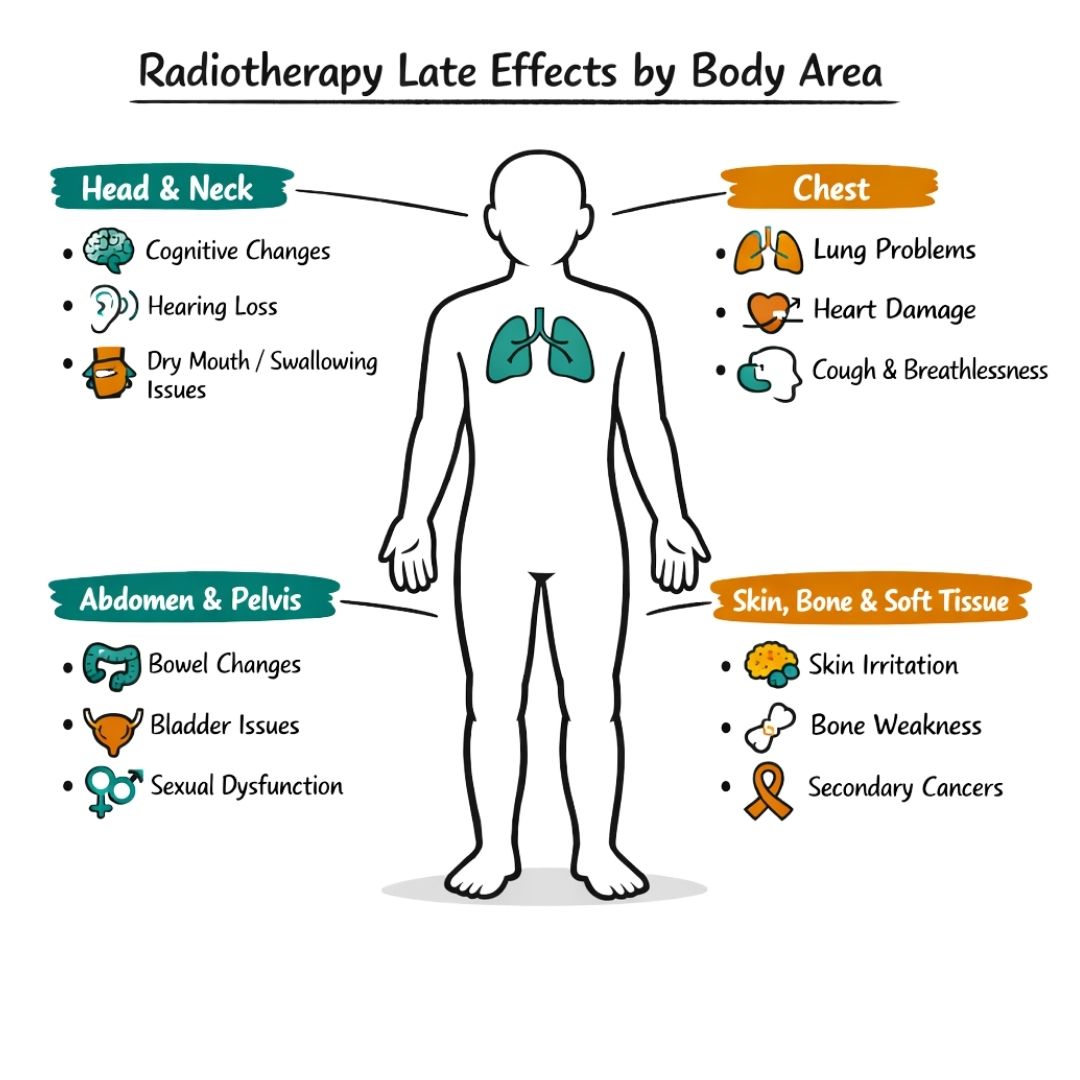
Because radiotherapy is such a targeted treatment, the side effects you might experience down the line are usually specific to the part of your body that received the radiation. Think of it like a spotlight on a stage; only the area in the beam is directly affected.
This means that the long-term effects someone might face after treatment for a brain tumour are completely different from those who had radiation to their pelvis. Knowing what to look out for based on your specific treatment can feel incredibly empowering. It helps you tune into your body and turns vague worries into focused, confident questions for your healthcare team.
To give you a clearer picture, let's explore some of the common late effects that can arise in different parts of the body.
Potential Late Side Effects Of Radiotherapy By Body Area
The following table offers a quick overview of the potential long-term issues linked to different treatment zones. It's designed to help you quickly find the information that's most relevant to your personal experience.
Skin feeling tight or hard, swelling in a limb or other treated area, joints feeling stiff or difficult to move.
Remember, this is a general guide. The risk of developing any of these effects depends on many individual factors, which your oncology team can discuss with you in detail.
A Closer Look at Specific Treatment Areas
Head And Neck Radiotherapy
Radiation aimed at the head and neck can have a lasting impact on everything from eating and speaking to your hearing and dental health. The tissues here are incredibly intricate, making them prone to slow-developing changes over many months or years.
One of the most frequent complaints is a persistent dry mouth (xerostomia), which happens when salivary glands are damaged. This isn't just a minor annoyance; a long-term lack of saliva can seriously increase your risk of tooth decay and gum disease. That’s why lifelong, meticulous dental care and regular check-ups are absolutely essential after head and neck radiation.
Other potential issues that can emerge over time include:
Difficulty swallowing (dysphagia): This can develop years later as the throat muscles gradually stiffen due to scarring.
Jaw stiffness (trismus): Radiation can cause fibrosis in the muscles you use for chewing, making it hard to open your mouth fully.
Changes to your voice: The vocal cords might be affected, leading to a voice that’s permanently hoarse or weaker.
Hypothyroidism: The thyroid gland, located in the neck, can become underactive. If this happens, you may need to take hormone replacement therapy for life.
Chest Radiotherapy
When radiation targets the chest for cancers like lung, breast, or oesophageal cancer, the heart and lungs are the primary organs at risk of long-term damage. These effects often creep up slowly, so it's vital to be aware of any new symptoms, even if your treatment was years ago.
For the lungs, an initial inflammation called radiation pneumonitis can sometimes lead to permanent scarring, known as pulmonary fibrosis. This scarring makes the lung tissue stiffer and less efficient, which might cause a nagging dry cough or shortness of breath, particularly when you exert yourself.
The heart can be affected in a few different ways. Radiation can harden the arteries that supply the heart muscle, damage the muscle itself, or affect how the heart valves function. These changes can increase the long-term risk of heart disease, which really underscores the importance of a heart-healthy lifestyle and regular follow-ups.
Abdomen And Pelvis Radiotherapy
Radiation to the abdomen or pelvis is a common treatment for cancers of the bowel, bladder, prostate, and gynaecological system. The late effects here usually involve long-term changes to bowel, bladder, and sexual function. When these symptoms occur together, it's sometimes referred to as Pelvic Radiation Disease.
Your bowel habits may be permanently altered. You might find you need to go to the toilet more frequently or urgently, or you may struggle with chronic diarrhoea or notice bleeding. In a similar way, the bladder can become less elastic and hold less urine, leading to a need to go more often.
For both men and women, pelvic radiation can have a significant impact on sexual health and intimacy. This might mean erectile dysfunction for men, or vaginal dryness, narrowing, and discomfort for women. It can also affect fertility, which is a crucial conversation to have with your care team if you are of an age where you might want to have children in the future.
Skin, Bone, And Soft Tissues
No matter which part of the body is treated, some long-term effects can appear in the skin, bone, and surrounding tissues. One of the most significant is fibrosis—the formation of dense scar tissue that makes the area feel hard and less flexible. This can restrict movement in a joint, cause muscle tightness, or even affect how an organ works.
Another key issue to be aware of is lymphoedema. This is a chronic swelling that happens when the lymphatic system is damaged, preventing fluid from draining away properly. It most often affects an arm or a leg, but it can appear in other places too, like the head, neck, or torso. We have a detailed guide on how to spot and manage this condition, as understanding and managing lymphoedema in oncology patients is a critical part of long-term wellbeing.
Data from radiotherapy networks suggests that common effects, seen in 10-50% of patients, include permanent changes to skin texture, the appearance of tiny broken blood vessels (telangiectasia), and dental problems. For those who had pelvic treatment, expected effects (50-100%) can include skin colour changes, dry mouth, altered taste, and lymphoedema.
A Deeper Look At Pelvic Radiation Disease
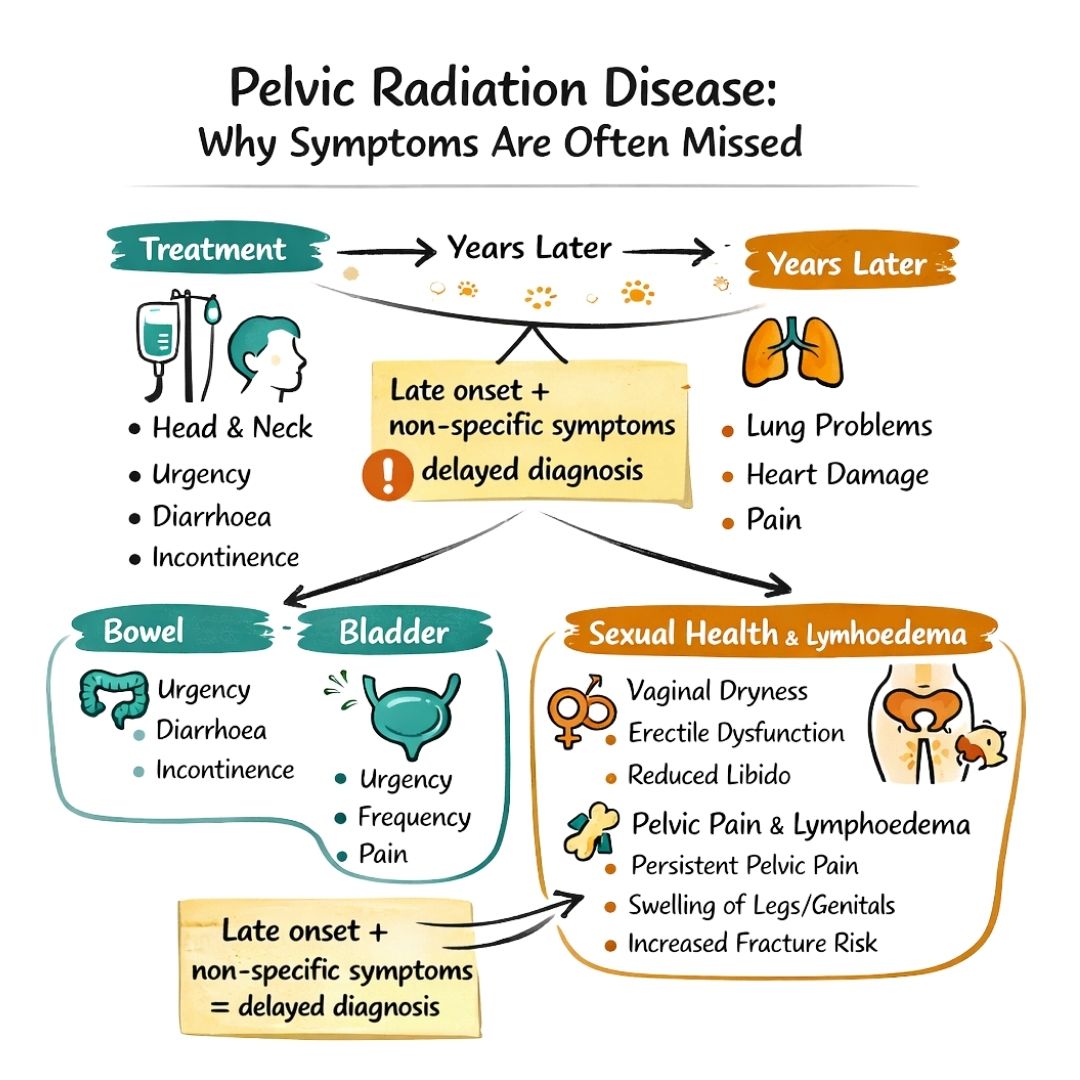
When radiotherapy is aimed at the pelvic area—a common treatment for cancers of the cervix, prostate, bowel, or bladder—it can lead to a specific cluster of long-term side effects. This collection of symptoms is known as Pelvic Radiation Disease (PRD).
It’s not a single problem but a range of issues that can emerge months, or even years, after treatment has finished. Understanding PRD is so important because its symptoms can deeply affect daily life, from basic bodily functions to your emotional wellbeing and intimate relationships. The root cause is the gradual damage radiation causes to healthy tissues and organs in the pelvis, like the bowel, bladder, and reproductive organs.
What Does Pelvic Radiation Disease Involve?
The symptoms of PRD are incredibly varied and can look very different from one person to the next. They often involve long-term changes to bowel and bladder habits, but the impact can be much broader, touching on many aspects of a person’s health and quality of life.
Think of someone who finished treatment for cervical cancer five years ago. At first, they felt fine, but over time, they started noticing a persistent, nagging urgency to use the toilet and a level of discomfort they couldn't quite pin down. This is a classic story for those with PRD; the onset is often so slow and gradual that it’s easily mistaken for something else, or even just the effects of ageing.
Common symptoms associated with PRD include:
Bowel Problems: This is one of the most frequent challenges, with symptoms like chronic diarrhoea, a sudden and intense need to go, bowel incontinence, rectal bleeding, or excessive wind.
Bladder Issues: You might find yourself needing to urinate far more often, feeling that sudden, desperate urge, or experiencing pain when you do. Some people may also notice blood in their urine.
Sexual Dysfunction: For women, this can mean vaginal dryness, tightness (stenosis), and pain during intercourse. For men, erectile dysfunction is a common long-term side effect.
Other Effects: PRD can also cause persistent pelvic pain, swelling in the legs or genital area (lymphoedema), and an increased risk of pelvic bone fractures as the bones can become weaker.
Pelvic Radiation Disease is a complex condition that can evolve over time. Early recognition and a proactive approach are crucial for managing symptoms and preventing them from becoming more severe.
The Scale And Impact Of PRD
The impact of these symptoms is anything but trivial. The Pelvic Radiation Disease Association (PRDA) estimates that a significant number of people are living with ongoing problems after pelvic radiotherapy.
The numbers are stark. Research shows that as many as 80% of patients develop chronic changes in their bowel function. To put that in perspective, among survivors of cervical cancer, a staggering 88% reported at least one persistent symptom, such as bowel or bladder trouble. These figures aren't just statistics; they represent real people navigating incredibly challenging and often distressing physical changes every single day.
The emotional toll can be immense, often leading to anxiety, social isolation, and a real drop in quality of life. When you can’t predict when you’ll urgently need a toilet, just leaving the house can become a source of profound stress.
Seeking And Finding The Right Support
One of the biggest hurdles for people with PRD is simply getting a diagnosis. Because the symptoms can appear so long after treatment and mimic other conditions, they are sometimes unfortunately dismissed. However, getting specialised care can make a world of difference.
If you are experiencing any of the symptoms described here, it is absolutely essential to speak with your doctor or oncology team. They can refer you to specialists who truly understand the long-term effects of radiation therapy, such as gastroenterologists, urologists, or dedicated late effects services.
Management strategies are tailored specifically to your symptoms and can include:
Dietary adjustments to help manage bowel problems.
Medications to control diarrhoea or bladder urgency.
Pelvic floor physiotherapy to improve muscle control.
Specialised dilators or hormone treatments for vaginal changes.
In some cases, bowel changes may be severe enough to require surgery. If you're navigating this possibility, learning more about the options is a vital step. You can read our guide on what a colostomy is to better understand one potential procedure. For bladder-related issues, treatments like hyperbaric treatment for radiation cystitis are showing real promise.
The key takeaway is that help is available. You do not have to endure these symptoms alone.
The Risk of Secondary Cancers After Radiotherapy
Let's talk about one of the most sensitive subjects in cancer treatment: the possibility of developing a completely new cancer years down the line. It's a question that weighs on many people's minds, and it’s an important one to ask.
The straightforward answer is yes, radiotherapy can slightly increase the risk of a secondary cancer. But it's crucial to understand just how small that risk is.
Modern radiotherapy is incredibly sophisticated. The technology is designed to focus powerful, cancer-killing energy directly on the tumour while protecting as much healthy tissue as possible. Even with this precision, any radiation exposure carries a theoretical risk. The very treatment that saves your life can, in a small fraction of cases, cause changes in healthy cells that might lead to a new cancer, often decades later.
This isn't a reason to second-guess your treatment. The benefit of using radiotherapy to fight an active cancer vastly outweighs the tiny statistical chance of a future one. The point isn't to be alarmed, but to be aware. This knowledge makes you a more informed and proactive partner in your own long-term health.
Understanding The Actual Risk
Putting some numbers to this helps bring the risk into perspective. A prominent study found that radiotherapy-related second cancers are rare. The researchers estimated that a very small percentage of all new cancer diagnoses were potentially linked to previous radiotherapy. You can explore the full study on second cancers and radiotherapy for a deeper dive into the data.
So, what does this look like in practice? The study found that the most common secondary cancers were of the lung, oesophagus, and female breast.
It also revealed that more than half of these cases were diagnosed in people aged 75 or over. This really underscores that this is a long-term risk that tends to show up many years after the original treatment. We’re not talking about something that appears right after your sessions end; it’s a late effect that might develop 10, 20, or even 30 years later.
What This Means For Your Long-Term Health
Knowing about this small risk simply reinforces why lifelong health awareness and regular check-ups are so important. Your survivorship plan isn’t just about managing the late effects you have now; it’s about being vigilant for the future.
This doesn't mean you need to live in fear of every new ache or pain. It’s about getting into the habit of listening to your body and feeling confident enough to speak up when something just doesn't feel right.
Here are some of the key signs and symptoms that are always worth discussing with your doctor:
A new lump, bump, or swelling that doesn’t go away.
Unexplained weight loss, persistent tiredness, or drenching night sweats.
A cough that won’t quit, shortness of breath, or changes in your voice.
Lasting changes in your bowel or bladder habits.
A sore that doesn’t heal or a mole that changes shape or colour.
The goal of discussing secondary cancers is not to create anxiety, but to promote empowerment. Your journey with cancer gives you a unique understanding of your own body. Trust that knowledge and use it to advocate for your ongoing health and wellbeing.
Taking control of your lifestyle is also a powerful move. Simple things like not smoking, maintaining a healthy weight, eating a balanced diet, and staying active can significantly reduce your overall cancer risk.
Staying in touch with your primary care doctor and sticking to recommended screening schedules are the foundations of good long-term care. This ongoing partnership with your healthcare team is your best strategy for a long and healthy future.
Practical Strategies For Managing Long-Term Side Effects
Knowing that long-term side effects from radiation therapy might happen is one thing; learning how to actively manage them is the next crucial step. Making that shift from awareness to action can make a world of difference to your quality of life. Think of it as a partnership between you and your healthcare team, blending medical support with simple, practical things you can do for yourself every day.
The secret is to tailor your approach. After all, what works for soothing sensitive skin is completely different from what helps manage bowel issues or persistent fatigue.
Managing Skin Changes And Fibrosis
The skin in the treatment area can stay sensitive long after radiotherapy has finished. You might notice it's become thinner, changed colour, or developed tiny red or purple blood vessels (known as telangiectasia). The tissue underneath can also feel firm or tight, a result of fibrosis.
Consistent, gentle care is your best line of defence here.
Moisturise Daily: A mild, unscented moisturiser will keep your skin hydrated and supple. This simple habit can improve flexibility and ease that feeling of tightness.
Sun Protection Is Essential: Skin that’s been irradiated is permanently more sensitive to the sun. Make it a rule to cover the area with clothing or apply a high-factor, broad-spectrum sunscreen (SPF 30 or higher) before heading outside.
Gentle Massage and Stretching: Regularly massaging the area can help to soften scar tissue. Your physiotherapist can be a great resource, showing you specific techniques to improve tissue mobility and reduce any stiffness from fibrosis.
If you had radiation to your pelvic area, managing ongoing bowel and bladder symptoms often starts in the kitchen. It’s amazing how a few simple dietary changes can help you get a handle on urgency, diarrhoea, or discomfort.
A great first step is keeping a food and symptom diary. It can help you pinpoint your personal triggers. Common culprits often include spicy foods, caffeine, alcohol, and very high-fibre or fatty meals.
A proactive approach to diet isn't about restriction; it's about empowerment. By understanding how certain foods affect your body, you can make informed choices that reduce symptoms and put you back in control.
Consider trying these adjustments:
Introduce Soluble Fibre: Foods like oats, bananas, and apples are brilliant for regulating bowel movements because they absorb excess fluid.
Stay Hydrated: Sip plenty of water throughout the day. If you find you’re getting up a lot at night, try limiting your fluids in the evening.
Eat Small, Frequent Meals: Smaller meals are often easier for your system to digest, which can help reduce symptoms like bloating and urgency.
Consult a Dietitian: A registered dietitian who specialises in oncology can give you personalised advice that’s tailored to your specific bowel or bladder symptoms.
Tackling Fatigue And Promoting Physical Wellbeing
Cancer-related fatigue is one of the most common and frustrating late effects. It's a profound exhaustion that sleep doesn't seem to touch. The best way to fight it is actually quite counterintuitive: gentle, regular physical activity.
Exercise is fantastic for rebuilding stamina, lifting your mood, and shaking off that sense of weakness that can linger after treatment.
Start Slowly: You don’t have to run a marathon. Even a short, 10-minute walk each day is a brilliant start. You can gradually increase the time and intensity as you feel able.
Incorporate Stretching: Gentle stretching, or activities like yoga, can work wonders for muscle stiffness, especially in areas affected by fibrosis.
Listen To Your Body: On days when you feel wiped out, it’s perfectly okay to do less. Pacing yourself is key to avoiding overexertion.
Specialist Support For Complex Symptoms
Some late effects need a more specialist touch. It's important to know these services are out there and to feel confident asking for a referral if you need one.
Symptom
Specialist Support Available
What They Can Offer
Lymphoedema
Lymphoedema Specialist/Clinic
Specialised massage, compression garments, skincare advice, and exercises to manage swelling.
Jaw Stiffness (Trismus)
Physiotherapist or Dentist
Exercises and devices to gently stretch the jaw muscles and improve your ability to open your mouth.
Difficulty Swallowing
Speech and Language Therapist
Swallowing exercises, advice on food textures, and techniques to make eating safer and more comfortable.
Vaginal Dryness/Narrowing
Gynaecologist/Late Effects Nurse
Prescription moisturisers, hormone treatments (if appropriate), and guidance on using vaginal dilators.
Never be afraid to speak up. Always let your doctor or nurse know about any new or worsening symptoms. Getting on top of things early with proactive management and specialist care can stop small issues from turning into bigger problems, helping you lead a full and active life for many years to come.
Your Questions About Radiotherapy Late Effects, Answered
Once active treatment is behind you, the focus shifts to long-term health and wellbeing. Part of that journey is understanding what might come next. Here are some answers to the most common questions we hear about the late effects of radiotherapy.
How Long After Treatment Can Late Side Effects Appear?
This is a really common question, and the answer can be surprising. Late side effects don’t follow a strict timeline. They can show up a few months after your treatment wraps up, or they might not appear for several years—sometimes even a decade or more down the line.
The reason for this delay is that radiation causes gradual changes in the healthy tissues and blood vessels in the treated area. That’s why it’s so important to let your healthcare team know about any new or persistent symptoms, no matter how much time has passed since you rang the bell.
Are Long-Term Side Effects Of Radiotherapy Permanent?
Whether a side effect is permanent really depends on the individual and the specific issue. Some changes, like a bit of skin discolouration or a slight hardening of the tissue (fibrosis), might stick around for good but are often very manageable.
On the other hand, many other effects, such as nerve pain or certain bowel problems, can be significantly improved. With the right support, like specialised physiotherapy, medication, or simple dietary adjustments—you can often find real relief. The key is to address it early. A chat with your doctor or a late effects clinic can open up a world of management options.
Never assume a new symptom is something you just have to live with. Many late effects can be effectively managed with the right support and treatment, greatly improving your quality of life.
Who Should I Talk To About A Long-Term Side Effect?
Your primary care doctor is a fantastic starting point. If you’re still under the care of your oncology team, you can absolutely reach out to them as well. They can assess what’s going on and, if needed, refer you to a specialist or a dedicated late effects service.
To get the most out of that conversation, it helps to be prepared. Try keeping a simple diary of your symptoms.
What is the symptom? (e.g., pain, stiffness, a change in your bowel habits)
When did it start?
What makes it better or worse?
How is it affecting your day-to-day life?
Don't ever feel like you're being a bother. Speaking up for your health is one of the most powerful things you can do.
How Can I Reduce My Risk Of Developing Late Effects?
While you can't prevent every possible late effect, there are definitely proactive steps you can take to look after yourself. The best place to start is by following the advice your medical team gave you during and after your radiotherapy.
Simple lifestyle choices can make a huge difference. This includes things like protecting the treated skin from the sun, maintaining a healthy weight, and not smoking. These habits give your body the best possible chance to heal and can help lessen the severity of some late effects. If you're struggling with digestive upset, for instance, learning about what foods are easy to digest is a practical way you can start managing symptoms yourself.
We strongly advise you to talk with a health care professional about specific medical conditions and treatments. The information on our site is meant to be helpful and educational but is not a substitute for medical advice.
Written by Cancer Care Parcel
In a world full of conflicting and sometimes misleading information about cancer, Cancer Care Parcel stands out by offering resources backed by solid facts. Funded entirely by the sale of our products and donations, we ensure that every resource on our site is accurate, trustworthy, and focused on supporting the cancer community.